





- ABM
What Is ABM? A Comprehensive Guide to Implementation and Strategies for Success

Use Cases by Objective
New Approach List
Group Strategy

Digital
Marketing

Client Information Registration

Data Deduplication
Corporate Attribute Analysis

SFA/MA Activation

Business Card Data Integration

Credit & Client Check

Use Cases by Department
Sales Department

Inside Sales
Department

Marketing &
Corporate Planning Department

Information Systems Department

Management Department

Use Cases by Tool
Meeting Sonar
Last Updated:
October 18, 2023

Click Here to Learn All About ABM ▶
ABM Implementation: The Complete Guide
Download the Free eBook
Account-Based Marketing (ABM) has recently gained significant attention among B2B companies. However, many professionals looking to get started often wonder, "Where should I begin?" or "Is there an easy way to start that delivers measurable results?"
To successfully implement ABM and maximize its effectiveness, the adoption of a dedicated ABM tool is essential.
By implementing an ABM tool, you can establish the necessary environment for ABM operations, such as data preparation and the identification of high-value customers. This article explains the functions of ABM tools, the importance of their implementation, and the benefits they provide.
Table of Contents
1What Is Account-Based Marketing (ABM)?
1-1Differences in Approach Compared to Traditional Marketing, SFA, and MA
2ABM Tools Support Operations by Storing and Analyzing Customer Information
2-2Differences Between ABM and Other Tools Such as SFA and MA
2-3Characteristics of Companies That Benefit From ABM Tools
3The Importance of Implementing Tools for ABM
3-1High Costs Associated With Manual Data Integration and Cleansing
3-2Difficulty in Identifying High-Value Customers
4Benefits of Implementing ABM Tools
4-1Ability to Conduct Analysis and Plan Strategies at the Corporate Level
4-2Facilitation of Information Sharing Across Departments
4-3Integration With Other Systems to Improve Operational Efficiency
5-1uSonar
Recommended Articles
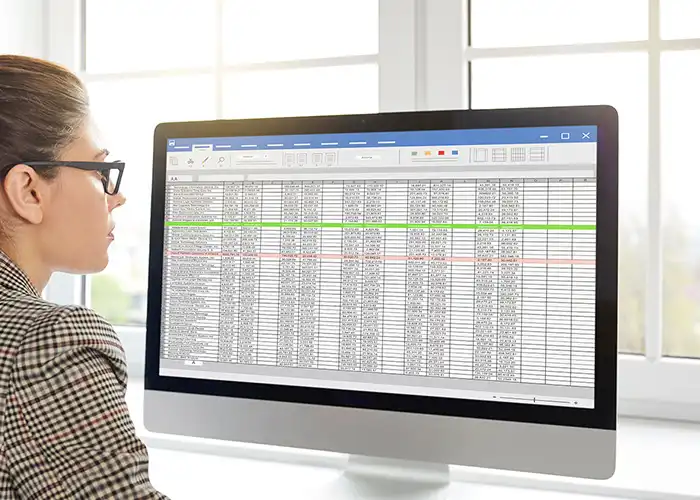
Account-Based Marketing (ABM) is a marketing methodology that focuses on specific accounts (companies).
In ABM, sales and marketing teams collaborate to approach high-value (potential) customers with individually customized strategies.
It aims to build relationships from every angle, seeking to create touchpoints with key stakeholders at the corporate level.
Establishing an internal organizational structure and utilizing accurate, comprehensive data to understand customer status are the keys to success.
Reference Article: What Is ABM? A Comprehensive Guide to Benefits and Strategies for Success!▶︎
Furthermore, the fundamental concept of SFA and MA is to manage activities with leads (contacts/business cards) that already have established touchpoints.
This differs from the ABM approach, which attempts to implement optimal strategies at the corporate level, including prospective customers and partners.
ABM tools are solutions that store, integrate, and analyze the customer and prospect data necessary for ABM, supporting the execution of ABM operations.
Specifically, these tools integrate pre-stored databases with your company's internal data to identify high-value customers likely to purchase products or utilize services, enabling the planning and execution of strategic approaches.
Instead of taking a scattergun approach to client companies, prioritize them based on their likelihood to convert and implement a company-wide approach customized to their specific characteristics.
To implement ABM, it is necessary to perform various analyses and accumulate, integrate, and analyze data in order to select high-value customers and identify potential target leads.
ABM tools already contain accumulated corporate information, allowing you to develop strategies based on data that cannot be collected by SFA or MA alone, thereby supporting sales activities that are more likely to yield results.
ABM tools are designed to support the core steps of ABM operations: "Selection of High-Value Customers," "Customized Approaches for Each Customer," and "Performance Verification and Improvement."
The main features are as follows:
By utilizing these features, we support data-driven sales activities even in the absence of personnel with specialized data management skills.
There are tools often compared with ABM, such as SFA and MA. The differences between them are summarized in the table below.
| ABM | SFA | MA |
|---|---|---|
| • Execute strategies and measure effectiveness at the account (corporate) level | • Centralize the management of customer information, appointments, and sales meeting status | • Accumulate information on prospective customers |
| • Visualize untapped companies to identify potential leads from the total market | • Analyze the activity history and daily performance metrics of sales representatives | - Automate marketing initiatives such as email newsletters. |
| - Conduct targeting and strategic planning based on rich information. | - Streamline sales activities based on data analysis. | - Prioritize leads through scoring. |
| - Align sales and marketing teams to acquire key accounts. | - Streamline sales back-office operations, such as creating invoices and quotes, and following up with customers. |
ABM tools excel at selecting and analyzing high-value customers. They resolve inaccuracies in internal data and enhance analysis precision by supplementing missing information.
As the name Account-Based Marketing implies, they enable targeting and strategy development at the account (company) level rather than the individual lead level. Furthermore, because high-value prospects include companies with which you have not yet established contact, these tools are also effective at visualizing data for the entire market.
Since sales and marketing teams approach the same targets, a key feature is the ease of creating a unified data foundation for both departments.
On the other hand, SFA and MA systems are generally designed based on information accumulated at the lead (contact/business card) level, excelling at managing and streamlining internal sales and marketing activities.
Therefore, to grasp the effectiveness of initiatives at the company level or to perform targeting and analysis that includes companies with no prior contact, it is necessary to consider methods for expanding information separately from SFA and MA.
While SFA and MA systems can often be integrated, the reality is that they are frequently used in silos with fragmented data and functions because the departments and objectives for each tool differ.
| Category | Company Characteristics |
|---|---|
| Degree of Interdepartmental Collaboration |
|
For medium to large enterprises with high-ticket products and a broad customer base, the decision-making process often involves significant barriers, leading to complex sales cycles.
Since multiple stakeholders are frequently involved in the decision-making process when adopting products, Account-Based Marketing (ABM)—which focuses on approaching multiple contacts within a single company rather than just acquiring a single lead—is highly effective.
Furthermore, companies with these product characteristics often see their revenue concentrated among a select group of clients. Conversely, this structure makes it easier to penetrate individual accounts, and if there are existing case studies within the same industry, it is easier to scale these successes horizontally.
For such companies, ABM, which focuses on prioritizing specific groups of enterprises, is a well-suited strategy.
Conversely, for companies with low-cost products and fewer stakeholders involved in the decision-making process, adopting ABM is not recommended, as it may cause them to miss opportunities to reach a wider audience.

To achieve results in ABM operations, it is necessary to perform data integration, data deduplication (merging records), and data cleansing to resolve inconsistencies and errors before selecting high-value customers.
Performing these tasks manually using systems or Excel spreadsheets incurs enormous costs in terms of man-hours and labor expenses.
Many ABM tools include features for deduplication and data cleansing. By simply uploading your company's customer data, these tools can reflect high-precision data even when there are differences in formats or output, thereby establishing an environment that facilitates easier analysis.
Duplicate or incomplete data within SFA and MA systems makes it difficult to accurately assess the current situation.
Furthermore, it is common for leads registered via web forms or data entered by sales representatives to contain only minimal information, leaving companies without the data necessary for analysis.
Before considering analysis or selection methods, performing data cleansing and information enrichment using tools such as ABM tools is a prerequisite for effective targeting and strategy implementation.
Reference Article: What Are the Three Challenges to Solve for ABM Success? Introducing Data Utilization as the Key to Solutions ▶︎
Utilizing an ABM tool enables analysis and strategy planning at the corporate level.
ABM tools integrate data that was previously scattered across various departments, allowing you to confirm sales, volume, and usage status by company. This enables you to propose products or services at the exact moment a target's purchasing interest is at its peak.
Once customer characteristics are accurately visualized, it becomes easier to propose upsells to increase the average customer value or cross-sells to encourage the simultaneous purchase of additional products.
Depending on the tool, it also becomes possible to approach companies using data such as capital relationships and interest profiles.
Reference Article: What Corporate Information Should Be Acquired for ABM? An Explanation of Data Acquisition and Management Methods ▶︎
It facilitates information sharing between the marketing department, which performs numerical analysis and identifies high-intent prospects, and the sales department, which conducts appointments and business negotiations in the field.
This allows each department to share acquired information in real time, enabling continuous updates to sales activities.
By integrating ABM tools with systems such as SFA and MA, you can enrich and utilize information that cannot be captured by those tools alone.
Beyond centralized management of customer information, you can realize strategic sales activities by leveraging comprehensive data, including industry, revenue scale, corporate group information, and interest profiles.
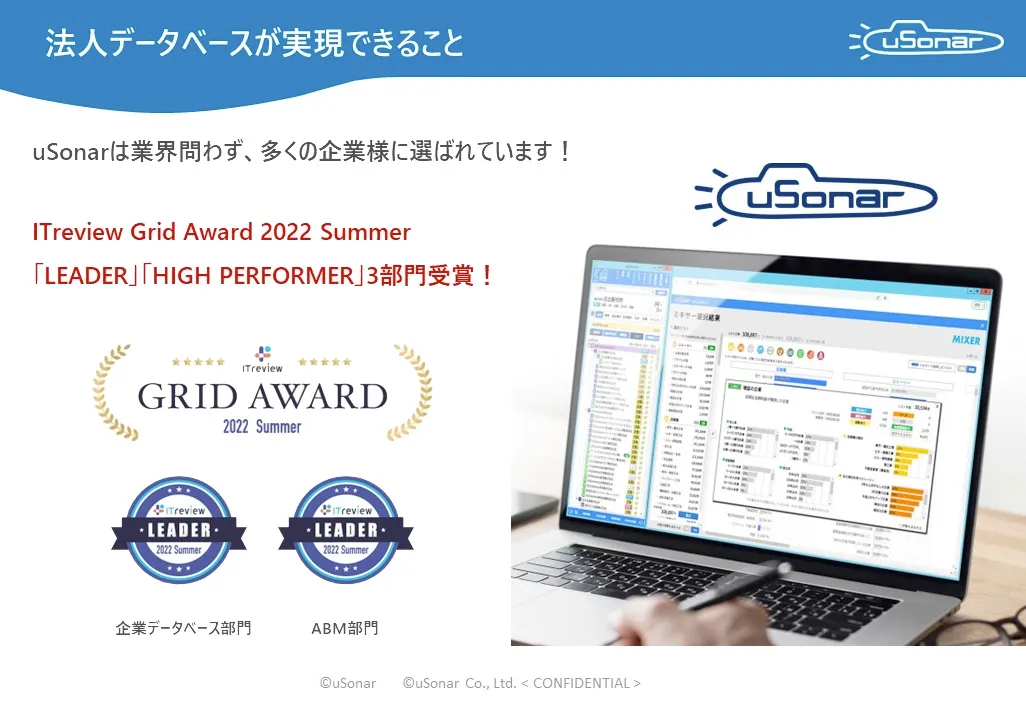
For those looking for an ABM tool, we highly recommend uSonar, which is equipped with one of Japan's largest corporate databases.
The strength of uSonar lies in its overwhelming volume of information and high precision of data matching.
Our database of 12.5 million records, covering companies across Japan at the branch level, enables advanced targeting. In addition to basic information such as location and annual revenue, you can select targets using over 200 diverse segmentation criteria. We also support high-precision data matching using know-how accumulated over 20 years to address the decline in customer data reliability caused by inconsistent naming or duplicate registrations.
• JTB Corp. ▶ Details
• Hitachi Solutions, Ltd. ▶ Details
• Demae-can Co., Ltd. ▶ Details
• OTSUKA CORPORATION ▶ Details
• Ministry of Economy, Trade and Industry ▶ Details
We have a proven track record of implementation, primarily with major companies across various industries.
Please check below for more details on uSonar.
In this article, we have summarized the basics of ABM tools, the importance of implementing them, and their benefits.
An ABM tool is a solution that supports the fundamental steps of ABM operations: Identifying High-Value Customers, Approaching Each Customer, and Verifying and Improving Results.
In particular, identifying high-value customers requires integrating internal and external data, as well as improving data quality through matching and cleansing. Therefore, it is an essential tool for achieving success with ABM.
By implementing an ABM tool, you can facilitate smooth information sharing between departments and optimize sales activities through integration with other systems.
uSonar provides a customer data integration solution that can optimize your ABM operations:
● High-precision data cleansing and matching functions
● Access to one of Japan's largest corporate databases with over 12.5 million records
● Automatic identification of high-value customers through centralized customer data
You can automatically identify high-value customers—a process that usually requires vast amounts of time and high data precision—using AI-driven demand measurement. This enables sales activities with higher order probability and productivity.
You can check actual implementation cases and success stories in the materials below.
Author

uSonar Editorial Department
MX Group, Editor-in-Chief
We are the uSonar Editorial Department.
We provide information on data utilization and digital technologies useful for considering future business operations, primarily for companies engaged in B2B business.
uSonar is utilized by various companies
across all industries and sectors.
ITreview Grid Award 2026 Summer
Leader in 6 Categories

With uSonar,
we will guide your company to solve its challenges!
Case Studies and Sample Reports
Download