- ABM
What Are the Three Challenges to Solve for ABM Success? Introducing Data Utilization as the Key to Resolution

Last Updated: September 19, 2024
Click Here to Learn More About ABM ▶
ABM Practice: The Complete Guide
Download the Free E-book
In recent years, Account-Based Marketing (ABM) has been gaining significant attention, particularly among B2B companies.
However, many may still lack a clear understanding of its precise definition and how to effectively utilize it.
This article provides a detailed explanation of ABM, covering its fundamental concepts, differences from lead-based marketing, benefits, implementation steps, and key points for achieving results.
If you are looking to implement ABM to enhance your company's sales and marketing performance, we encourage you to read this article to the end.
Table of Contents
1What Is ABM (Account-Based Marketing)?
1-1Differences Between ABM and Lead-Based Marketing
1-2Differences Between ABM and Demand Generation
2-1An Average of 28% of Marketing Budgets Is Allocated to ABM
2-2Background Behind the Growing Interest in ABM
3Three Benefits of Implementing ABM
3-33. Enhancement of Customer Loyalty
4-1Step 1. Selection of Target Accounts
4-2Step 2. Selection of Channels
4-3Step 3. Determination of Content and Messaging
4-4Step 4. Campaign Execution, Performance Measurement, and Optimization
5Key Points for Achieving Results with ABM
5-11. Develop Strategies Based on Visualization of the Entire Market
5-22. Organize Customer Data for High-Precision Data Analysis
5-33. Facilitate Seamless Collaboration Between Sales and Marketing Departments
Recommended Articles
ABM (Account-Based Marketing) is a marketing methodology that involves pre-selecting high-potential prospects and approaching them effectively.
To explain it more clearly, it refers to a method of "identifying companies that will bring significant profit to your business, narrowing down the target, and conducting intensive sales activities." In ABM, rather than targeting by general categories such as "small and medium-sized enterprises" or "sole proprietorships," you perform targeting and customer selection at the company level, such as "Sharp" or "Panasonic."
After selecting companies at the corporate level, the goal is to create touchpoints with the stakeholders and key persons responsible for decision-making within the target companies, and to build relationships from various angles.
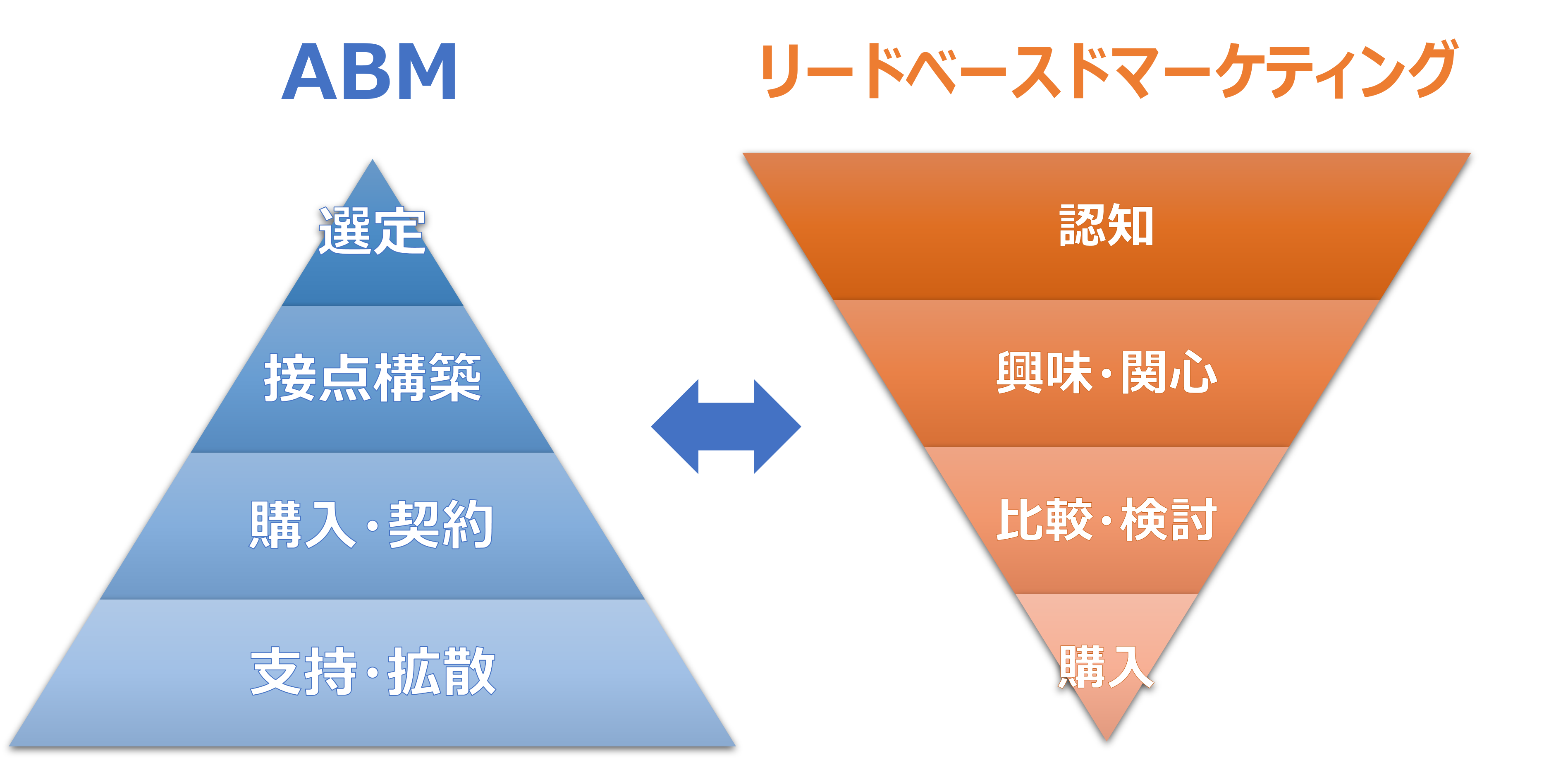
Lead-Based Marketing is a marketing methodology often compared with ABM.
Lead-Based Marketing is an approach that conducts consistent marketing activities toward a broad range of potential customers, gradually narrowing them down to prospects with a high probability of conversion.
In contrast, ABM is an approach that involves narrowing down target companies in advance, executing customized marketing strategies for the entire organization, and gradually expanding touchpoints.
While ABM starts with specific companies (accounts), lead-based marketing differs in that it starts with a broad range of prospective customers (leads).
The choice of strategy depends on the characteristics of your product and market.
ABM is suitable when high-value contracts or long-term relationships with major enterprises are critical and you wish to concentrate resources on a select number of accounts. In contrast, lead-based marketing is appropriate when the goal is to identify high-quality customers from a large pool of prospects.
Another methodology often compared to ABM is demand generation.
Demand generation refers to the entire series of marketing activities in which the marketing department generates awareness and interest in a product among prospective customers, thereby increasing their purchase intent.
The difference from ABM is that it allows for an approach targeting a much broader range of prospective customers and markets.
As implementing both strategies can lead to more efficient and higher ROI sales activities, an increasing number of companies are adopting a hybrid approach that combines ABM and demand generation.
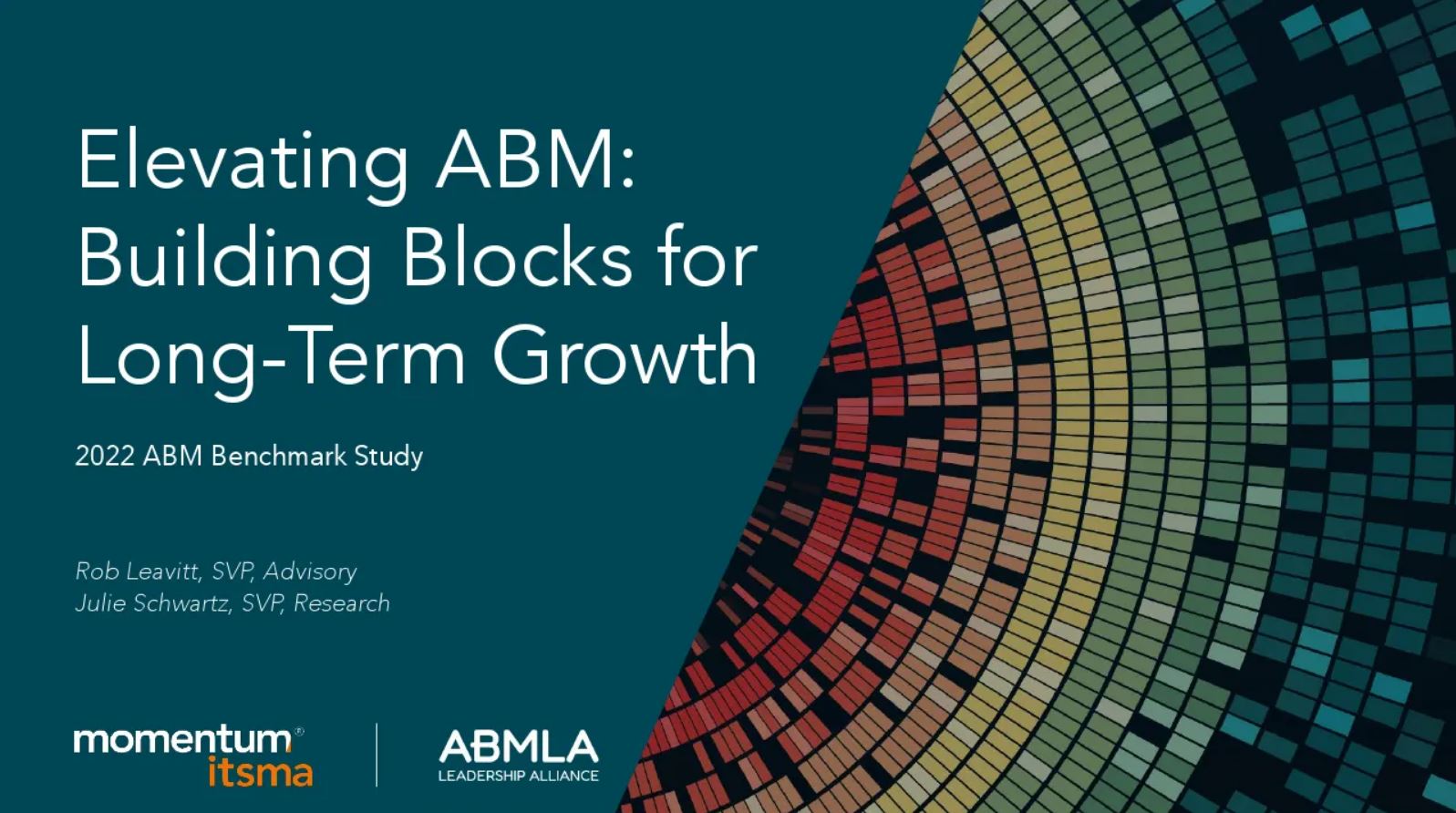
According to the 2022 ABM Benchmark Study, jointly conducted by Momentum ITSMA and the ABM Leadership Alliance at the end of 2022, B2B marketers continue to place ABM at the forefront of their marketing strategies, marking the fourth consecutive year that ABM has held the top priority for initiatives. On average, 28% of marketing budgets in 2022 were allocated to ABM, and this trend is highly likely to continue through 2024.
While this survey focused on U.S. companies, given that trends often shift from the West to Japan, it is highly plausible that a similar trend will emerge in Japan in the near future. In fact, inquiries regarding ABM to our company have been on the rise in recent years.
The attention surrounding ABM is driven by the increase in advertising budgets. According to a survey by Dentsu Inc., total advertising expenditures in Japan in 2022 reached a record high of 7.1021 trillion yen (104.4% compared to the previous year).
There are various factors behind this, but the rise of digital marketing has accelerated the growth of internet advertising costs and the increase in customer acquisition costs. With rising advertising budgets, ABM is gaining attention for its ability to focus on key targets and efficiently generate customers.
The widespread adoption of sales support tools such as SFA and MA is another factor contributing to the attention on ABM. The implementation of systems that allow for centralized data management has made cross-departmental collaboration—which was previously difficult to achieve—much easier, serving as a catalyst for the interest in ABM.
☆-☆-☆ Body End ☆-☆-☆What benefits does the implementation of ABM provide? Here, we introduce three major points.
The first benefit is the reduction of lead time.
ABM is a methodology that involves selecting prospects before initiating an approach, and by focusing on building touchpoints specifically with stakeholders and key persons, it is expected to yield results within a shorter lead time.
In particular, if you are handling products with high unit prices that require a long time to close, implementing ABM can lead to a significant reduction in lead time.
The second benefit is the improvement of ROI.
By properly implementing ABM, you can reduce advertising costs and sales activity expenses associated with lead acquisition.
Furthermore, it is possible to reduce the number of approaches to customers with a high probability of loss and concentrate available resources on customers with a higher probability of conversion.
Since you can conduct sales activities focused on customers who are more likely to lead to negotiations and orders, an improvement in ROI can be expected.
The third benefit is the improvement of customer loyalty.
ABM involves identifying target companies and making proposals to stakeholders and key persons that lead to solving the customer's issues. Consequently, this leads to proposals from the customer's perspective, allowing them to feel that you are not just selling, but genuinely thinking about their company.
While acquiring new customers is essential for business continuity, increasing repeat business, enhancing customer loyalty, and aiming for higher LTV (Lifetime Value) are equally critical. Implementing ABM will significantly contribute to improving LTV.
Let us now examine the actual process of implementing ABM. We will explain this in four major steps.
ABM is a marketing methodology that identifies high-value customers who will benefit your company based on pre-defined targets. Therefore, the selection of target accounts (companies) is the key to the success of your ABM initiatives.
When selecting targets for ABM, the primary criterion is whether the company will generate profit for your business. Use the following criteria as a reference to clarify your company's high-value customers.
Once you have identified your ideal customer profile based on these selection criteria, the next step is to locate the key persons who serve as decision-makers within the target companies.
Information on key persons can be obtained from sources such as executive and employee profiles on corporate websites, personnel change announcements, and securities reports.
Selecting target accounts requires comprehensive information, ranging from industry-wide data like corporate news and market trends to specific segmentation criteria such as industry type, annual revenue, and employee count. It is essential to establish an environment where you can collect, integrate, and analyze high-quality data as efficiently as possible.
Reference Article: What Corporate Information Should Be Acquired for ABM? An Explanation of Data Acquisition and Management Methods ▶︎
Next, analyze the channels (media) that the key persons at your target companies use on a daily basis to select those that are most likely to yield effective results. Examples of channels through which you can establish contact with key persons are as follows:
As mentioned above, in addition to direct telemarketing, various approaches that integrate sales and marketing can be considered.
Participating in exhibitions and events that allow you to build connections with senior-level decision-makers, as well as effectively utilizing advertising strategies, can also be highly effective.
It is also important to understand the characteristics of your target companies and key personnel.
For example, if the business partners of your target company have their headquarters within the 23 wards of Tokyo, it is highly likely that they primarily use taxis or trains for transportation. Therefore, placing transit advertisements within the 23 wards of Tokyo can be expected to create touchpoints with key personnel.
Select the optimal channels for your company by taking into account the characteristics of your products and services. Combining multiple channels can also be highly effective.
Once you have selected your approach channels, create the content and messages you will actually provide.
In ABM, it is crucial to provide content that is optimized for each individual company.
Examples of content include email newsletters, webinars, company-specific events, white papers, and sales materials.
Thoroughly consider how to best present your solutions by aligning them with the specific challenges of each company, industry-specific issues, and the missions of key personnel.
Finally, conduct effective campaigns and sales activities tailored to your channels.
When executing initiatives, do not simply proceed blindly; monitor your sales activities and campaign results so that you can analyze and improve them later.
When aggregating activity results, you can use tools like Excel internally to keep costs down; however, ABM is a strategy where collaboration between the marketing and sales departments is essential. By utilizing a dedicated tool equipped with ABM functions, you can generate significantly greater results.
Reference Article: What Is an ABM Tool? Explaining the Importance of Implementation and 3 Benefits for Your Company ▶︎
There are several points to keep in mind to achieve results with ABM. Here, we introduce three major points.
The first step is to develop a strategy after visualizing the entire market universe.
When selecting target accounts, it is impossible to identify the optimal accounts without first understanding the entire market where your products can be deployed.
You may miss opportunities to approach companies that actually have the potential to utilize your products.
Methods for identifying the market universe internally include using the Corporate Number Publication Site or corporate registries, but it is a fact that building this data takes time.
By utilizing an external corporate database, you can grasp the market universe more efficiently. In particular, including the number of corporate data records and the variety of segmentation axes as criteria for adoption will enable more effective ABM implementation.
Reference Article: Detailed Explanation of ABM Strategy Implementation and Best Practices for Solving Challenges ▶︎
The second step is to organize customer data and conduct high-precision data analysis.
Data analysis is always critical in the ABM workflow, such as when selecting target accounts, choosing channels, or creating content.
For example, by analyzing your existing customers in detail, you can identify companies with similar attributes or pain points and create content that effectively addresses their challenges.
By cleansing and consolidating your internal customer data to eliminate outdated or duplicate records, you can perform high-precision data analysis. Enhance your data analysis accuracy to execute ABM initiatives that are more aligned with reality.
The third point is to streamline collaboration between the sales and marketing departments.
To successfully implement ABM and achieve results, it is essential to establish a system that allows for an immediate approach once high-value customers have been identified.
One potential measure is to introduce a tool that allows the sales department to view the results of data extraction and analysis performed by the marketing department in real time. Let us build an environment where the sales and marketing departments can easily communicate with each other.
Reference Article: What Are the Three Challenges to Solve for ABM Success? Introducing Data Utilization as the Key to Solutions ▶︎
Implementing ABM involves various points and considerations, such as target selection, data integration to promote interdepartmental collaboration, operational maintenance, and environment setup for effectiveness measurement. Achieving these with internal resources alone requires significant effort.
There is a possibility of falling into the conclusion that things are not going well after trying to do something that looks like ABM based on insufficient data. Because optimal measures are not being taken, an opportunity loss is occurring where companies give up on ABM implementation itself.
Regarding such challenges, introducing uSonar services may solve many problems. uSonar resolves data issues that are essential for ABM success.
uSonar possesses a wide range of corporate information, from large enterprises to sole proprietorships, and deploys the LBC corporate database that covers locations such as sales offices and stores. By utilizing LBC, it is possible to extract priority targets for your company in real time, not only at the corporate level but also at the location level, without omissions.
When conducting ABM, it is essential that corporate information is normalized first.
uSonar achieves high-precision data matching with a master database created based on over 20 years of support experience. It quickly detects and maintains all change information, such as notation variations, company name changes, and address relocations.
Since information on linked SFA systems is also updated automatically, it is possible to reduce the internal resources spent on updates.
uSonar assigns corporate attributes across various axes to each company. In addition to basic attributes such as industry, location, and annual sales, we have constructed "Stories," which are qualitative attributes that summarize corporate characteristics and interests.
By utilizing these stories, it is possible to analyze target companies from a more multifaceted perspective.
For more details, please feel free to contact us from this page.
ABM is a marketing methodology that can achieve high results by targeting specific companies or key persons for effective approaches. By introducing ABM, many benefits can be expected, such as shortening lead times, improving ROI, and strengthening customer loyalty.
However, to practice ABM, it is essential to clarify objectives and strategies, and to perform sufficient data collection and analysis. By visualizing the entire market through customer data and market analysis, you can develop more accurate strategies.
Through the practice of ABM, companies can build longer-term relationships with their clients. If you are considering the introduction of ABM, please use this article as a reference to implement the optimal ABM strategy for your company.
Document Download Link
☆-☆-☆ Document Download Link End ☆-☆-☆
Author

uSonar Editorial Department
MX Group, Editor-in-Chief
We are the uSonar Editorial Department.
We provide information on data utilization and digital technologies useful for companies primarily engaged in B2B business to rethink their future operations.
uSonar is utilized by a wide range of companies across various industries and sectors.
ITreview Grid Award 2026 Summer
Leader in 6 Categories

With uSonar,
we can guide your company toward solving its challenges!
Case Studies and Sample Reports
Download