- ABM
What Is ABM? A Comprehensive Guide to Implementation and Strategic Success

Last Updated: April 15, 2024
Click Here to Learn More About ABM ▶
ABM Practice: The Complete Guide
Download the Free Ebook
Account-Based Marketing (ABM) is a strategy focused on approaching the specific customers your company should target. As of 2024, more B2B companies in Japan are adopting this approach as it also leads to improvements in Return on Investment (ROI).
However, many companies struggle to successfully implement ABM initiatives.
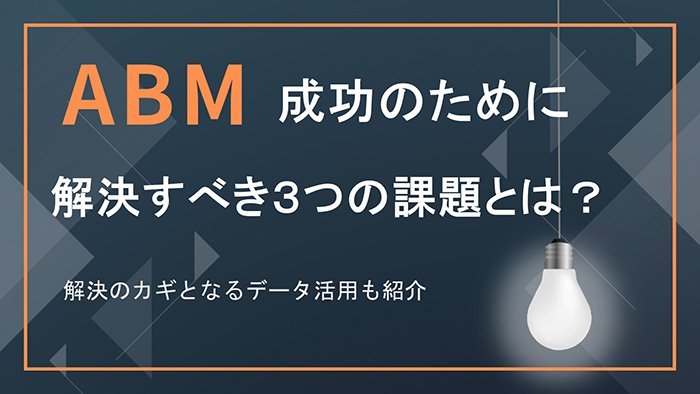
While there are multiple factors, we believe the three most critical challenges are: "overlooking the dark funnel," "data fragmentation and quality issues," and "a lack of alignment between sales and marketing."
In this article, we explain these often-overlooked challenges in ABM implementation and provide a detailed introduction to data integration and demand centers, which are the keys to ABM success.
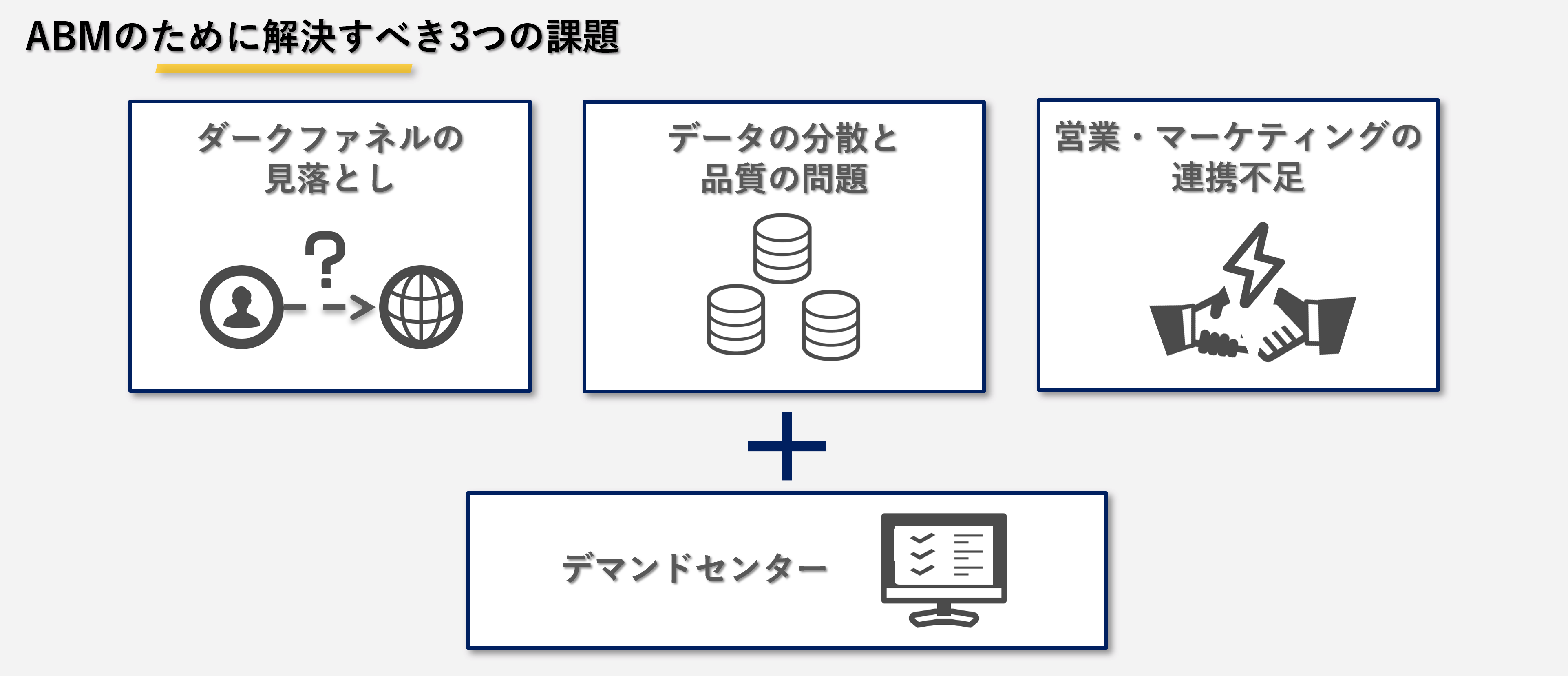
Table of Contents
2Three Challenges in Implementing ABM
2-11. Overlooking the Dark Funnel
2-22. Data Fragmentation and Quality Issues
2-33. Lack of Alignment Between Sales and Marketing
3Data Integration Is the Key to ABM Success
4Steps for Data Integration to Solve Challenges
4-2Step 2: Data Integration and Consolidation
4-3Step 3: Corporate Attribute Enrichment and Segmentation
4-4Step 4: Setting Engagement Scoring
4-5Step 5: Continuous Data Updating and Maintenance
5What Is a Demand Center for Leveraging Data Integration Results?
Recommended Articles
ABM is a marketing methodology that involves pre-selecting companies with high potential to become valuable customers and approaching them effectively.
Simply defined, it is a strategy of "identifying the specific groups of companies that will bring significant profit to your business, narrowing down the target, and conducting intensive sales activities."
Rather than targeting broad categories such as "Small and Medium-sized Enterprises" or "Sole Proprietors," ABM selects targets based on specific "Individual Companies."
Once selected, the goal is to establish points of contact with the stakeholders and key persons responsible for decision-making at the target companies, and to build relationships from various perspectives.
The reason ABM is gaining attention is its ability to maximize limited resources and achieve a high Return on Investment (ROI). By narrowing down the target, more personalized approaches become possible, leading to improved customer engagement and increased sales.
Reference Article: What Is ABM? A Thorough Explanation of Its Benefits and Strategies for Success! ▶︎
When B2B companies implement ABM, the following challenges often arise.
We will explain each of these in detail.
The Dark Funnel refers to the segment of potential customers that marketers cannot identify while they are in the process of gathering information about products or services.
Specifically, this includes untrackable browsing, email forwarding, information sharing via messaging apps, and direct access from social media posts or advertisements.
With traditional marketing methods, if a website visitor is part of the Dark Funnel (anonymous), it is impossible to even determine if they are a target customer for your company.
Consequently, companies often focus too heavily on the sheer volume of leads as a marketing KPI, leading to the challenge of low lead quality.
Without the ability to identify website visitors and visualize visitor engagement, it is difficult to implement basic engagement enhancement strategies, such as determining which company to approach, what information to provide, and when to deliver it.
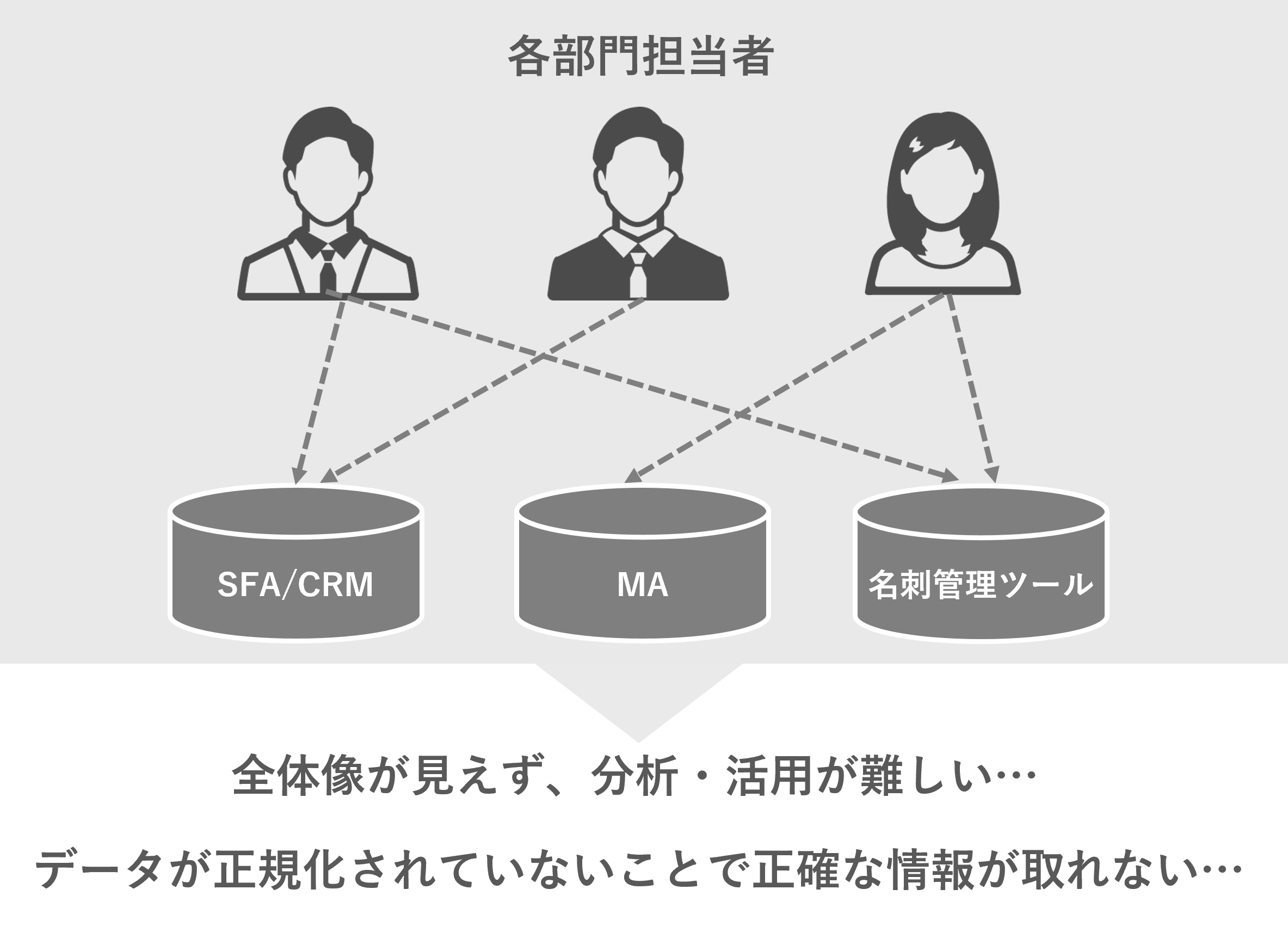
When implementing ABM, fragmented or poor-quality corporate data makes it difficult to execute an effective approach.
For example, if customer data is entered separately by personnel in different departments, it becomes scattered across CRM systems, marketing automation tools, and business card management systems, making analysis and utilization difficult.
Furthermore, if the data is "dirty"—containing input errors, duplicates, or missing information—accurate targeting and personalization become challenging.
To resolve these issues of data fragmentation and quality, data integration and maintenance are essential.
Specifically, it is necessary to integrate data from various systems, remove duplicates, correct inaccurate information, and supplement missing data. Establishing data entry rules to maintain and improve quality is also critical.
ABM is a framework where the sales department engages with accounts prioritized based on profiling and touchpoints established by the marketing department; therefore, close collaboration between both departments is essential.
However, in reality, marketing and sales departments are often siloed.
Managers and staff in each department are frequently overwhelmed by various tasks, often leading to a shortage of personnel capable of focusing on sufficient cross-departmental collaboration.
As a result, the meticulous inter-departmental coordination vital for ABM cannot be achieved, leading to issues such as the marketing team's intentions not being communicated or sales progress not being shared.
To strengthen the alignment between sales and marketing, the following initiatives are effective:
Data integration plays a vital role in achieving success with ABM.
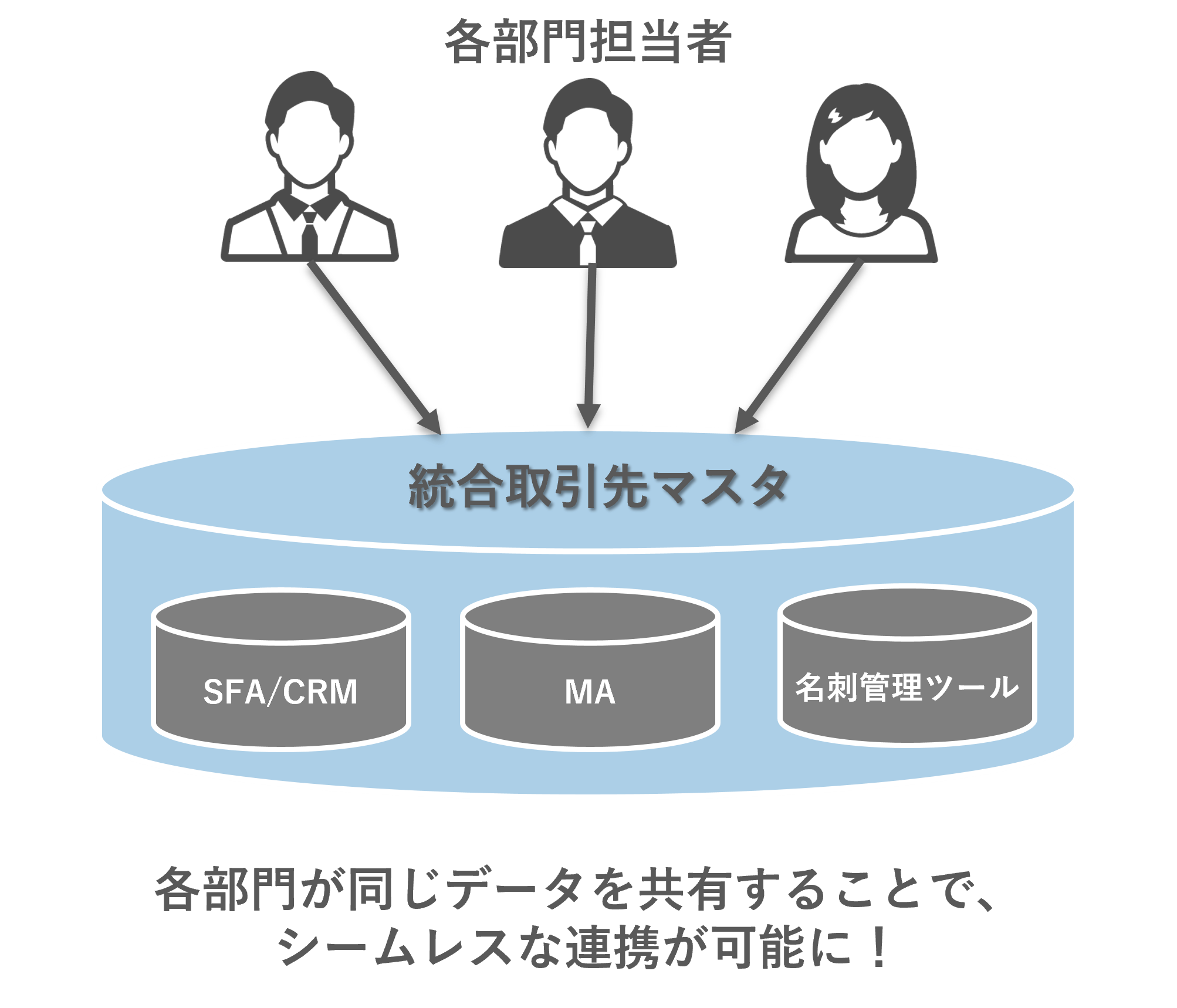
The three challenges mentioned above can be broadly defined as issues related to data management. Therefore, rather than implementing minor improvements, it is highly effective to first establish a framework for data integration within your company as a structural solution.
Data integration in this context refers to consolidating the customer and prospect data held by a company and improving its quality.
By performing data integration, targeting precision is improved, allowing you to identify and approach companies that better align with your ideal customer profile (persona).
Furthermore, based on the integrated data, you will be able to provide personalized messages and content tailored to customer attributes and behavioral history, which will also improve your lead-to-opportunity conversion rate.
In addition, by sharing the same data across sales and marketing, seamless collaboration becomes possible, enabling the delivery of a consistent customer experience.
Overall, data integration reduces ineffective outreach and increases effective engagement, which can be expected to improve your return on investment (ROI).
Reference Article: What Corporate Information Should Be Acquired for ABM? Explaining Methods for Data Acquisition and Management ▶︎
Data integration is a critical initiative that serves as the foundation for ABM and holds the key to its success. So, what steps are required for data integration?
For B2B companies, the following five steps are necessary.
Let us examine each step in detail.
Data cleansing is an essential process for improving data quality. Specifically, it involves removing duplicate data, correcting inaccurate information, and supplementing missing data.
To perform data cleansing, you must first define which data is important and establish rules for how data should be structured and managed.
Identify data entry points and define the necessary data while considering data integration across systems.
When applying these new rules to perform data cleansing, mixing data from before and after the rule implementation can lead to data inconsistencies.
Therefore, it is important to eliminate target data that does not conform to the new rules and falls within a gap period where cleansing has not yet been applied.
Next, integrate data dispersed across various systems to enable centralized management. In this process, "Deduplication (data matching and integration)" is essential.
For example, if identical customer information exists in multiple systems, it must be consolidated into a single record.
By performing this task, you can eliminate duplicate customer information and maintain data integrity.
When integrating data, it is necessary to pay attention to differences in data formats and field names across systems.
For instance, unless you manage data in a unified format such as "Customer ID / Company Name / Job Title / Individual Name," it cannot become actionable data.
Reference Article: What Is an ABM Tool? Explaining the Importance of Implementation and 3 Benefits for Your Company ▶︎
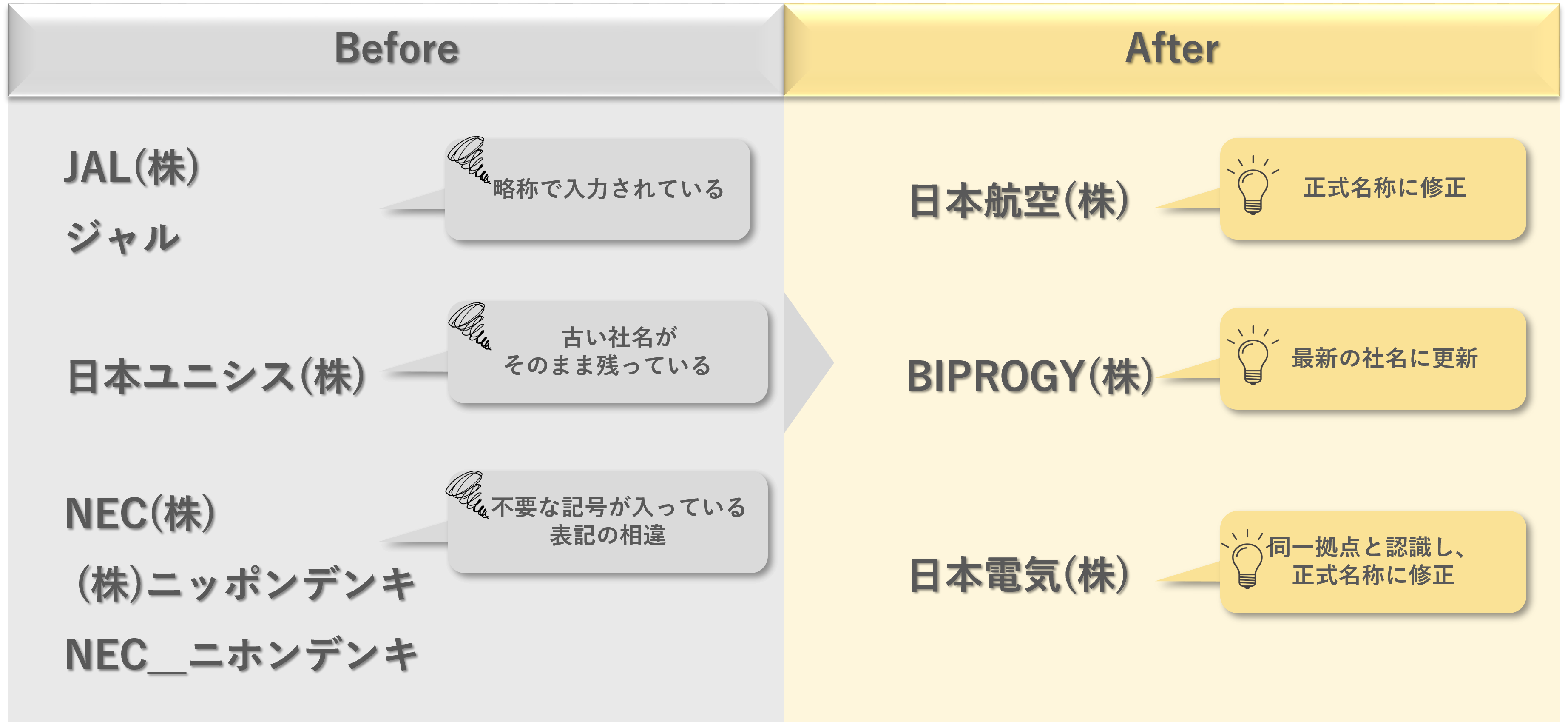
At this stage, you enrich the integrated data with corporate attribute information (e.g., industry, number of employees, annual revenue, etc.).
By adding this information, it becomes easier to understand the characteristics of your customer companies.
Once the enrichment of corporate attribute information is complete, perform segmentation. Segmentation is the process of classifying and grouping customer companies based on specific criteria.
This allows you to execute approaches tailored to each segment.
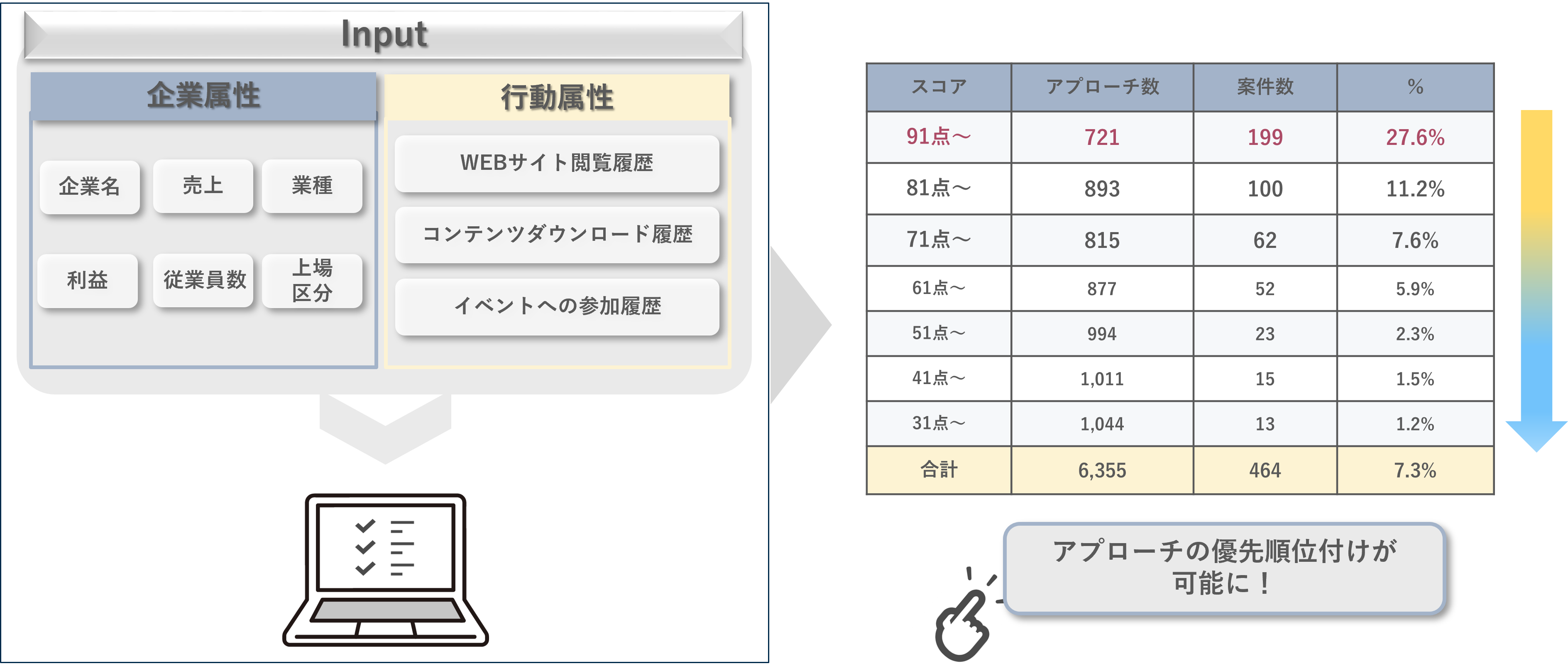
Next, establish a mechanism to quantify and score engagement (relationships) with customer companies.
For engagement scoring, utilize behavioral data such as website browsing history, content downloads, and event participation.
Companies with high engagement scores can be identified as having a strong interest in your products and services.
By leveraging these scores, you can identify priority target companies and execute effective ABM strategies.
Data integration is not a one-time process. Because customer company information is constantly changing, it is essential to continuously update and maintain your data.
Specifically, this involves performing regular data updates to incorporate new information. Periodic data cleansing is also indispensable for maintaining high data quality.
By continuously updating and maintaining your data, you can always utilize the latest and most accurate information. This allows you to maximize the effectiveness of your ABM initiatives.
A demand center is a core organizational function for practicing ABM by leveraging the results of data integration, serving as a centralized system for internal company information.
Its role is to provide the sales department with a stable stream of high-quality sales opportunities.
The primary functions of a demand center are as follows:
By establishing a demand center, you can centralize information on target companies, enabling a highly specialized approach.
In other words, by providing personalized messages and content tailored to the needs and challenges of target companies, you can achieve communication that is more likely to lead to business negotiations.
Developing a demand center also strengthens the collaboration between sales and marketing. By working closely together and sharing information regarding leads, both departments can provide a consistent customer experience.
To succeed in ABM, a personalized approach tailored to target companies is essential.
However, many companies face obstacles in implementing ABM due to issues such as data fragmentation, poor data quality, and a lack of alignment between sales and marketing.
To resolve these challenges, high-precision data integration is required. By organizing and consolidating scattered internal data, you can enable a specialized approach focused on specific accounts.
By establishing a demand center that leverages the results of data integration, you can strengthen sales and marketing alignment and provide a consistent customer experience.
uSonar provides a comprehensive guide titled "ABM Implementation: The Complete Guide," which systematically outlines the knowledge required to execute ABM.
If you are unsure about the specific methods for implementing ABM, please download the guide from the link below.
About the Author

uSonar Editorial Department
MX Group, Editor-in-Chief
We are the uSonar Editorial Department.
We provide information on data utilization and digital technologies useful for B2B companies to rethink their future business operations.
uSonar is utilized by a wide range of companies
across various industries and sectors.
ITreview Grid Award 2026 Summer
Leader in 6 Categories

With uSonar,
we will guide your company to solve its challenges!
Case Studies and Sample Reports
Download