- Customer Management & Analysis
[Understand in 5 Minutes] What Is Customer Data Management? Explaining the Basics of Customer Management Essential for Analysis and Utilization!

Last Updated: May 31, 2024
Click Here to Learn More About Customer Analysis ▶
Before You Begin Your Analysis,
Why Not Review Your "Dirty Data"?
Customer analysis is a vital methodology for building trust between a company and its customers, as well as for achieving differentiation from competitors. As economic conditions and market landscapes evolve, customer needs change daily. By conducting accurate customer analysis, companies can adapt to these changes and propose optimal approaches.
This article provides a detailed explanation of the importance of customer analysis, its fundamental components, and 16 specific frameworks.
We hope you find this information valuable and read it through to the end.
Table of Contents
2The Importance of Customer Analysis
2-1Improving Customer Satisfaction
2-2Developing Sales Strategies and Improving Business Processes
3Preparation for Customer Analysis
3-1Defining Target Customer Segments
3-2Analyzing the Purchasing Process
4-44. Behavioral Trend Analysis
5 Leveraging CRM/SFA for Customer Analysis
5-1 Data Preparation Perspectives Often Overlooked
6 Summary
Recommended Articles
[Understand in 5 Minutes] What Is Customer Data Management? Explaining the Basics of Customer Management Essential for Analysis and Utilization!

What Is the Difference Between Business Card Management and Customer Management? Introducing the Benefits of Integrating with CRM Tools
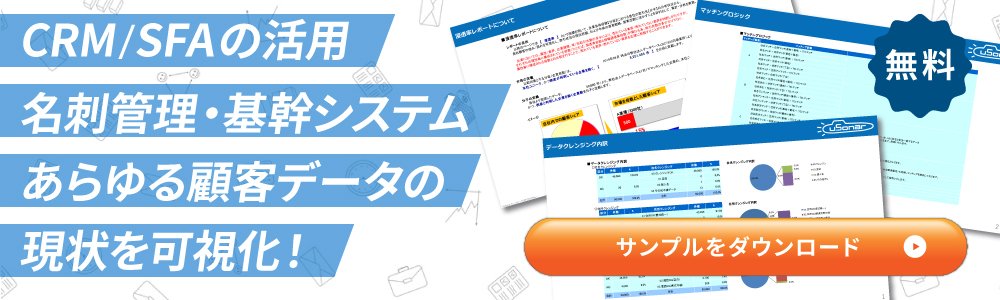
Customer analysis is the process of collecting and analyzing information to gain a detailed understanding of customer needs and behaviors. Through this process, companies can meet customer expectations, develop more effective marketing strategies, and enhance their competitive edge.
The purpose of customer analysis is to align the company with its customers. As economic conditions and global situations shift, customer needs change daily, leading to discrepancies between the company and its customers. By conducting proper customer analysis to bridge these gaps, companies can strengthen trust with their customers. Furthermore, by repeating this analysis, companies can differentiate themselves from competitors and advance their sales strategies.
There are two main reasons why customer analysis is considered important:
By repeatedly conducting customer analysis based on feedback, companies can improve their services and further increase customer satisfaction. Additionally, by organizing and utilizing data comprehensively, companies can resolve customer pain points proactively, building long-term relationships of trust.
Conducting customer analysis allows companies to determine whether current marketing initiatives are proceeding as planned. For example, you might find that despite spending on advertising, conversions actually originated from word-of-mouth, indicating that traffic is being generated by unintended actions. In such cases, you can reduce advertising costs, develop different strategies, or expand your options.
By analyzing information and repeating these improvements, companies can propose optimal approaches to their customers.
Furthermore, because progress toward target customers can be visualized, managers can provide appropriate advice to their team members, which is also effective for improving sales business processes.
When conducting customer analysis, it is necessary to understand the following two elements in advance.
One of the goals of customer analysis is to maintain and expand the base of high-value customers. To achieve this, it is necessary to select a target customer segment and engage with customers who can be utilized for future marketing initiatives. By enabling the selection of high-value customers over those who do not provide feedback, companies can allocate costs more appropriately.
Understanding the customer's purchasing process makes it possible to better comprehend target customers. Without an appropriate approach, you will not secure orders. As customer purchasing processes become increasingly complex, it is necessary to analyze where changes in customer sentiment occur and whether your approach is reaching the actual decision-makers.
By thoroughly analyzing the reasons why a deal was not closed, you can determine the optimal approach for your next target customers and successfully convert them into sales.

Below, we introduce 16 primary methods used for customer analysis.
Since the most suitable analysis method varies depending on the products or services you handle, it is important to select and utilize them effectively.
Decile analysis is a method that categorizes customers into ten equal groups based on their purchase history data, ranked by total purchase amount. The term "decile" is derived from the Latin word for "one-tenth."
By calculating the composition ratio of sales for each customer segment, you can identify which groups are your high-value customers contributing most to revenue, enabling effective sales promotion tailored to each segment.
RFM analysis is a method that classifies customers based on their purchasing behavior into three categories: Recency (the date of the most recent purchase), Frequency (purchase frequency), and Monetary (total purchase amount).
While this method requires more consideration than decile analysis because it identifies customers based on more than just purchase amount, it allows for more detailed analysis by accounting for the most recent purchase date and frequency.
It can also be used as a guideline for considering re-engagement strategies for customers who have high historical purchase amounts but whose purchase frequency has begun to decline.
Segmentation analysis is a method of grouping customers based on characteristics such as attributes and purchase history. By clearly grouping and analyzing data by gender, age, and location, companies can provide services that are differentiated from competitors.
Furthermore, by grouping customers based on psychological factors and behavioral characteristics, companies can develop and implement strategies tailored to specific segments.
Behavioral trend analysis involves grouping customer segments that intend to make purchases during specific seasons. By utilizing behavioral trend analysis to understand purchasing attitudes and motivations during these periods, companies can provide products and services that align with the needs of high-value customers.
Additionally, this analysis can uncover other potential customer needs, offering opportunities to resolve underlying issues.
Cohort analysis is a method of indexing the behavior of specific user groups, such as the "Millennial" or "Gen Z" generations, to analyze the retention rate of prospective customers. For example, by analyzing and grouping customers who have used distributed coupons, companies can redistribute coupons to those identified as having not used the service recently, thereby maintaining retention rates. Consequently, cohort analysis is an essential metric for building long-term customer relationships.
LTV analysis stands for Life Time Value analysis. It refers to the total profit a customer brings to a company over a specific period, starting from the beginning of the business relationship.
LTV can be calculated as: Average Customer Value × Profit Margin × Purchase Frequency × Customer Lifespan.
The importance of LTV analysis lies in the fact that business models focused solely on one-time sales result in sporadic profitability. Customer analysis is essential for cultivating brand loyalty, as allocating advertising costs to customers who do not continue their engagement is inefficient. In short, a higher LTV indicates a stronger relationship between sales and the customer, which translates into greater revenue generation.
CTB analysis is an acronym for Category, Taste, and Brand. While Decile analysis and RFM analysis focus on purchase amounts, CTB analysis allows for a deeper understanding of customer utility (attributes and types). It is frequently utilized in e-commerce and retail sectors.
By conducting CTB analysis and segmenting customers, it becomes possible to propose products and services that align with their specific utility (attributes and types). A key feature of CTB analysis is the ability to plan new product offerings or implement marketing initiatives before customer needs become explicitly apparent.
Pipeline analysis is a method of managing and analyzing the sales process that prospective customers follow, visualizing it as a pipeline. It features the ability to streamline sales activities by visualizing both qualitative information, such as sales representative actions and marketing initiatives, and quantitative data, such as elapsed time, volume, and response rates at each stage of the sales process.
While pipelines vary by company, the following are considered representative processes:
• Events, Exhibitions, and Seminars
• Inquiries and Material Downloads
• Follow-up by the Inside Sales Department
• Initial Meeting
• Demonstrations and Quotation Presentations
• Lead Nurturing
• Closing
• Customer Success
Sales pipelines are not simple, linear paths; it is essential to design an analysis that accounts for branches, pauses, and lost deals (reversals).
CPM Analysis stands for Customer Portfolio Management and is a method for analyzing existing customers based on three axes: Purchase Frequency, Purchase Amount, and Days Since Last Purchase. It is well-suited for identifying high-value customers from current transaction data. However, it is important to note that it cannot analyze customers with whom you have no prior transactions. Keep in mind that analyzing untapped markets requires separate analysis based on attribute information such as location and interests, in addition to transaction status.
Market Basket Analysis, sometimes referred to as basket analysis, is an analytical method used to identify correlations between purchased products. As the name suggests, it visualizes the correlation between products by analyzing items placed in a basket (shopping cart) simultaneously. The correlation is visualized by calculating the following four metrics.
• Support
Support = Number of customers who purchased Product ① and Product ② simultaneously ÷ Total number of customers
• Confidence
Confidence = Number of customers who purchased Product ① and Product ② simultaneously ÷ Number of customers who purchased Product ①
• Expected Confidence
Expected Confidence = Number of customers who purchased Product ② ÷ Total number of customers
• Lift
Lift = Confidence ÷ Expected Confidence
3C Analysis is a method for conducting an environmental analysis that includes your company and its customers by examining Customer (market), Company, and Competitor. In 3C Analysis, it is important to be conscious of gathering objective facts and primary information. Caution is required, as the validity of the information collected directly impacts the validity of your strategy.
For B2B companies, performing a 6C analysis—which combines the 3C analysis of your own company with the 3C analysis of your customer companies—allows for an accurate visualization of the environment surrounding your sales and marketing activities.
We comprehensively map and visualize the customer journey—the touchpoints a prospective customer has with your company from initial awareness through consideration to final purchase. By managing all touchpoints between your company and your customers, you can optimize marketing and sales initiatives across multiple departments.
This method organizes the environment surrounding your company into four aspects: Strengths (internal environment × advantages), Weaknesses (internal environment × disadvantages), Opportunities (external environment × advantages), and Threats (external environment × disadvantages). By shifting the perspective to your own company, you can visualize the status of the services your customers are receiving (and that your company is providing). By developing marketing initiatives and management strategies based on this organized information, you can optimize your business operations.
Persona analysis is a method used to develop product and marketing strategies by defining target customers as specific, fictional characters (personas) and conducting analysis from their perspective. This process includes steps such as collecting detailed customer data, creating personas, understanding their needs and goals, formulating product development and marketing strategies, and regularly updating these personas.
Collecting customer attribute information, behavioral data, and opinions or feedback in as much detail as possible is a crucial step that is often overlooked. This information serves as the foundation for establishing specific personas.
AIDMA represents the psychological process in customer purchasing behavior. Each letter represents the following phases:
A (Attention): First, the product or service must attract the consumer's attention. This involves making consumers aware of the existence of the product or service through advertising and promotion.
I (Interest): The consumer becomes interested in the product or service. This involves providing information such as features, benefits, and usage methods to stimulate the consumer's interest.
D (Desire): The consumer desires the product or service. As interest deepens, the consumer begins to feel a desire to obtain the product or service.
M (Memory): The consumer retains the product or service in their memory. It is important for the consumer to remember the product or service before deciding whether to purchase it, as well as after the purchase.
A (Action): The consumer finally takes action to purchase the product or service. After passing through the previous phases, the consumer transitions to specific purchasing behavior.
By applying an appropriate approach for each phase, you can effectively promote consumer purchasing behavior.
This is an analytical method used to identify similarities and relationships within data, grouping data with common characteristics into clusters. In marketing, it is utilized for customer segmentation and the development of targeted marketing strategies.
Representative methods for creating clusters (clustering techniques) include K-means clustering and hierarchical clustering.
To conduct customer analysis, increase sales, and improve market awareness, building an appropriate data foundation is essential. Utilizing tools such as SFA and CRM is recommended for data accumulation and integration.
Reference Articles:
What Is CRM? Benefits, Implementation Steps, and How to Choose a CRM Tool▶
What Is SFA (Sales Force Automation)? Explaining Basic Functions, Implementation Methods, and Keys to Adoption!▶
However, simply introducing these tools cannot resolve "data issues" such as input errors or duplicate registrations. Furthermore, enforcing common rules among employees responsible for data entry is often impractical.
To succeed in customer analysis, it is essential to have a perspective that includes both maintaining existing data and creating a system that optimizes data entry. This perspective is often overlooked, or even if noticed, frequently ignored by many.
The reason for this is simply that many people do not know where to start.
With the customer data integration solution uSonar, we support the resolution of "data issues" through one of Japan's largest corporate databases, accumulated since the 1990s, and our expertise in data maintenance. By integrating with CRM/SFA, you can also improve the efficiency of your sales activities.
Before you begin your analysis, why not review your internal data from the perspective of data maintenance?
☆-☆-☆ Internal Link Button Start ☆-☆-☆ ☆-☆-☆ Internal Link Button End ☆-☆-☆ ☆-☆-☆ Body Text End ☆-☆-☆Customer analysis is one of the essential elements for corporate growth and improving customer satisfaction. By clarifying target customer segments and understanding the purchasing process, and by utilizing various analytical methods, you can develop optimal sales and marketing strategies. Furthermore, by building data foundations using CRM and SFA tools, more accurate analysis becomes possible. Let us actively incorporate customer analysis as the first step toward providing greater added value to your customers.
About the Author

uSonar Editorial Department
MX Group, Editor-in-Chief
This is the uSonar Editorial Department.
We provide information on data utilization and digital technologies useful for rethinking future business operations, primarily for companies engaged in B2B business.
uSonar is utilized by various companies
across all industries and sectors.
ITreview Grid Award 2026 Summer
Leader in 6 Categories

With uSonar,
we can guide your company toward solving its challenges!
Case Studies and Sample Reports
Download