Generated at: 2026-09-01 06:07:52

kintone × AI Utilization, Data Cleansing, and Risk Information

Major Food Wholesaler Kuze Achieves Successful Sales DX and Customer Data Strategy on Their Third Attempt

Successful Business Model Transformation Through Integration of kintone and uSonar

Kuze Co., Ltd.

Wholesale of Commercial Food Products and Private Brand Product Development

INTERVIEWEE

  • Shin Sawada, DX Promotion Manager, Corporate Strategy Promotion Office

Kuze Co., Ltd. supports the food service industry, primarily through the wholesale of commercial food products. To advance their sales activities and centralize customer information, the company utilizes kintone as their SFA. By integrating the uSonar corporate database, LBC, they are advancing data cleansing for client information, grasping information at the corporate group level, and utilizing business card and credit information. However, the path to this point was far from easy. The challenges faced during two previous SFA implementations and a strong belief that "the system must be valued by the frontline staff" supported their third SFA implementation and its successful adoption. We spoke with Shin Sawada, who is involved in promoting sales DX.

  • Challenges Before Implementation

    • The food service industry is subject to rapid changes, making it difficult to grasp and continuously update information on clients at the corporate group and branch levels, which resulted in significant time and effort spent on sales aggregation and organizing meeting information.
    • Information was siloed by individual sales representatives, making it difficult to share project statuses and customer touchpoints across the organization.
    • Previous SFA implementations failed to gain traction among staff due to the difficulty of data cleansing and maintenance.
  • Key Reasons for Adoption

    • Successfully achieved data cleansing for corporations and business locations by utilizing uSonar's LBC as a common key.
    • Capable of organizing approximately 50,000 client records in the evolving food service industry by company, group, and location.
    • Enables integration with corporate and business card information directly within the screens used daily by sales teams in kintone, which serves as the SFA.
  • Results Achieved

    • The use of kintone has expanded from the sales department to the product, customer, and logistics departments.
    • Improved understanding of corporate groups and locations, facilitating analysis from both sales strategy and logistics perspectives.
    • Accurate data management serves as the foundation for generating project reports via kintone AI, reducing the operational burden of preparing meeting materials.
    • Internal communication has increased, shifting the organizational culture toward collaborative sales.

Challenges Before Implementation

Managing 50,000 client records and two failed SFA implementations: The "Third Time's the Charm" challenge.

First, could you please tell us about your role and background, Mr. Sawada?

Sawada

I am responsible for driving and leading DX and AX initiatives. I have gained hands-on experience across various departments, including Sales, Logistics, Product Development, and Customer Support. From this, I strongly believe that internal DX will not take root unless it is approached from the perspective of the frontline. Our company has attempted to implement SFA twice in the past, but it failed because it did not resonate with the staff. Now that I am in a leadership position, I have given significant thought to how we can ensure the sales team actually uses the system.

What were the specific difficulties you faced with the previous SFA implementations?

Sawada

Although we brought in consultants for those implementations, the staff found it difficult to feel that the system was aligned with their daily tasks, and it never became a tool that sales representatives used consistently. Our company culture is defined by "delivering excitement through food," so for this third attempt, we chose kintone, which allows the team to build their own apps, solve problems collaboratively, and maintain a sense of excitement.

Interview Scene 2.jpg

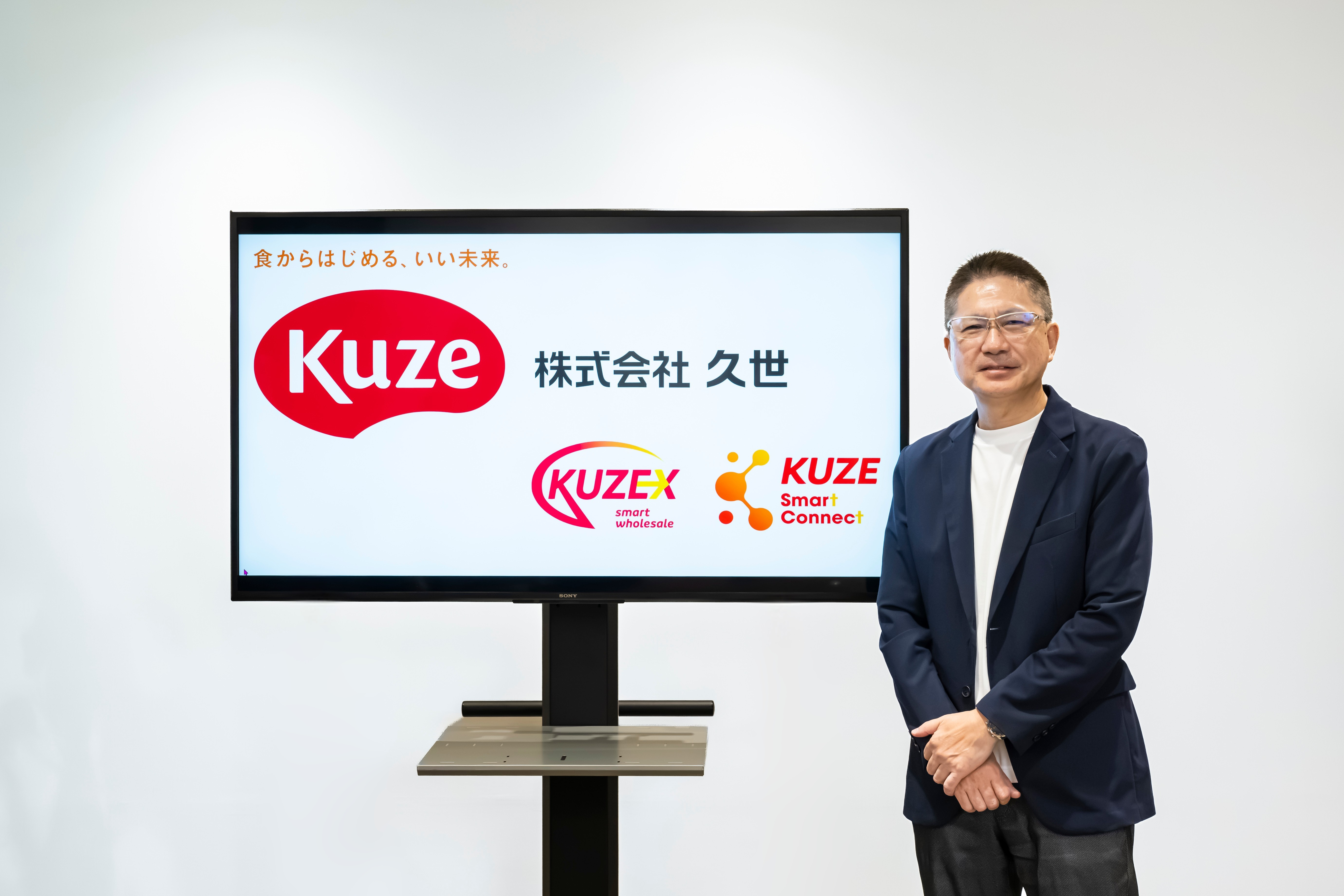
Mr. Makoto Sawada, DX Promotion Manager, Management Strategy Promotion Office, Kuze Co., Ltd.


What challenges did you face regarding customer information management before implementing uSonar?

Sawada

The biggest issue was that we were unable to consolidate client information. At the time, our customer database had ballooned to 100,000 records. The food service industry is characterized by frequent store turnover, changes in business models, group company mergers, and relocations. A significant amount of information changes within a single month. We were unable to keep up with these updates, and registering new clients was also a challenge.
For example, hotels are important clients for us, but even if there is only one delivery location, there may be multiple business entities such as banquet halls, restaurants, and cafes, which complicates invoice management. Since sales representatives register new clients and enter meeting information every time they make a new contact, in many cases, it appeared as though there were 20 different clients when in reality there was only one, and we found that 40% of the data was duplicated overall.
In the logistics department, because the address data for delivery destinations was a mix of full-width and half-width characters, we were unable to display them correctly even after implementing mapping software, which caused significant issues.
Consequently, it became extremely time-consuming to grasp data directly linked to sales strategies, such as total sales per group company—not just for hotels—and identifying white space opportunities.

Did you consider maintaining your own customer company codes?

Sawada

Of course, we considered it. We thought about creating our own proprietary codes and linking them to our clients. However, maintaining them on an ongoing basis was extremely difficult. As mentioned earlier, changes in the food service industry, such as mergers, acquisitions, and business model shifts, happen rapidly, so it would have required constant manual updates.
If we wanted to ensure the adoption of SFA, we first had to solve this data consolidation problem. Otherwise, even if we entered meeting information, we could not utilize it at the company or group level. That had been a major concern for a long time.

Does this mean there were data-related issues during your two previous SFA implementations?

Sawada

Yes. I believe this time, it was the third time's the charm, as we succeeded by having both Kintone as our SFA and information consolidation provided by uSonar.

Deciding Factors for Implementation

Shift from In-House Maintenance to Integration with External LBC Data. A Paradigm Shift Leading to Rapid Implementation

What was the catalyst for considering uSonar?

Sawada

It started when a team member suggested, "Could we achieve this by linking it with uSonar's corporate information?" I recall receiving a proposal in the past, and that comment immediately caught my attention. We promptly arranged a meeting and learned about the concept of the LBC corporate code. "Instead of continuously organizing our own corporate master data, we can simply link it to an already maintained external corporate database." This was a major paradigm shift for us.

Interview Scene 3.jpg

Mr. Makoto Sawada, DX Promotion Manager, Corporate Strategy Promotion Office, Kuze Co., Ltd.


It seems the decision to implement it followed quickly.

Sawada

I believe it was quite fast. We heard the specific details around November 2024 and achieved rapid implementation by April 2025. It simply means that we saw a clear path to solving the issues our company had been struggling with. It felt as if a light had shone into the darkness where we had been struggling for so long. We immediately began the data cleansing process, and we are currently operating with approximately 50,000 verified client records.

Did you also organize your business card information during the implementation?

Sawada

Yes. We were able to link and organize approximately 40,000 business cards with LBC. Business card information is a critical customer touchpoint for the entire company. By integrating corporate data with business card information and organizing it, I believe we have established a solid foundation for managing customer information as a company.

How would you evaluate the integration with kintone?

Sawada

Since we use kintone as our SFA, we have configured it so that users can view uSonar's corporate data, contact information, affiliated companies, and branch information directly on the deal entry screen. Not only when sales representatives input data, but also when others view the deal, they can see the full picture of the customer, such as the company's contacts, related companies, and group information. It has become a highly user-friendly interface for the sales team. We can also customize it by reflecting feedback from the field, such as switching input fields based on whether the user is in field sales or office-based roles. This flexibility is a major factor in ensuring adoption in the field.

Results Achieved

From the Sales Department to the Entire Company: kintone Adoption Expands, Making Customer Information a Shared Organizational Asset

How has the use of kintone and uSonar expanded within the company?

Sawada

Originally, kintone was used primarily by the Customer Department with about 20 users, as it was easier to achieve operational efficiency gains there. After introducing it to the Sales Department, usage expanded rapidly. It started with about 80 accounts, including sales administration, and later increased by another 100. Currently, it is used by approximately 220 people, including the Product, Customer, and Logistics departments. We realized that once the SFA is successfully utilized by the Sales Department, it naturally spreads to surrounding departments. This can be attributed to the fact that customer data was accurately organized through the integration with uSonar.

How are you utilizing the contents of the uSonar corporate database?

Sawada

In the sales department, we monitor not only project information but also corporate data, business card information, and credit data (such as credit scores and risk flags). For instance, staff responsible for tracking payment and deposit statuses check credit-related information on a daily basis.
Furthermore, business card information is utilized not only by the sales team but also by the logistics and product departments. Being able to see who has established contact with which client leads to a better understanding of our customers across the entire company.

株式会社久世 ユーソナー導入活用ケース データ連携イメージ図

Kuze Chart 1.PNG


I understand that address information is also being utilized.

Sawada

Address information has been extremely helpful. Since data such as prefectures, cities, towns, and street addresses are managed separately, it is easy to use for logistics and location-based analysis. The mapping issues we were struggling with have been resolved, and we can now accurately see how many of our customers are in the same building or delivery location, and which locations are generating sales. For companies involved in the food service and logistics industries, having properly organized address information is of immense significance.
It can be used not only as sales intelligence but also for logistics and location strategy. This is one of the benefits I have truly realized since implementing uSonar.

kintone AI Summarizes Projects. Everything from Creating Meeting Materials to Management Approaches Has Changed

Please tell us about your use of kintone AI as well.

Sawada

By selecting a department or sales office and clicking a button, a current status report is generated instantly based on project information. Large-scale projects, high-probability negotiations, and projects requiring attention due to low credit scores are automatically extracted.
For example, if a project has a low credit score but a high transaction value, the system provides suggestions such as, "A supervisor should accompany the visit due to collection risks." It is precisely because uSonar's corporate and credit information is accurately integrated with our project data that we can utilize it for such AI-driven analysis.

It seems this would also be effective for creating meeting materials.

Sawada

It has been highly effective. Previously, managers and team members had to create materials for meetings. Now, they can review reports generated by AI. Since pressing a button to generate reports every time is cumbersome, the administrative office schedules them by day of the week and prepares reports for each sales office in advance. As a result, the time spent preparing for meetings has been significantly reduced. The volume of materials created by team members has also decreased. Previously, there were many instances where supervisors had to tell their subordinates to report properly, but now that members are accurately entering data into kintone, supervisors are sometimes even pointed out by their members if they haven't reviewed it (laughs).

Kuze Co., Ltd. uSonar Implementation Case: Data Integration Diagram

Kuze Chart 2.PNG


As project information accumulates, the scope of analysis is likely to expand as well.

Sawada

It is also possible to analyze sales trends by aggregating multiple weeks of project reports. This allows us to look at trends across periods rather than just focusing on a single week. While there is still significant room to leverage AI-driven summarization and analysis, I feel it has the potential to transform the quality of our sales meetings and management.

Future Outlook

Implementation and Construction Project Completed Almost Entirely by One Person. Attentive After-Sales Support Also Highly Rated

Changes in Organizational Culture: From an Individual-Centric Model to a Collaborative Sales Organization Focused on Projects

Sawada

Has the use of SFA and data utilization brought about positive changes to the organization?
Mr. Sawada: The most significant change is that we can now discuss the specifics of our operations. Previously, sales representatives operated like independent sole proprietors. While supervisors and senior staff could ask, "How is it going?", the specific details of which projects were causing difficulties remained siloed and opaque.
Now, project and customer information is centralized and visualized in kintone, allowing colleagues to engage in informed discussions. It has become easier to provide advice, such as "This customer had this history" or "It would be better to proceed with this project in this way." This aligns with the "Teamwork" philosophy of Cybozu, the operator of kintone, which is why we chose kintone as it fits our corporate culture.

Interview Scene 1.jpg

Mr. Makoto Sawada, DX Promotion Manager, Management Strategy Promotion Office, Kuze Co., Ltd.


So, communication in the field has changed.

Sawada

When I listen to conversations between employees in break areas, it is clearly different from before. Instead of mere small talk, there is an increase in conversations based on the substance of our projects. Because we can see where someone has failed or is struggling, supervisors and senior staff can provide support. I believe this reduces the likelihood of individuals struggling and bearing burdens alone.
In the past, every company operated with a style where results were achieved through long working hours, but now we must achieve results within a set timeframe. To do that, we must properly equip our employees with the right tools.
SFA, corporate data, and AI-driven reports are among those tools. Having a system to understand customers, share project information, and collaborate with others makes it easier to achieve results. This is a perspective we learned from uSonar, and it is a point I strongly resonate with.
Since this has led to work-style reform, we have even had employees return to us after changing jobs, and fortunately, we seem to be attracting attention from both inside and outside the industry. We have also obtained DX certification from the Ministry of Economy, Trade and Industry, for which we highlighted our use of kintone and uSonar.

How do you intend to utilize uSonar and kintone in the future?

Sawada

In June 2026, our company announced the second phase of our medium-term management plan. This plan covers the period from the fiscal year ending March 2027 to the fiscal year ending March 2029, with the theme of "Business Model Transformation." Within this, we have set goals for "Operational Transformation," "Transition from DX to AX," and "Support for Next-Generation Talent and Women's Empowerment." The SFA and data utilization initiatives I am involved in are part of this context.
I do not believe that simply replacing paper or Excel with digital tools constitutes true DX. What is important is using data to change how we conduct business and make decisions. Furthermore, we have identified areas where we have successfully transformed our business model, as well as the challenges that lie ahead.

You are linking kintone utilization with uSonar corporate information, and further using AI to summarize projects and extract key points to watch. Thank you for your valuable insights. We will continue to support your efforts to transform your sales operations and organization.

*Our service and feature names are current as of the time of the interview.

Article Publication Date: August 24, 2026

Consult with uSonar

You may stop receiving information regarding services and events at any time. For our policies, please review our Privacy Statement.

Other Case Studies

For Urgent Inquiries, Please Call Us03-5388-7000Business Hours: 10:00 AM – 5:00 PM (Closed on Weekends and Holidays)

The Definitive Solution for Sales DX Through Data Utilization

Service Brochure

uSonar in 5 Minutes

Understand uSonar in 5 Minutes

Download Brochure