






- Data Utilization
Data Utilization in Business: What Are the Essential Processes and Challenges to Solve?

Use Cases by Objective
New Approach Lists
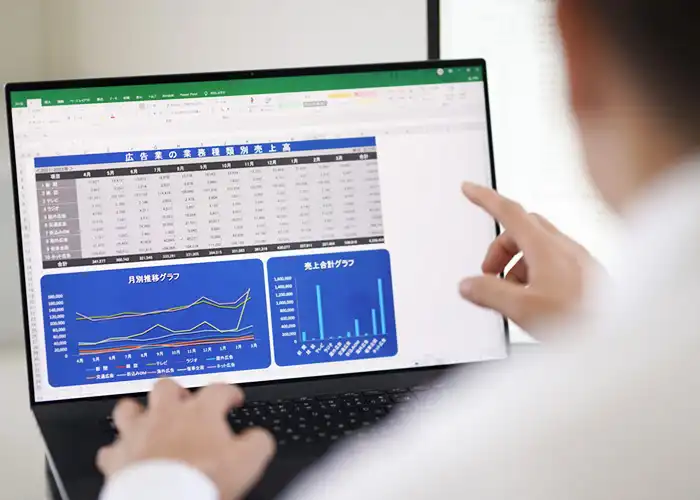
Group Strategy

Digital
Marketing

Client Information Registration

Data Cleansing
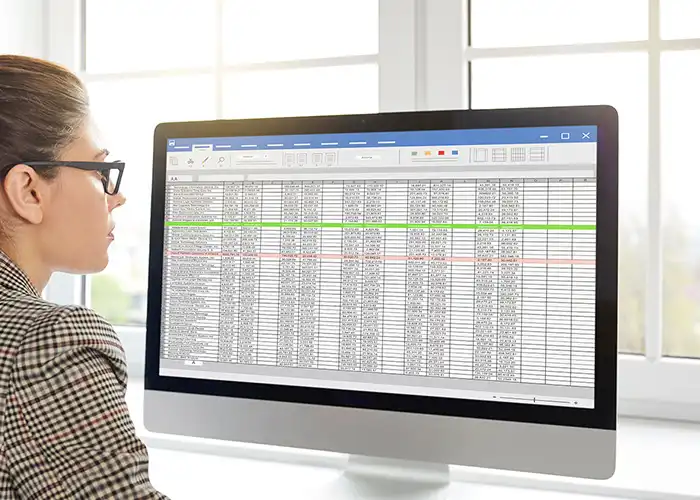
Corporate Attribute Analysis

SFA/MA Activation

Business Card Data Integration

Credit and Client Screening

Use Cases by Department
Sales Department

Inside Sales
Department

Marketing &
Corporate Planning Department

IT Department

Administrative Department

Use Cases by Tool
Meeting Sonar
Updated: April 22, 2024

The value of data-driven initiatives varies by organization. Sales organizations can improve sales efficiency, marketing organizations can optimize strategy development, customer support organizations can enhance the customer experience, and product development organizations can increase their competitive edge. By leveraging data, companies can achieve advanced targeting and personalization, effective lead generation, the acquisition of market intelligence, and more impactful forecasting and decision-making.
Let this article be the first step toward improving efficiency and strengthening competitiveness through data-driven initiatives.
Recommended Articles
B2B initiatives vary depending on the organization executing them. While the following are just examples, the objectives of these initiatives and the significance of utilizing data change based on the organization.
By utilizing customer data and purchase history to forecast LTV, organizations can identify cross-selling and up-selling opportunities. This streamlines and improves sales processes and approaches, thereby maximizing revenue. Depending on the industry, predictive analytics can also be used to visualize needs and monitor inventory levels, which enhances productivity and profitability.
By understanding target market segmentation and customer journeys, organizations can define the target audience for lead generation. This allows for the development of personalized marketing strategies tailored to customer needs. By also incorporating existing customer data and purchase history, organizations can create effective messaging and offers for specific targets, thereby improving the cost-effectiveness of selling, general, and administrative expenses.
By predicting customer behavior patterns and trends and deploying initiatives to enhance experience value, organizations can optimize products and services to meet individual customer requirements and pain points. Realizing rapid problem resolution based on personalized communication can increase CSAT (Customer Satisfaction) and NPS (Net Promoter Score).
By analyzing the competitive landscape and trends of the company's products and services in the market, organizations can identify points of differentiation from competitors. Collecting customer voices and feedback as data and reflecting them in product and service improvements allows for the provision of offerings focused on customers who can build better relationships with the company, thereby strengthening market competitiveness.
By sharing data-based decision-making within the company and deploying initiatives accordingly, it becomes possible to achieve higher business results more quickly.
The initiatives mentioned above were conducted even in eras when data utilization was not relatively prioritized; however, it is said that the addition of data has streamlined these processes and accelerated corporate growth. Below, we explain the points where efficiency has improved.
By utilizing news information and market research reports on industries with a large number of potential customers, organizations can identify target segments. For example, they may launch campaigns focused on specific industries or regions and propose solutions tailored to those needs.
Regarding existing customers, by acquiring information that cannot be collected by the company alone (such as personnel changes and recent developments for each company) and understanding customer needs and behavior patterns, organizations can provide personalized messages and offers, thereby improving customer engagement and response rates.
The lead generation process is considered one of the areas where optimization has progressed the most through data utilization. By analyzing data such as existing customer attribute information, interests, and purchase history, organizations can understand the needs and interests of potential customers and incorporate compelling messages into advertisements and outbound sales activities.
In particular, it is said that marketing departments can now identify conditions that make it easier to convert customers by industry, list the corresponding companies, and implement initiatives, thereby providing high-quality leads with higher affinity to the sales department and supporting efficient sales activities.
By utilizing data that can be acquired online, in particular, organizations can gain insights into overall market trends and the competitive landscape. By collecting and analyzing information such as trends in target industries, features of competing products, pricing, and marketing strategies, organizations can clarify the positioning they should take and their points of differentiation. This allows for the optimization of company messaging according to customer and competitor situations, thereby increasing market competitiveness.
Data is not just for collection; it can be used to forecast future trends and demand through analysis. In particular, by utilizing machine learning to build models for predicting customer behavior and demand, organizations can optimize product management and improvement, enabling the deployment of sales strategies and marketing initiatives aligned with demand.
Data-driven initiatives bring many benefits, including improved efficiency, increased profitability, and strengthened competitiveness. To leverage these benefits, it is important to collect appropriate data, interpret it using various analytical methods and tools, and apply it to decision-making.
Based on the value of data, we will introduce several specific examples of measures that can maximize effectiveness by leveraging data.
Common to all businesses is the importance of focusing first on optimizing your own website.
The website is the center of a company's online presence and serves as a channel checked by many prospective customers who interact with sales and marketing organizations.
It is no exaggeration to say that effective utilization of the website and optimization through data analysis have become essential elements for business success.
Specifically, this includes building SEO strategies, improving usability, optimizing page load speeds, and conducting A/B testing.
Social media is an optimal tool for direct communication with customers and is utilized by many B2B companies as an effective method for deploying measures. By using corporate accounts to disseminate information on social media and placing advertisements as necessary, you can accumulate more VoC (Voice of Customer) and gain customer insights.
An omnichannel strategy involves realizing seamless coordination between channels, based on the premise that customers use multiple channels to interact with a company. To realize an omnichannel strategy, the utilization of APIs and the introduction of microservices are important. These technologies can be used to share data and automate processes.
☆-☆-☆ Body End ☆-☆-☆By deepening your understanding of various customers, such as site visitors and seminar participants, you can identify current problems and challenges, determine the content your company should disseminate, and formulate methods for improvement. To achieve this, it is said that collecting and analyzing data to grasp customer characteristics and behavioral trends and designing response priorities is important; however, forming a corporate culture and business processes that allow for flexible changes to business strategy is said to be the most important factor in leveraging data.
We support data utilization for many clients with successful B2B business experiences and provide white papers that summarize business success factors across various industries and sectors. If you are interested, please feel free to contact us, and we will introduce case studies that we believe are close to your company's industry and situation from this page.
About the Author

uSonar Editorial Department
MX Group, Editor-in-Chief
This is the uSonar Editorial Department.
We primarily disseminate information regarding data utilization and digital technology that is useful for companies engaged in B2B business to consider the future of their operations.
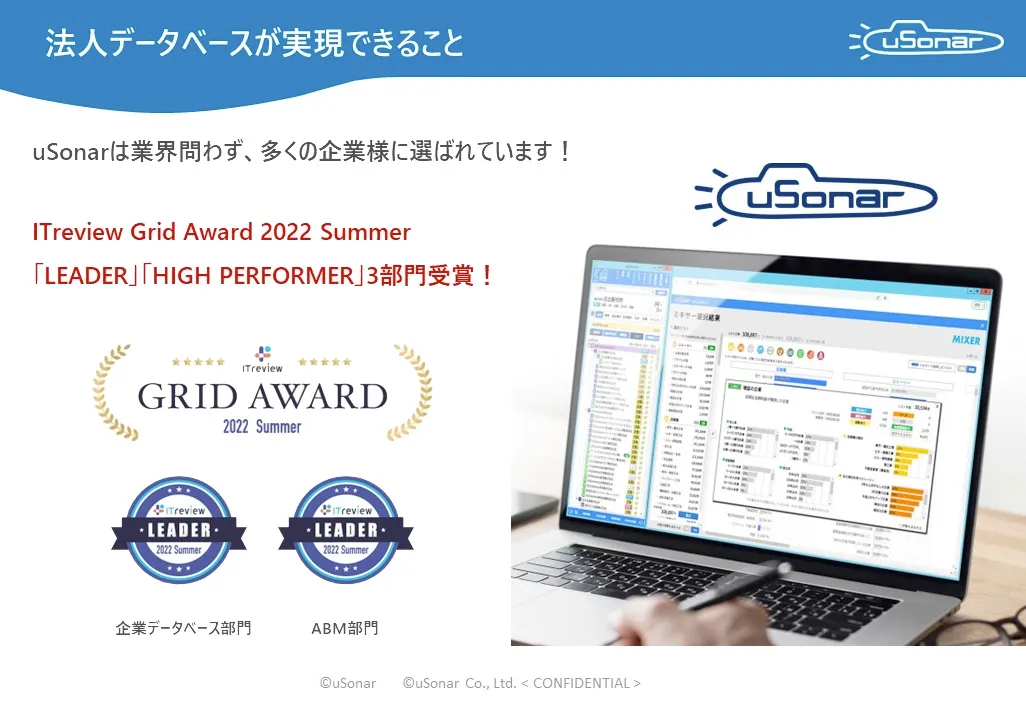
uSonar is utilized by various companies
across all industries and sectors.
ITreview Grid Award 2026 Summer
Leader in 6 Categories

With uSonar,
we can help solve your company's challenges!
Case Studies and Sample Reports
Available for Download