





- CRM/SFA/MA
What Is CRM? Benefits, Implementation Steps, and How to Choose a CRM Tool
Use Cases by Objective
New Approach List

Group Strategy

Digital
Marketing

Client Information Registration

Data Cleansing

Corporate Attribute Analysis

SFA/MA Activation

Business Card Data Integration

Credit & Client Screening

Use Cases by Department
Sales Department

Inside Sales
Department

Marketing &
Corporate Planning Department

Information Systems Department

Management Department

Use Cases by Tool
Meeting Sonar
Last Updated: April 22, 2024
Click Here to Learn More About SFA/CRM ▶
Gain Insights into Customer Trends
Through Customer Data "Diagnostics"
In today's business environment, where customer needs are becoming increasingly diverse and complex, providing high-quality services requires a precise understanding of individual customer needs and the implementation of optimal engagement strategies. This is where CRM marketing becomes essential.
CRM marketing involves managing and analyzing customer information using a CRM (Customer Relationship Management) tool to provide products and services tailored to individual needs. This approach fosters strong customer relationships, enhances customer satisfaction and LTV (Lifetime Value), and ultimately drives profit growth.
This article provides an overview of CRM marketing, its importance, its benefits, and fundamental strategies.
Table of Contents
1-1Key Elements of CRM Marketing
1-2Differences Between CRM and SFA
2The Background Behind the Growing Importance of CRM Marketing
2-1Diversification of Customer Needs
2-2Reduction of In-Person Sales Due to COVID-19
3-1Improve Customer Satisfaction
3-2Deploy Optimal Strategies for Existing Customers
3-3Expect Improved Operational Efficiency
4Basic CRM Marketing Strategies
Recommended Articles
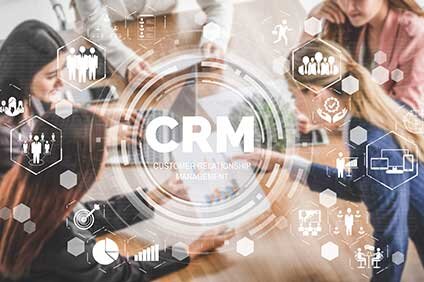
CRM (Customer Relationship Management) is a system or tool used to collect and manage customer information, as well as to implement strategies for building and maintaining positive relationships with each individual customer.
Previously, when referring to the systems or tools themselves, terms like "CRM system" or "CRM tool" were used, but today they are often simply referred to as "CRM."
CRM marketing refers to the practice of leveraging this CRM to advance efficient marketing efforts.
In traditional marketing that does not utilize CRM, while companies could deliver information to customers via advertisements or direct mail, it was difficult for customer feedback to reach the company, limiting the ability to truly cater to customer needs.
Furthermore, even if there was vast customer data available for marketing, human analysis alone had limitations, leading to suboptimal strategies and missed business opportunities.
However, CRM enables real-time analysis of vast and diverse customer data, allowing for marketing that aligns with the needs and values of each customer, which in turn facilitates the provision of better products and services. Additionally, because CRM can digitize results and effectiveness after implementation, it allows for efficient improvements while reducing operational costs.
The key elements in CRM marketing are the accumulation and analysis of customer information through CRM.
When customers are individual consumers, CRM allows for the centralized management of all customer information, including basic details such as name, age, gender, address, and contact information, as well as purchased products, spending amounts, usage periods, responses to advertisements or campaigns, and inquiry history with customer support.
Furthermore, when customers are companies rather than individual consumers, CRM can centrally manage and share in real-time with various departments a wealth of information, including company name, address, representative name, capital, number of employees, business description, as well as sales contact persons, negotiation amounts, number of contracts, cost of goods sold, contract amounts, contract dates, and contract managers.
In CRM marketing, this information is accumulated and analyzed according to objectives to formulate marketing measures and sales strategies. By executing these measures and periodically verifying and improving their effectiveness, companies can enhance their overall performance.
Often discussed alongside CRM is "SFA." SFA stands for "Sales Force Automation," which refers to tools and methods specialized in supporting sales activities. Its main functions include customer information management, centralized management of sales status, management of sales representative activities, and sales management/forecasting. Its primary purpose is to streamline sales activities, with customer information management serving as one of the functions to achieve that goal.
"MA (Marketing Automation)" is also related in the sense that it collects and manages customer information, but MA focuses on managing information about potential leads and aims to increase the number of prospective customers.

The reasons why CRM marketing is emphasized include the shrinking market due to a declining birthrate and aging population, which makes acquiring new customers more difficult year by year, thereby increasing the importance of securing repeat customers. Furthermore, CRM marketing is gaining attention due to the recent "diversification of customer needs" and the "impact of COVID-19."
With the spread of the internet and smartphones, customers have more opportunities to obtain information, leading to highly diversified and complex customer behaviors and needs. To be chosen by customers in a competitive market, it is necessary to approach each individual accurately. For this, CRM marketing, which captures the unique needs of each customer, is indispensable.
In B2B specifically, the approval process is complex because many people are involved in decision-making, and it takes time until a purchase or contract is finalized. Therefore, to build good long-term relationships with customers and respond accurately and timely to their detailed requests and needs, marketing that effectively incorporates CRM is required.
Companies that previously relied heavily on face-to-face sales were forced to strengthen their online approaches, inside sales, and digital marketing due to the spread of COVID-19. Customer data accumulated in CRM tools can be acquired not only through face-to-face interactions but also through these digital approaches.
Therefore, by combining CRM tools with digital marketing, companies can continue to analyze customers and flexibly maintain and build customer relationships in line with changing situations, even when face-to-face communication is restricted. These features of CRM tools are attracting attention, and the number of companies engaging in CRM marketing is increasing.
The benefits of CRM marketing include the ability to "improve customer satisfaction," "provide optimal measures for existing customers," and "streamline business operations."
In CRM marketing, customer needs can be visualized by analyzing customer data. If a company can grasp what customers are looking for in its products and services, it can reflect that information in new product development and various measures, thereby efficiently improving customer satisfaction. Improving customer satisfaction can also lead to higher LTV (Life Time Value) and repeat business.
By accumulating a wide variety of data on existing customers through CRM, it becomes easier to follow up and approach customers in sales activities and customer service. For example, by grasping and sharing each customer's interests and relevant news, sales and marketing representatives can deploy individually optimized approaches.
Also, because CRM marketing allows constant access to and analysis of customer information, it is easy to implement timely and optimal measures.
Introducing CRM can automate data analysis, which is expected to streamline operations. In particular, by introducing a cloud-based CRM, work can be performed on mobile devices such as smartphones and tablets, allowing for the review of customer data while traveling to a business meeting.
Furthermore, by centrally managing customer data with CRM, necessary customer information can be easily accessed and shared with other departments. This reduces the waste of searching through various systems and files to find the information needed.
As basic measures for building and maintaining relationships with customers in CRM marketing, the following initiatives can be mentioned.
To nurture acquired leads into actual customers, hosting events such as seminars and workshops is effective. In B2B, it takes time until a purchase or contract is made. To maintain a good relationship until then, set event content according to the consideration stage and needs of the leads. Customers who take the time to participate in a seminar can be judged to have a certain level of interest in the theme, making it easier to promote the company's products and services. Recently, seminars can also be held online, which reduces costs and effort while allowing for follow-ups with customers nationwide, leading to improved customer satisfaction.
Sending bundled items or direct mail (DM) to customers with high purchasing intent is also one of the CRM measures. By extracting customers with high purchasing intent based on seminar survey data or purchase history and sending them bundled items or DM to promote company products, it is possible to efficiently lead to sales. In particular, by including flyers or samples with purchased products, there is the advantage that they are more likely to be seen compared to emails.
CRM marketing is a marketing method that utilizes CRM to help centrally manage and analyze customer information and build and maintain positive relationships with customers. Incorporating CRM marketing into a company allows for responding to diversified consumer needs and enables optimal marketing activities for each individual customer, which is expected to lead to improvements in customer satisfaction and LTV, operational efficiency, and the retention of existing customers.
If your company is facing challenges with customer acquisition strategies, why not consider incorporating CRM marketing?
About the Author

uSonar Editorial Department
MX Group, Editor-in-Chief
We are the uSonar Editorial Department.
We provide information on data utilization and digital technologies useful for companies primarily engaged in B2B business to consider the future of their operations.
uSonar is utilized by various companies
across all industries and sectors.
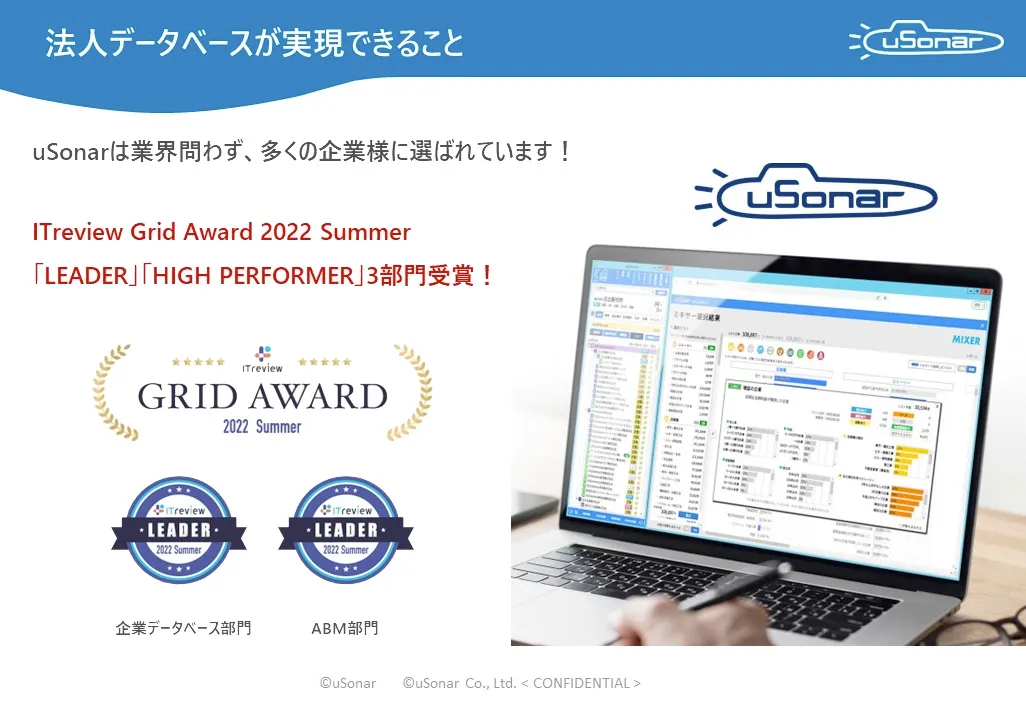
ITreview Grid Award 2026 Summer
Leader in 6 Categories

uSonar Can Help Solve
Your Business Challenges!
Case Studies and Sample Reports
Available for Download