- Data Matching and Data Cleansing
[2026 Latest Edition] What Is the Best Way to Perform Data Cleansing? Methods, Procedures, and Key Considerations Explained
Update Date: March 15, 2024
Scientific Sales Management
Learn About uSonar in 5 Minutes
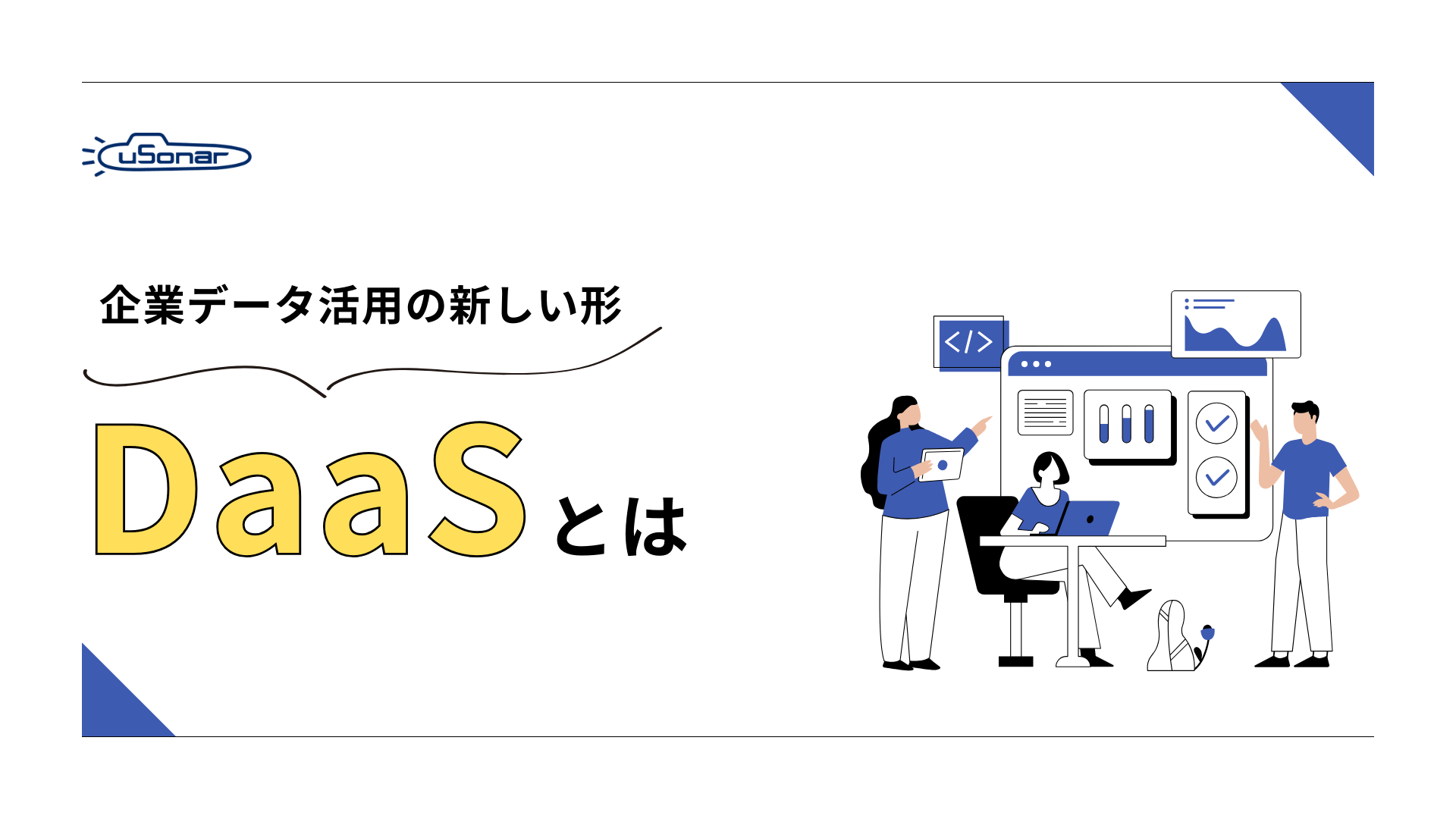
In recent years, DaaS (Data as a Service) has emerged as the latest form of data distribution. Instead of directly owning data, companies can access and utilize only the specific data they need from external providers.
DaaS is highly flexible and enables the acquisition of relevant data in real time, which can strengthen business decision-making and analysis, thereby expanding the possibilities for effective data utilization.
This article introduces the characteristics of DaaS and how to utilize it effectively.
Recommended Articles

DaaS is a modern data utilization method that allows organizations to access data from cloud-based remote servers or third-party providers. It is gaining attention as an approach that simplifies data management, storage, and access by providing data resources via the internet.
The main features of DaaS are as follows:
DaaS often provides data integration services, allowing users to combine and utilize data from various sources through a single DaaS provider.
You can access data from anywhere as long as you have an internet connection. This is particularly useful for remote work and collaborative projects.
As it is primarily provided on a subscription or pay-as-you-go basis, it is a highly scalable service model that makes it easier to calculate cost-effectiveness.
It provides highly updated data in real-time or near real-time, ensuring that user companies always have access to the latest information.
The DaaS provider is responsible for ensuring the security of data distribution, performing backups, and complying with data protection regulations.
This relieves user companies of the operational burden associated with security and compliance.
DaaS is used in various industries, including data analytics, BI, and CRM.
It is highly beneficial for organizations that require efficient and timely data access without the need to build and manage complex infrastructure.
The utility of DaaS in business is driving new changes in how data is provided, managed, and analyzed.
The utility of DaaS in business is explained below.
Because DaaS providers integrate data from various sources to provide consistent datasets, client companies can reduce the operational burden of analyzing data from multiple providers and building databases, enabling more efficient analysis.
Since DaaS provides real-time data, businesses can utilize it even in situations requiring immediate decision-making or customer interaction.
It delivers higher service quality, particularly in industries where rapid action is required, such as finance, retail, and e-commerce.
DaaS is highly scalable, allowing businesses to flexibly expand or limit data requirements according to their situation.
Client companies can flexibly obtain data tailored to needs arising from sudden increases in data volume, facilitating business expansion into new markets or regions.
DaaS facilitates the sharing of data between different organizations.
New business collaboration models and co-creation data marketplaces for sharing data within industries are emerging, and data collaboration is evolving.
The DaaS provider is responsible for tasks such as ensuring data distribution security, performing backups, and complying with data protection regulations.
This relieves client companies from the operational burden associated with security and compliance.
With the emergence of new technologies and the evolution of digital transformation (DX), the importance of data is increasing, and DaaS is attracting attention as a new means for organizations to effectively utilize data.
Here are several ways to utilize DaaS in B2B business.
B2B companies need to track market trends and competitive information based on the latest data.
DaaS enables access to more real-time market data and competitive intelligence, allowing for faster analysis. By quickly obtaining information on competitors' web traffic, social media activity, and product releases, companies can leverage these insights for their own strategies.
By providing corporate information and characteristics of known high-quality customers, it is possible to generate a list of potential customers who share similar traits or interests.
A list of lead candidates equipped with intent information regarding specific industries or regions is essential for sales and marketing personnel to execute effective sales campaigns.
In parallel with approaching leads based on a candidate list, delivering personalized messages through targeted advertising and email campaigns is a critical lead generation strategy.
By combining not only known information but also industry-specific trends, personnel changes, and online behavioral data, you can provide highly personalized messaging.
B2B companies must integrate data such as customer information, purchase history, and support history to provide high-quality customer support. By combining this information with real-time data collected from the recent activities of client companies, you can enable faster and more personalized responses, leading to improved customer satisfaction.
These use cases are examples of how B2B companies can strengthen their competitiveness and improve business outcomes by leveraging DaaS.
The greatest value of utilizing DaaS lies in the ability to update or enhance individual data points and combine information to gain deeper customer insights and execute strategic actions.
With the emergence of DaaS, companies can accelerate their decision-making cycles.
By streamlining the process of linking individual data points and managing associated data privacy requirements, while ensuring the accuracy and freshness of lists, DaaS enables companies to formulate strategies and replan based on the latest market conditions. In this respect, DaaS can become a service that makes corporate sales and marketing activities more efficient than ever before.
Our customer data integration solution, uSonar, is equipped with features that provide data automatically integrated from various sources into an analyzable format.
Furthermore, we provide intent data that allows you to infer user interests and engagement with competitors. Many B2B companies use this not only to visualize non-client companies but also to keep existing customer information up to date.
Additionally, specific information can be retrieved in real-time by using the API we have developed.
For more details, please feel free to contact us via this page.
Author

uSonar Editorial Department
MX Group Editor-in-Chief
We are the uSonar Editorial Department.
We provide information on data utilization and digital technologies useful for rethinking future business operations, primarily for companies engaged in B2B business.
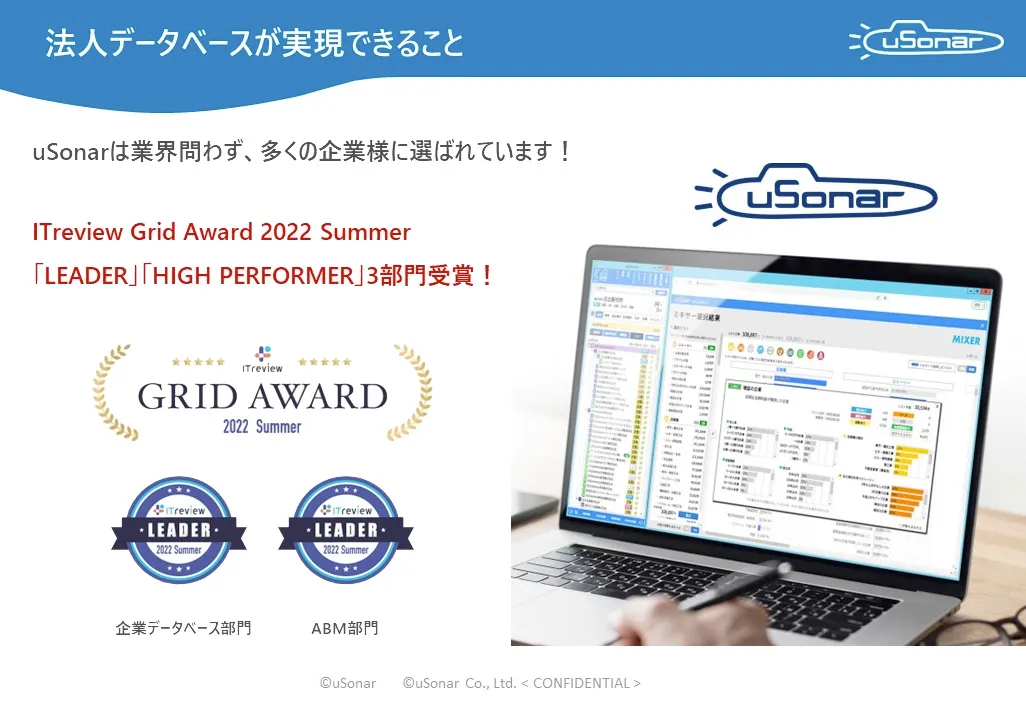
uSonar is utilized by various companies
across all industries and sectors.
ITreview Grid Award 2026 Summer
Leader in 6 Categories

With uSonar,
we will guide your company toward solving its challenges!
Case Studies and Sample Reports
Download