- Intent Data
- Digital Marketing
What Is Intent Data? Visualizing Customer Interests Through Behavioral Data
Last Updated: May 15, 2024
Click Here to Learn More About Customer Management ▶
Detect Website Visits by Dormant Customers!
uSonar's "Live Access" Feature
Dormant customers are a vital segment whose past transactions confirm their interest in and needs for your products or services. By reactivating dormant customers, you can significantly improve your sales performance.
This article provides a detailed explanation of the definition and importance of dormant customers, as well as methods for their revitalization.
Table of Contents
1-1Definition and Characteristics of Dormant Customers
1-2Potential Value of Dormant Customers to Businesses
1-3Importance of Re-engaging Dormant Customers
2Reasons Customers Become Dormant
2-1Changes in Customer Purchasing Motives and Decreased Satisfaction
2-2Impact of Changes in Corporate Services or Products
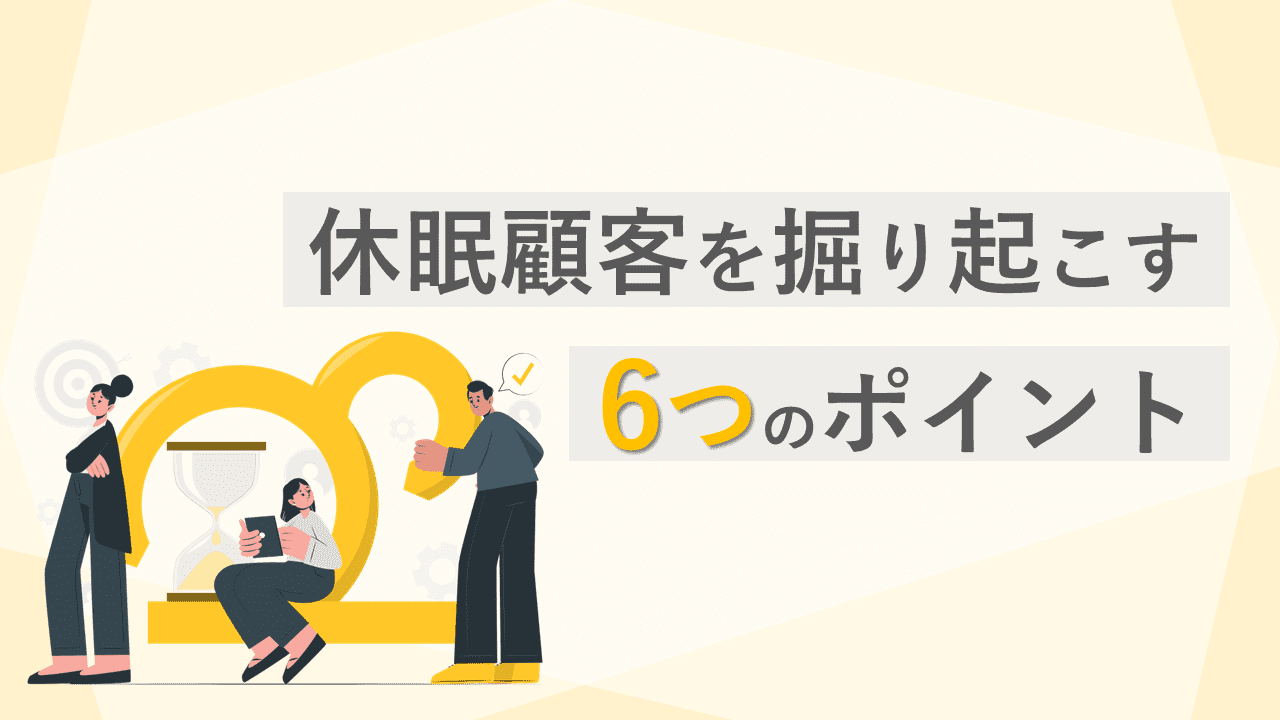
3Six Key Points for Re-engaging Dormant Customers
3-1Point 1: Identifying Dormant Customers Through Data Analysis
3-2Point 2: Segmenting Dormant Customers Through Data Analysis
3-3Point 3: Providing Personalized Content
3-4Point 4: Direct Approaches via Direct Mail, Email, or Telephone
3-5Point 5: Offering Special Promotions or Discounts
3-6Point 6: Improving Services Based on Customer Feedback
4Tools for Revitalizing Dormant Customers
4-1SFA and CRM
Recommended Articles

Dormant customers are those who have previously used a product or service but have ceased transactions for a certain period. The specific definition of this period varies by industry and product. For example, in the case of daily consumer goods, a lack of repurchase within a few months can be considered dormant. For high-ticket items, a period of several years without a repurchase might be the definition of dormancy.
Additionally, for SaaS products, usage rates can be visualized through log management even if a cancellation has not occurred. It is important to define a decline in usage over a certain period as dormancy and implement an improvement approach.
A characteristic of dormant customers is that it can be confirmed they had an interest in or need for the product or service in the past. However, for some reason, they are currently not actively transacting.
It is generally considered that the cost to achieve a repurchase from a dormant customer is lower than that of acquiring a new customer. This is because dormant customers have past transaction experience with the company, meaning they have brand or product awareness and a relationship of trust has already been formed.
Therefore, by taking an appropriate approach, there is a high possibility of resuming transactions as an active customer without incurring the same costs as acquiring a new one.
The reactivation of dormant customers contributes not only to a temporary increase in sales but also to long-term profit improvement. By reactivating long-term dormant customers, you increase their Customer Lifetime Value (LTV).
Reactivated customers may have an interest in new products or services, which can lead to continuous transactions. Furthermore, before a reactivated customer becomes dormant again, opportunities for further upselling or cross-selling will arise.
Additionally, succeeding in the reactivation of dormant customers increases opportunities to acquire new customers through their word-of-mouth or recommendations. This enhances the company's brand value and market reputation, laying the foundation for long-term growth and stable revenue.
One major reason customers become dormant is a change in their purchase motivation. For example, if a customer who used a product or service to solve a specific need or problem at a certain time finds that the need has disappeared or the problem has been solved, their motivation for repurchase may be lost.
It is also possible that they have found appeal in and switched to a competitor's product or service. Furthermore, if satisfaction with the product or service decreases, the tendency to look for other options during the next purchase increases, raising the likelihood of transitioning to a dormant state.
Changes in corporate initiatives or products are also considered factors that cause customers to become dormant. For example, if product quality or specifications are changed and become different from before, they may no longer meet the customer's needs.
Additionally, if the quality of support or after-sales service declines, it may erode customer trust and diminish the desire for repurchase. Such changes or deficiencies on the company's side are major factors that cause customers to switch to other competitors or products.
The first step to effectively reviving dormant customers is to accurately identify them. By utilizing data analysis, you can clearly distinguish dormant customers based on purchase history, activity, and the time elapsed since the last transaction. This analysis allows you to narrow down the target customer group for your approach.
A problem that arises when attempting data analysis is the duplication of customer data. Data cleansing and matching require complex rule settings and are tasks where one is prone to failure. Customer data is the key to a business that produces results with minimal effort. It is important to resolve data deficiencies by requesting assistance from data experts.
★★★★ Links to Other Articles Start ★★★★Recommended Articles:
Explaining Data Matching in 5 Levels! How to Eliminate Data Duplication in SFA and CRM?
Once you have identified dormant customers, categorize them in more detail. Even if they are all called dormant customers, their situations and states vary.
Confirm the following information as much as possible through data analysis:
The categorization of dormant customers leads to the content of personalization and direct approaches in subsequent points. For example, if a customer feels that the reason for dormancy is that "the quality of support or after-sales service has declined," simply offering an incentive may not lead to reactivation.
★★★★ Links to Other Articles Start ★★★★Recommended Articles:
To get dormant customers interested again, it is necessary to provide content tailored to their needs and interests. Create personalized messages and offers based on past purchase history and interests to capture the customer's attention.
For example, if a customer purchased a certain system in the past, providing the latest information on that system or related event information can encourage motivation for repurchase.
☆-☆-☆ Internal Link Button Start ☆-☆-☆☆-☆-☆ Internal Link Button End ☆-☆-☆
As a direct approach method, DM and email marketing are effective. In particular, by providing special offers and information for dormant customers, you can encourage motivation for repurchase.
Approaching via telephone is also effective for reviving dormant customers. Through telemarketing, you can grasp customer needs and concerns through direct communication and make proposals accordingly.
For example, when conveying information about new products to dormant customers or inviting them to special events, approaching them by phone can capture their interest.
Providing special promotions or discounts is also an effective means to capture the interest of dormant customers. By preparing limited offers and benefits, you can increase the desire for repurchase.
For example, create an opportunity for repurchase by providing a coupon code exclusively for dormant customers, such as a "Special Discount for Long-term Customers."
Feedback and opinions from dormant customers are valuable sources of information for improving services or products. By incorporating the voice of the customer and improving service quality, you can increase long-term customer loyalty and the success rate of reactivation.
For example, if you receive complaints or requests regarding a certain product from a dormant customer, you can improve customer satisfaction by making product improvements based on that feedback.
★★★★ Links to Other Articles Start ★★★★Recommended Articles:
SFA (Sales Force Automation) and CRM (Customer Relationship Management) are very useful tools for managing and analyzing customer data. By using these tools, you can prepare the prerequisites for effective approaches, such as identifying dormant customers, tracking purchase history, and customer segmentation.
In particular, when planning a reactivation campaign for dormant customers, it is necessary to build a strategy based on the results of data analysis obtained from these tools.
Email marketing tools are suitable for direct approaches to dormant customers. By utilizing functions such as creating personalized messages, segment-based delivery, and analysis of open rates and click-through rates, you can implement effective email campaigns.
Also, by using tools with A/B testing functions, it is possible to find the most effective messages and designs.
uSonar's Live Access function is a tool that visualizes the companies of prospective customers who have accessed your website, but it can also be utilized for approaching dormant customers.
In normal access analysis, you cannot know "what kind of companies are visiting the website," but by using the Live Access function, you can grasp the companies accessing the website in real-time. Therefore, before a customer takes specific actions such as service cancellation, document requests, or inquiries, it is possible to detect the company's movements and take the optimal approach.
If there are dormant customers among the companies visiting the website, you can judge that they are "dormant but have not lost their purchasing intent" or "are looking for some information regarding the product or service." By approaching them there, you can increase the satisfaction of dormant customers, and the possibility of succeeding in reactivation will increase.
☆-☆-☆ Body End ☆-☆-☆Dormant customers are a valuable customer segment whose interest in or need for products or services can be confirmed from past transactions.
By reactivating them, the opportunity to dramatically improve sales results expands. From data analysis to approach methods and tool utilization, take the first step toward turning dormant customers into active customers by practicing concrete methods.
Author of This Article

uSonar Editorial Department
MX Group, Editor-in-Chief
We are the uSonar Editorial Department.
We provide information on data utilization and digital technologies useful for rethinking future business operations, primarily for companies engaged in B2B business.
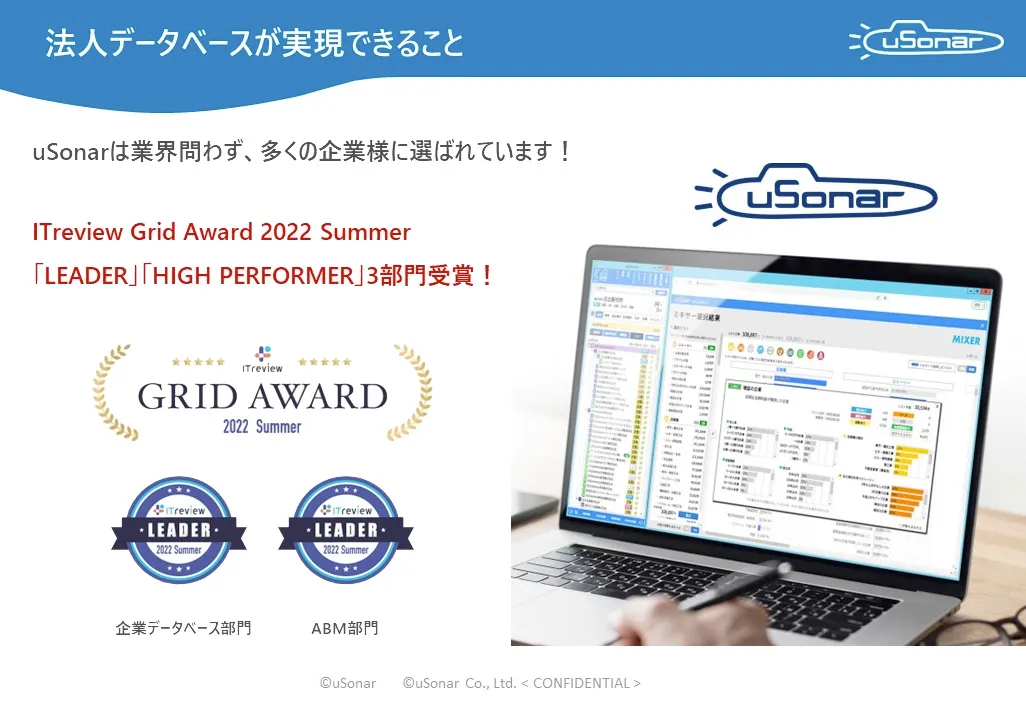
uSonar is utilized by various companies
across all industries and sectors.
ITreview Grid Award 2026 Summer
Leader in 6 Categories

With uSonar,
we can help solve your company's challenges!
Download Case Studies and Sample Reports