






- Data Matching and Data Cleansing
2026 Edition: How to Perform Data Cleansing? Methods, Procedures, and Key Considerations Explained
Use Cases by Objective
New Approach List
Group Strategy

Digital
Marketing

Client Information Registration

Data Cleansing
Corporate Attribute Analysis

SFA/MA Activation

Business Card Data Integration

Credit & Client Screening

Use Cases by Department
Sales Department

Inside Sales
Department

Marketing &
Corporate Planning Department

Information Systems Department

Management Department

Use Cases by Tool
Meeting Sonar
Updated: March 28, 2024

Click Here to Learn All About Data Cleansing ▶
Discover Data Cleansing Methods
Exclusive to uSonar
In today's rapidly digitizing market, companies must strategically leverage big data to establish a competitive advantage. To effectively utilize data across business domains, a commitment to data analysis is essential, and data cleansing plays a critical role in that process.
This article explains the overview, benefits, and specific implementation steps of data cleansing. We encourage companies promoting the construction of data-driven management systems to use this as a reference.
Table of Contents
2The Importance of Data Cleansing for Accurate Data Utilization
4-2Improving Accuracy in Data Analysis and Decision-Making
4-3Strengthening Customer Relationships and Competitive Advantage
5How to Proceed with Data Cleansing
5-22. Identifying and Standardizing Inconsistencies and Variations
5-33. Organizing and Categorizing for Future Data Utilization
Recommended Articles
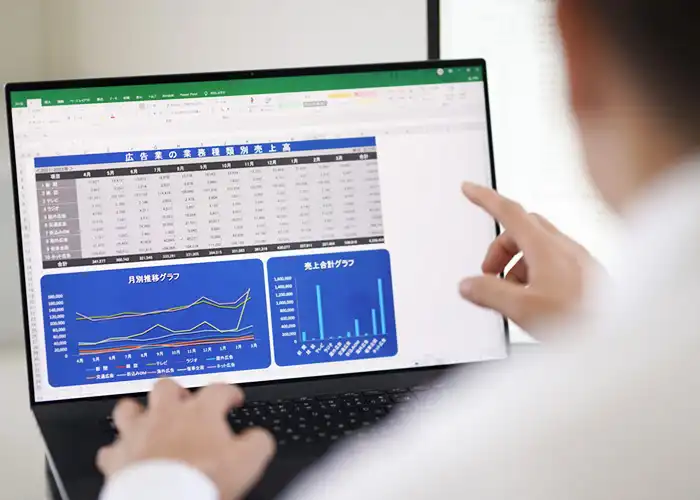
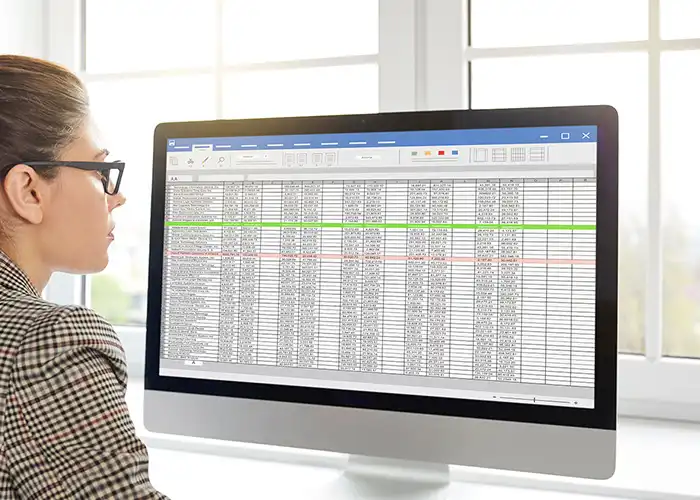
Data cleansing refers to the process of organizing data by addressing errors, noise, duplicates, missing values, and outliers, and then converting or processing it into a format suitable for analysis. Data analysis generally begins with "data collection," followed by "storage," "extraction," "transformation," "visualization," and "analysis." To visualize and analyze data collected and stored in a database, a process is required to extract the necessary information and convert it into a format that is easy to analyze.
Raw data stored in databases often lacks uniform formatting or granularity and typically contains "dirty data," such as corrupted, inaccurate, or duplicate entries. To improve the accuracy and speed of data analysis, a process to remove errors and noise while transforming and processing the data is essential; this stage is called "preprocessing." Data cleansing is a part of the preprocessing stage and is also known as "data cleaning" due to its nature of handling missing values and outliers in the data.
We live in an era of information explosion, and for companies, how to utilize ever-increasing data in business areas has become a critical management challenge. However, data managed across various departmental business systems is often not ready for immediate use in data analysis. For example, to visualize and analyze data using BI tools, it is necessary to store structured data—processed through preprocessing—in a data warehouse and then send it to the BI tools.
Storing unstructured data in a data warehouse is not easy, and data with missing values or values that deviate significantly from the average can lead to reduced accuracy and speed in analysis. A preprocessing stage is essential to maintain data consistency, and among these, data cleansing—specifically the handling of missing values and the removal of outliers—is a mandatory process. As higher accuracy in data analysis enables product development that captures latent customer demand and high-precision demand forecasting, data cleansing is a vital measure for improving corporate value.
There are various causes for the creation of dirty data that requires cleansing. Common causes include registration errors by users, duplicate registrations, and minor variations in notation depending on the person entering the data. Additionally, there may be a lack of fields necessary to determine unique data. It is important to accurately identify the causes within your own company and implement countermeasures.

What benefits does data cleansing bring to an organization when it enables accurate data utilization? Here, we introduce three representative benefits gained from implementing data cleansing.
Processes for data analysis—"collection," "storage," "extraction," "transformation," "visualization," and "analysis"—generally follow a path of collecting and storing raw data in ERPs or data lakes, extracting and transforming it with ETL tools to send to a data warehouse, and then visualizing and analyzing it using BI tools or machine learning. If the collected and stored data contains variations in notation, duplicates, or missing values, it takes more time to extract and visualize, and the accuracy and reliability of the data analysis are compromised.
If consistent, structured data can be formed through data cleansing, it leads to more efficient and rapid transmission to data warehouses and visualization using BI tools. Furthermore, removing data errors and noise not only contributes to improved analysis accuracy but also significantly reduces the operational burden on departments specializing in data analysis. This allows resources to be concentrated on core tasks that directly lead to improved performance, thereby strengthening the overall management foundation.
In the modern era, digital technology is advancing at an accelerating pace, and markets tend to mature alongside technological development. Consequently, the demands of customers and general consumers are becoming more sophisticated and diverse. To secure a competitive advantage, companies must formulate business plans that capture latent market demand. To uncover these latent customer needs and nurture them through appropriate approaches, logical decision-making based on quantitative data analysis is indispensable.
For example, analytical methods used when formulating business plans or marketing strategies include "3C Analysis," "4P Analysis," and "PEST Analysis." To ensure the reliability of these analytical methods while increasing efficiency, it is necessary to have accurate datasets with minimal information gaps or biases, rather than just collecting and storing data. Data cleansing helps improve the accuracy of data analysis and decision-making by organizing data to remove duplicates, noise, differences in granularity, and variations in notation.
In today's market, which is overflowing with products and services due to market maturation, consumption trends are shifting from material consumption to experiential consumption, making it difficult to differentiate from competitors solely by appealing to functional value. For a company to develop sustainably in such an era, it must strengthen relationships with prospects and existing customers and provide unique added value that competitors cannot offer. No matter how much technology advances, the foundation of business remains human relationships, and business activities are built upon relationships with customers.
To create products and services that customers desire, a process of multifaceted analysis of prospect attributes, purchasing behavior, and latent demand is essential. Data cleansing contributes to the realization of approaches optimized for each individual customer by accurately identifying latent demand through improved customer analysis accuracy. For example, if customer data stored in a CRM can be cleaned regularly, it minimizes information gaps and duplicates, leading to the construction of good customer relationships and helping to provide added value that competitors cannot match.
The data cleansing process is basically carried out based on the following three steps.
1. Data Collection
2. Discovery and Formatting of Notation Variations and Inconsistencies
3. Organization and Classification for Data Utilization
The first step in data cleansing is the collection of data to be analyzed. Relevant information is collected from raw data within business systems stored in each department of the organization, such as ERPs, CRMs, core systems, DBMS, file servers, and data lakes. Since data managed in each department's business system is often siloed and varies in format and granularity, it is common to manage it on a single platform using a data integration foundation or ETL tools. This process also leads to a better understanding of the current state of the data held.
The next step is the process of preparing errors, noise, missing values, and outliers in the imported data for analysis. For example, issues such as inconsistent use of "half-width" and "full-width" characters, inconsistent currency symbols, duplicate registration of customer information, missing data due to input omissions, and incorrect notations of corporate entity types are identified and subjected to processes such as grouping, unification, conversion, and replacement. It is necessary to establish certain rules, such as supplementing missing values in aggregation or analysis results with averages or medians, or using existing datasets for predictive models, and to perform data cleansing based on those standards.
The final step is the process of organizing and classifying the formatted data with an eye toward strategic data utilization. For example, if you are conducting a 3C analysis for the purpose of creating a new business, you must analyze the growth potential of the market you are considering entering, the market share of competitors, and the strengths and weaknesses of your own products from a bird's-eye view. Furthermore, to utilize customer information for marketing analysis, "data consolidation" is required to integrate customer information scattered across multiple databases. In this way, necessary data is organized and classified according to the purpose or department, and arranged in a format that is easy to utilize in the business area.
A challenge cited regarding data cleansing is the time and effort required for the process. As mentioned earlier, we live in an era of information explosion, and the strategic utilization of big data has become a critical management challenge for companies. However, it is said that preprocessing, including data cleansing, accounts for 70% to 80% of the total time spent by teams performing data analysis, and it requires deep knowledge of statistical analysis and machine learning. Therefore, since how to streamline and improve the efficiency of the data cleansing process is a challenge, it is necessary to consider the introduction of solutions such as data integration platforms, ETL tools, and RPA.
Executing data cleansing itself is not the goal; it is one of the means to promote the improvement of accuracy and speed in data analysis. Therefore, when introducing tools for the purpose of automating or labor-saving data cleansing, you must consider your company's management situation and business model, and select them from the perspective of how the data will be utilized after cleansing. Specifically, it is necessary to select solutions based on criteria such as the volume and quality of the corporate information held and the frequency of updates to that information. Another important point is what items, in addition to company names and phone numbers, the tool can supplement. It is important to consider the cost-performance and plans of the solutions and select one that is suitable for your organization's structure.
Data cleansing is an information processing process that handles missing values and outliers contained in raw data and converts it into a format suitable for analysis. By removing noise and errors from data, it leads to improved accuracy and speed in data analysis, enabling decision-making that does not rely on ambiguous factors such as intuition and experience. To build a data-driven management structure, please work on streamlining your data cleansing.
Author

uSonar Editorial Department
MX Group, Editor-in-Chief
We are the uSonar Editorial Department.
We provide information on data utilization and digital technologies useful for B2B companies to consider the future of their business operations.
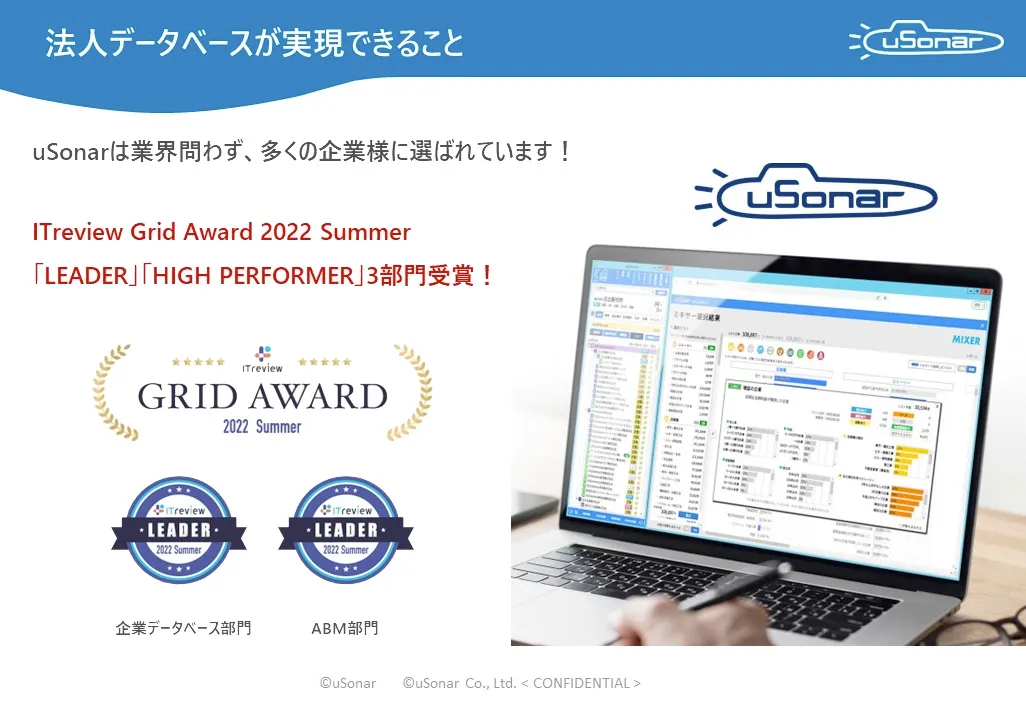
uSonar is utilized by various companies
across all industries and sectors.
ITreview Grid Award 2026 Summer
Leader in 6 Categories

With uSonar,
we will guide you to solve your company's challenges!
Case Studies and Sample Reports
Download