In Japan, in addition to the official Corporate Registry Information Provision Service and the online application system for registration and deposits, there are numerous private corporate registry information acquisition services that handle proxy acquisition, batch processing, and system integration, with the number of options increasing every year. On the other hand, many users report issues such as "focusing solely on comparing price lists" or "discovering gaps in operational fit after implementation."
This article explains the selection criteria for corporate registry information acquisition services in Japan and the steps to take to avoid common pitfalls.
Key Considerations Before Selecting a Corporate Registry Information Service
Before you begin selecting a corporate registry information service, it is essential to organize the following elements internally. If you proceed with comparisons without sufficient preparation, you may be easily swayed by individual features or pricing.
- Implementation Objectives and Desired Outcomes
Define what you aim to achieve, both quantitatively and qualitatively, such as accelerating credit screening, reducing the operational burden of verification tasks, or improving sales list management. The clearer your objectives, the easier it will be to weight your criteria later.
- Types of Registry Information Required
Clarify whether your focus is primarily on commercial and corporate registration, or if you also require real estate registration (full records and ownership details) or maps and drawings. The scope of the information required will significantly impact the range of suitable services.
- Departments and Use Cases
Determine whether the credit review department will acquire data on a per-case basis, the sales department will reference it daily, or if the system will acquire it automatically. Estimating the number of users and frequency of use is directly linked to evaluating the pricing structure.
- Existing Environment and Systems for Integration
Confirm where the acquired information will be managed and utilized, such as in a CRM (Customer Relationship Management system), SFA (Sales Force Automation system), or credit review system. The necessity of integration determines whether API (system-to-system connectivity) support is required.
- Projected Volume and Budgeting Strategy
Establish projections for monthly and annual acquisition volumes to determine which combination of initial costs, fixed costs, and usage-based fees is most suitable for your company. For operations with significant fluctuations in volume, a pricing structure with lower fixed costs may be more advantageous.
Six Criteria for Selecting a Corporate Registration Information Acquisition Service
Once the above points are organized, compare candidates based on the following perspectives. It is recommended to weight each criterion according to your company's specific use cases and create an evaluation matrix.
- Criterion 1: Types and Scope of Information Available
Verify whether the service covers the information your company requires, such as commercial registration records, real estate registration records, maps, and drawings. If there is a possibility that the scope of operations will expand in the future, it is advisable to evaluate the service with an eye toward future requirements, not just current needs.
- Criterion 2: Validity and Predictability of Pricing Structure
Check for the presence of initial fees, monthly fees, per-item usage rates, and minimum usage charges. Using the official fees of the government-operated "Registration Information Provision Service" (e.g., 330 yen per full record *1) as a benchmark is an effective way to compare total costs based on your projected acquisition volume.
- Criterion 3: Acquisition Speed and Availability
Confirm the time required from request to acquisition and the available operating hours. If the service is used for time-sensitive tasks such as credit reviews or sales meeting preparation, the ability to consistently acquire data during peak business hours is a key practical evaluation point.
- Criterion 4: Searchability and Operational Efficiency Features
Verify the ease of searching by company name or land lot number, the ability to perform bulk acquisitions, and features for managing acquisition history. If the pre-acquisition step of "identifying the target" is cumbersome, manual labor will remain even after service implementation; therefore, the usability of search functions significantly impacts total man-hours.
- Criterion 5: API Integration and System Compatibility
If you wish to integrate registration information into your company's business systems or data infrastructure, confirm the availability and scope of API support. Enabling automated acquisition without human intervention expands the potential for applications such as routine monitoring and high-volume processing.
- Criterion 6: Security, Operational Reliability, and Support Structure
Verify security measures for communication and data management, the track record of the operating company, and the support inquiry structure. Since registration information is critical for transaction decisions, stable operation and appropriate data handling are considered prerequisites that take precedence over pricing.
How to Proceed with the Selection Process
The following process is considered effective for selecting a registration information acquisition service.
- Requirement Definition
Consolidate the objectives, target information, usage scenarios, and integration requirements organized in the previous section into a document that can be agreed upon internally.
- Creation of a Candidate List
List public services and domestic private services on an equal basis and conduct a primary evaluation of their alignment with your requirements. Official websites and case studies for each service serve as useful information sources.
- Narrowing Down and Information Gathering
Narrow the list to a few companies with high requirement alignment and collect information regarding pricing terms, functional details, and security compliance. Clarify any uncertainties through inquiries and obtain quotes based on your projected volume.
- Trial and Small-Scale Verification
Using the target companies and properties handled in actual operations, verify the usability, speed, and readability of information from search to acquisition. It is important to define evaluation criteria and pass/fail thresholds in advance.
- Total Cost Estimation and Comparison
Based on the verification results, compare the total costs side-by-side, including initial fees, fixed costs, usage-based fees, and operational labor costs.
- Final Selection and Consensus Building
Review the evaluation results with the user department, administrative department, and information systems department, and reach a consensus along with the post-implementation operational rules.
Common Failure Patterns and Mitigation Strategies
The following are common failure patterns in selecting a corporate registration information acquisition service, along with their respective solutions.
- Comparing Solely Based on Unit Price
Even if the unit price per record is low, the total cost will not decrease if the search and management processes are labor-intensive. As a solution, it is effective to evaluate services based on the "actual cost per record," which includes both the acquisition price and the associated labor hours.
- Proceeding with Selection Without Verifying Actual Usage
Selecting a service without consulting the staff who will actually perform the acquisition tasks carries the risk that the tool will not be utilized after implementation. As a solution, it is recommended to involve representatives from the user departments in the evaluation process from an early stage.
- Superficial Validation
Judging a service solely by the impression of a demo screen may lead to misjudging its usability in actual operations. As a solution, it is recommended to conduct a trial using a volume and scope equivalent to actual production requirements and to define quantitative acceptance criteria in advance.
- Failing to Account for Future Volume Increases and Integration Requirements
Basing decisions only on current volume may lead to mismatches in pricing structures or integration capabilities as usage expands. As a solution, it is important to evaluate scalability by anticipating usage growth scenarios over the next one to two years.
- Failing to Design an Operational Framework
Implementing a service without establishing methods for managing acquired registration information or defining update rules can lead to fragmented data and outdated information. As a solution, it is recommended to define the operational personnel, management rules, and review frequency at the time of selection.
Conclusion
We summarize the key points of this article in three areas: (1) The selection of a corporate registration information acquisition service should start with organizing your objectives, target information, and usage scenarios; (2) Comparison requires evaluation based on six criteria, including not only unit price but also acquisition scope, speed, integration capabilities, and operational labor; and (3) The key to avoiding failure is to make decisions that include a production-equivalent trial and the design of an operational framework.
Selecting a corporate registration information acquisition service is not merely a comparison of tools, but a discussion on how to advance your company's credit management, compliance, and sales data utilization. By adhering to the criteria and processes introduced in this article, you can reduce post-implementation gaps and ensure the successful adoption of registration information utilization.
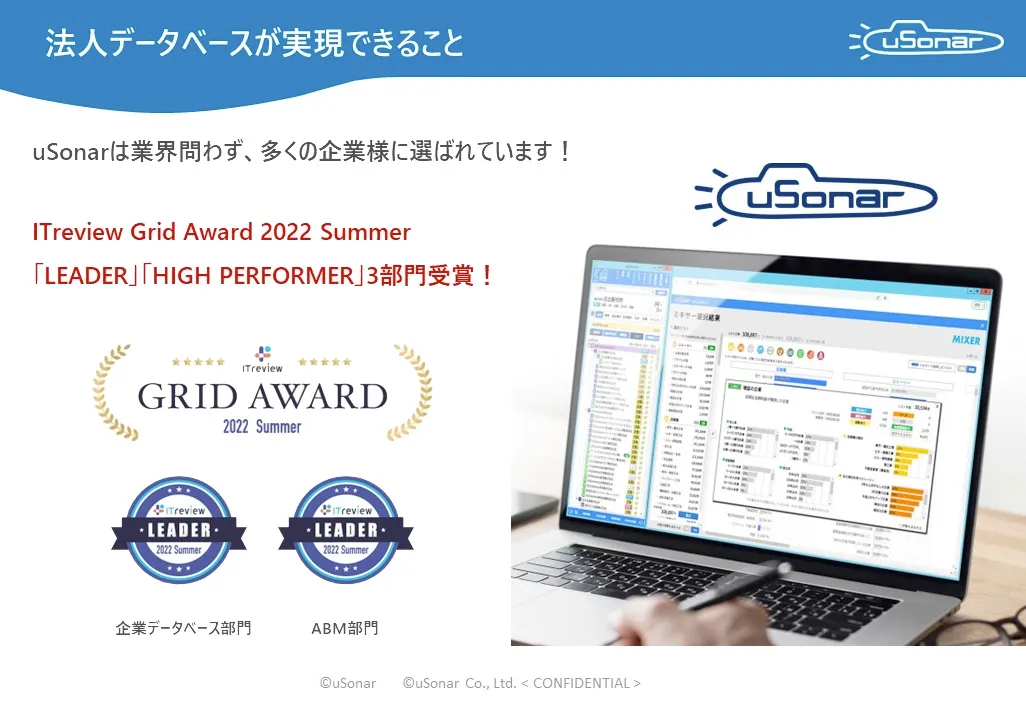
Our corporate registration acquisition service, "Touki Sonar," allows you to acquire commercial and real estate registration records online. It features a completely pay-as-you-go model with no initial or monthly fees, offers free searches, and enables the acquisition of necessary registration records in as little as several seconds to a few minutes. For commercial registrations, we also support system integration via API. Our service is highly competitive when measured against the selection criteria introduced in this article, such as "predictability of pricing structure," "acquisition speed," and "system integration capability." Please feel free to contact us for trials or consultations regarding implementation.
For further details, please feel free to contact us via this page.
*1: Ministry of Justice, "List of Usage Fees for the Registry Information Provision Service"
https://www.moj.go.jp/MINJI/minji25-1.html