- Data Matching and Data Cleansing
Why Is Core System Modernization Necessary? A 4-Step Guide to Data-Driven System Migration

Last Updated: July 4, 2024
As of 2024, the modernization of core systems has become an urgent priority for many companies. However, these initiatives are rarely straightforward and frequently encounter failure.
In many cases, projects proceed with inadequate data normalization or preparation, leading to a failure to achieve expected results and the risk of significant wasted investment.
This article explains the primary reasons why core system modernization projects fail and details the importance of data normalization as a key to success.
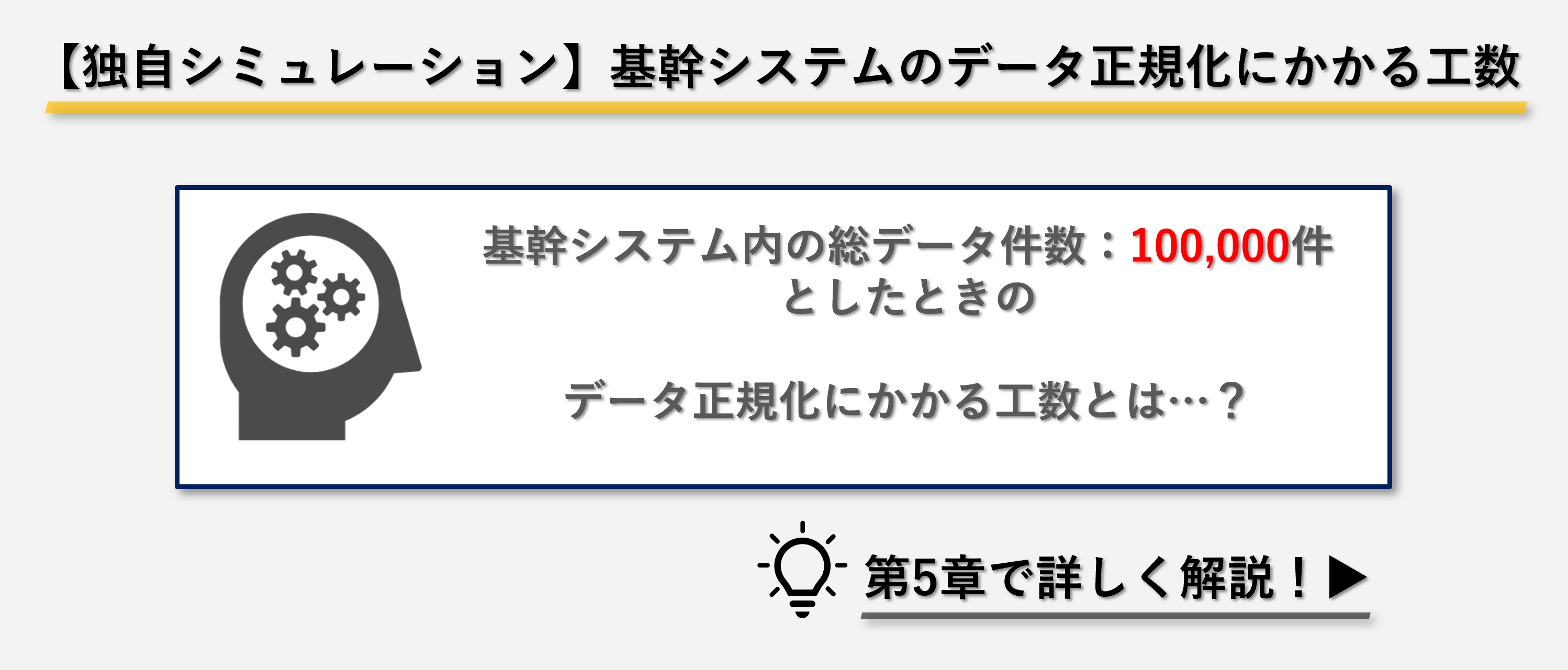
Table of Contents
1The Background Behind the Urgency of Core System Modernization
2Why Do Core System Modernization Projects Fail?
2-1Lack of Clarity Regarding the Purpose and Expected Outcomes of the Overhaul
2-2Over-Reliance on External Vendors
2-3Misalignment Between Management, Operations, and IT Departments
3Data Normalization Is Critical When Overhauling Core Systems for DX Promotion
3-1Core Systems Consolidate Vast Amounts of Corporate Data
3-2Expected Benefits of Data Normalization
4Examples of Data to Normalize During Core System Overhauls
4-2Product Data
5[Proprietary Simulation] Man-Hours Required for Normalizing Core System Data
6uSonar: Supporting Core System Modernization Centered on Data
Recommended Articles
In recent years, many companies have been facing the urgent need to modernize their core systems.
In a rapidly changing business environment, companies must leverage digital technology to reform their business processes and maintain or enhance their competitive advantage.
However, the core systems of many companies lack the flexibility required to adapt to such changes.
Core systems used for many years have become complex due to repeated modifications and functional additions, leading to increased maintenance and management costs.
In many cases, appropriate maintenance has become difficult due to the retirement or shortage of engineers who understand the system architecture.
These issues are known as the "2025 Digital Cliff."
This problem, highlighted by the Ministry of Economy, Trade and Industry, suggests that from 2025 onwards, the maintenance and operation of aging systems will reach their limits, potentially resulting in economic losses of up to 12 trillion yen.
Why Is Core System Modernization Necessary? A 4-Step Guide to Data-Driven System Migration ▶︎
So, what are the reasons why core system modernization fails? Typical examples are listed below.
Each of these will be explained individually.
When initiating a core system modernization project, it is not uncommon for organizations to start based on vague reasons such as "the system is aging" or "maintenance has become difficult."
However, without setting clear objectives and expected outcomes, the project may lack direction and result in ad-hoc responses.
Furthermore, it becomes difficult to evaluate the return on investment, making it challenging to gain understanding and support from management.
Additionally, there is a risk that project success criteria will remain unclear, preventing effective progress management.
To lead a modernization project to success, it is essential to clarify "why the system is being modernized" and "what the organization aims to achieve," while setting specific numerical targets.
Since core system modernization is a large-scale and complex project, it is common to engage external IT vendors.
However, if a vendor that does not fully understand the company's operations and challenges leads the project, there is a risk that the resulting system will not be suitable for actual business processes.
Moreover, there are cases where vendor convenience or technical constraints are prioritized, leading to situations where "the originally intended functions and benefits are deferred."
In successful modernization projects, it is essential to establish a structure where the company proactively controls the project and collaborates with the vendor.
It is required that internal members remain deeply involved in critical phases such as requirements definition, progress management, and testing.
Core system modernization involves diverse stakeholders, including management, operational departments, and the IT department.
However, because each department has different positions and perspectives, misalignments often occur.
For example, operational departments often find daily data entry cumbersome and burdensome. Furthermore, because they only interact with their own department's interface, they may struggle to grasp the importance of company-wide data integration.
IT departments may face situations where systems and tools are fragmented across departments, making overall maintenance and integration difficult.
Meanwhile, management wants to view integrated data across departments, but this is currently difficult to achieve.
Because the positions and perspectives of each department differ in this way, it becomes difficult to align the objectives and direction of core system modernization.
As a result, partial optimization tailored to the convenience of individual departments proceeds, and modernization projects often fail because overall optimization cannot be achieved.
To promote DX and achieve a truly effective modernization of core systems, data normalization is essential.
Here, we will examine why data normalization is necessary for the modernization of core systems.
Core systems handle various business data that form the backbone of a company. Data from diverse departments, such as sales management, inventory management, financial accounting, and human resources and payroll, are accumulated daily.
However, this data is not necessarily stored in an organized state.
It is necessary to appropriately perform data cleansing to ensure that data from each department, data from each business system, and old and new data do not become intermingled.
Furthermore, data degrades over time. Maintaining outdated data requires significant costs and man-hours.
Nevertheless, in many companies, the importance of data preparation is not sufficiently recognized, and there are many cases where the expected results are not achieved because only the system was renewed.
With the progress of DX, the necessary data for customer management, marketing, procurement, and more continues to increase.
If this data is not appropriately integrated and cleansed, and continuously maintained, DX promotion may end up being nothing more than a pipe dream.
Therefore, data preparation with a forward-looking perspective is essential for modernizing core systems.
Data normalization facilitates smooth data integration across departments, thereby improving operational efficiency.
Because normalized data can be easily shared and utilized across different departments, it enables the reduction of redundant tasks and the centralized management of information.
Data quality is improved by resolving data duplication and inconsistencies. This reduces the risk of making decisions based on incorrect data, enabling more reliable decision-making.
Consequently, it becomes easier to align perspectives across the entire organization, from management to frontline staff.
In addition, normalized data expands the scope of utilization, potentially leading to new value creation and problem-solving.
For example, when utilizing advanced technologies such as AI and machine learning, more precise data analysis and forecasting can be performed.
While it is difficult to make company-wide optimal decisions when data is siloed by department, centralizing data management can enhance efficiency and competitiveness across the entire organization.
So, what specific data should be integrated?
Below, we introduce the primary data that should be normalized during the modernization of core systems.
Customer data is vital information for managing relationships between companies and their customers.
By standardizing this data, you can gain a deeper understanding of customer behavior and preferences, leading to the development of effective marketing strategies and the improvement of customer service.
This will enhance the accuracy of customer segmentation and enable personalized approaches tailored to individual customers.
Examples of Customer Data
Product data is essential for managing information regarding the products and services a company provides.
Standardization enables the streamlining of inventory management, the optimization of pricing strategies, and the acceleration of new product development.
Furthermore, by integrating this with customer data, we identify cross-selling and up-selling opportunities, contributing to increased revenue.
Transaction data refers to information regarding a company's daily business dealings.
By normalizing this data, you can improve the accuracy of cash flow management and forecasting, which helps maintain financial health.
Financial data serves as the foundational information for understanding a company's economic status and making strategic decisions.
Maintaining organized financial data is essential for real-time management oversight and more precise financial analysis.
Data normalization contributes to advanced budget management and improved investment decision-making accuracy, ultimately leading to the optimization of corporate financial performance.
Since core system upgrades typically span long periods, it is essential to understand the required man-hours in advance.
So, how much time is actually required?
We have simulated the man-hours required for normalizing core system data as follows.
Prerequisites (Source: uSonar Research)
In other words, if one person works 8 hours per day, it would take approximately 416 days (over one year) to complete.
However, this workload includes not only simple mechanical tasks but also the following operations:
In practice, this task requires advanced business knowledge and data analysis skills, which may necessitate even more time and effort.
At the same time, this simulation reveals that data preparation accounts for a significant portion of the workload.
While data normalization is critical when modernizing core systems, it remains a significant challenge for many companies.
uSonar maintains one of Japan's largest corporate databases, containing 12.5 million records. By utilizing this as a "dictionary," companies can automatically consolidate and maintain data within their own core systems.
This significantly reduces the man-hours required for data preparation and ensures that data remains accurate and up-to-date at all times.
Furthermore, because uSonar solutions can be implemented without altering existing operational workflows, companies can improve data quality while minimizing the impact on daily business operations.
Modernizing core systems is a vital initiative for driving corporate digital transformation, yet achieving success involves numerous challenges.
Data normalization is particularly critical.
By properly organizing key data—such as customer, product, transaction, and financial information—companies can expect to improve operational efficiency and the quality of their decision-making.
However, because data normalization requires an enormous amount of man-hours, it is necessary to leverage external experts and systems.
By doing so, companies can efficiently improve data quality through automated data preparation and phased implementation.
Recognize that the success of core system modernization lies not merely in updating the system itself, but in the preparation and utilization of data, and approach this initiative strategically.
Author

uSonar Editorial Department
MX Group, Editor-in-Chief
We are the uSonar Editorial Department.
We provide information on data utilization and digital technologies useful for B2B companies to rethink their future business operations.
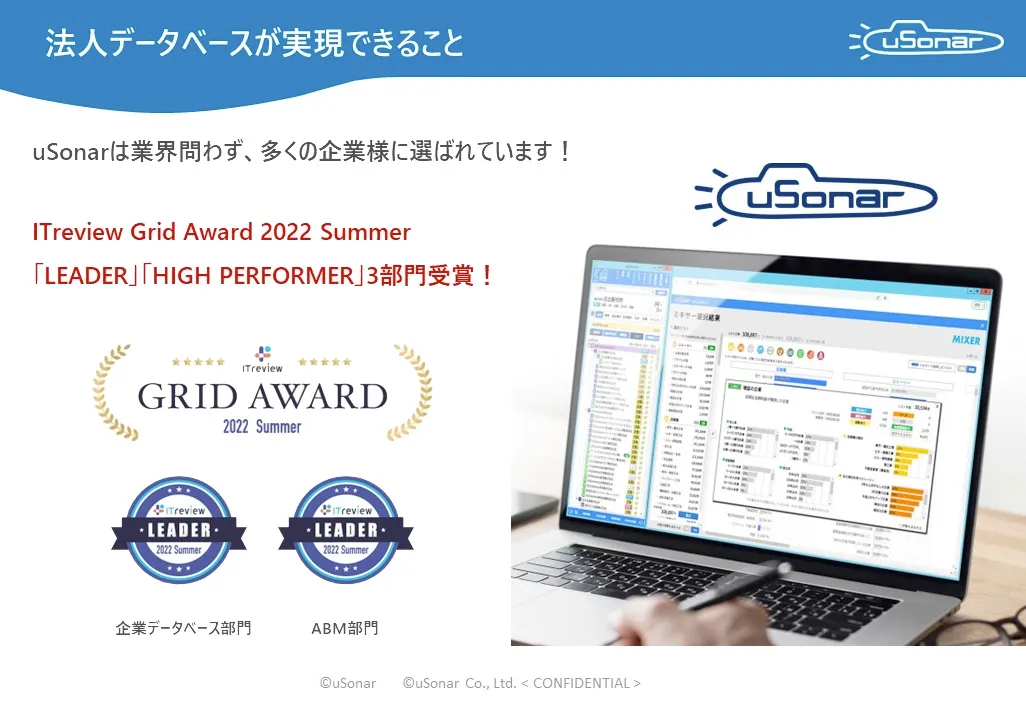
uSonar is utilized by various companies
across all industries and sectors.
ITreview Grid Award 2026 Summer
Leader in 6 Categories

With uSonar,
we will guide your company to solve its challenges!
Case Studies and Sample Reports
Download