- Data Matching and Cleansing
[5-Minute Read] What Is Data Cleansing? An Easy-to-Understand Guide to Its Purpose and Examples!

Last Updated: June 7, 2024
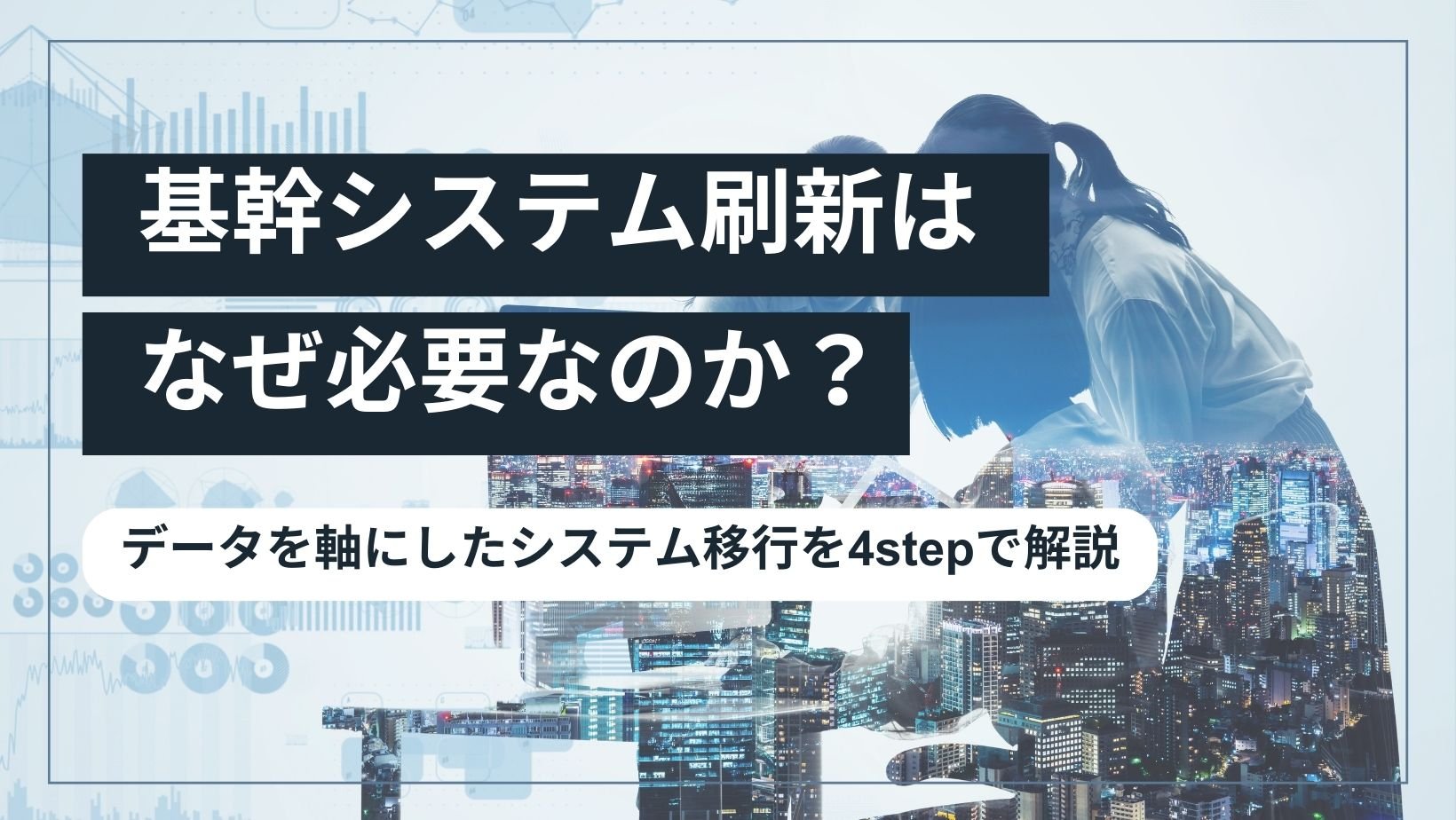
To promote Digital Transformation (DX), it is essential to develop core systems that serve as the foundation for data utilization.
However, core systems that have been in use for many years have become complex, outdated, and opaque, currently acting as a bottleneck for DX.
It is said that failing to modernize core systems could result in economic losses of up to 12 trillion yen annually from 2025 onwards.
This article explains the importance of and challenges associated with core system modernization in 4 steps.

Table of Contents
1The Importance of and Challenges in Core System Modernization
1-1Background Behind the Need for Core System Modernization: The 2025 Cliff Problem
2Adverse Effects of Failing to Modernize Legacy Systems
2-1Decline in Operational Efficiency
2-2Increased Operational and Maintenance Costs Due to Accumulated Technical Debt
3Requirements for Modernized Core Systems
3-1Flexibility to Adapt to Business Changes
3-2Realization of a Data-Driven Organization
4Core System Modernization Requires a Review of Data Utilization
4-1Data Preparation Prior to Modernization
4-2Necessity of Continuous Data Maintenance After Modernization
5Approaching Core System Modernization Through Data-Centric Strategies
5-1Step 1. Visualization and Current State Analysis of Existing Data
5-2Step 2. Data Cleansing and Integration
5-3Step 3. Defining Requirements for New Systems Based on Data Utilization
5-4Step 4. Phased and Iterative System Construction and Migration
Recommended Articles
Core systems refer to the information systems that support the foundation of a company's operations and management.
Specifically, these include systems that process operations such as sales management, inventory management, accounting, and human resources and payroll.
These systems play a vital role in achieving operational efficiency and automation, while supporting management decision-making.
Core systems are involved in every aspect of corporate activity and significantly influence a company's competitiveness.
Therefore, if a core system experiences downtime or failure, it can cause not only operational delays but also severe consequences for the company, such as lost opportunities and damage to corporate reputation.
Many companies are facing the aging of their core systems. Continuing to rely on legacy mainframes or client-server systems leads to issues such as escalating maintenance costs and technological obsolescence.
In many cases, data integration becomes overly complex, making company-wide data utilization difficult.
In the 2018 DX Report published by the Ministry of Economy, Trade and Industry, these complex, aging, and opaque core systems were described as the 2025 Digital Cliff, serving as a warning.
It is estimated that if companies continue to rely on legacy systems beyond 2025, it could result in an economic loss of up to 12 trillion yen.
To promote digital transformation and innovate business models, transitioning to a new core system built on the premise of data utilization is essential.
Companies must prioritize the digitalization and modernization of their core systems as soon as possible.
Failing to modernize legacy core systems can lead to the following negative impacts:
We will explain each of these individually.
Continuing to use legacy systems over many years leads to increased system complexity, which significantly reduces operational efficiency.
As a result of repeated partial modifications and customizations, the entire system becomes bloated, frequently causing issues such as slower processing speeds and data inconsistencies.
Legacy systems often fail to meet current business requirements.
For example, when introducing new products or services, legacy systems may struggle to adapt, forcing the organization to build separate, additional systems.
If such ad-hoc system development continues, business processes themselves become inefficient, hindering business growth and transformation.
Furthermore, with complex legacy systems, identifying and addressing the root cause of issues requires significant time and effort.
Because the overall system architecture is opaque, it is difficult to pinpoint where problems lie, creating a risk of operational stagnation during the troubleshooting process.
Operational and maintenance costs for legacy systems tend to increase year after year.
As systems age, system failures occur more frequently, necessitating reactive, symptomatic responses each time.
The loss of maintenance expertise due to the retirement of personnel familiar with the system can also lead to a situation where excessive time and effort are spent on routine maintenance.
In addition, maintaining and managing black-boxed legacy systems incurs substantial costs.
Continuous expenses are generated, including the need to secure engineers for operation and maintenance, the procurement of hardware and middleware, and the payment of licensing fees.
The issue is that rising operation and maintenance costs are putting pressure on new IT investments.
Ideally, budgets should be allocated to promoting digital transformation and introducing new digital technologies; however, resources are being consumed by the maintenance of legacy systems, making it difficult to move forward.
This is a state known as "technical debt," which acts as a major factor in significantly undermining a company's digital competitiveness.
So, when considering future sustainability, what requirements are needed for a modernized core system?
Specifically, they are as follows.
The details are explained below.
In the digital age, core systems require greater flexibility than ever before.
This is because it is necessary to respond rapidly to market changes and the diversification of user needs to evolve business models.
Therefore, core systems must be equipped with a design and architecture that can flexibly accommodate new business requirements.
For example, it is essential that core systems can be speedily modified and expanded in response to changes in the business environment, such as new product releases, the introduction of new services, or the development of new customer channels.
When pivoting business direction, such as through global expansion or M&A, it is required to have a system infrastructure that can flexibly adapt to global business processes so that the core system does not become a bottleneck.
To promote DX, it is essential to establish a framework for data-driven decision-making and business execution.
To achieve this, it is important to have a mechanism that can collect, integrate, visualize, and analyze the various data generated in each department across the company in real time.
For example, by aggregating all data, such as customer and market data, and visualizing it on a dashboard, management and frontline staff alike can perform rapid data utilization and decision-making.
To fulfill the role of such a data foundation, core systems are required to have an architecture suitable for data utilization, including ease of data integration, high scalability, and support for real-time processing.
Beyond simple data visualization and analysis, it also becomes possible to generate new business value from data, such as demand forecasting using machine learning.
The modernization of core systems is not merely about replacing systems with new ones. It is the first step toward transforming business and realizing data-driven management.
Therefore, it is essential to review the very nature of data utilization in parallel with system modernization.
In other words, how data accumulated in core systems is organized and utilized becomes the deciding factor in the success or failure of core system modernization.
When upgrading core systems, it is necessary to migrate data accumulated in existing systems to the new environment.
However, simply migrating the data as-is will likely prevent you from utilizing it effectively.
This is because, over years of operation, data quality often degrades, frequently leading to issues such as inconsistencies, duplicates, and missing information.
Therefore, thorough data preparation is required before a system overhaul.
Specifically, it is necessary to improve data quality by standardizing and unifying data, performing data matching, eliminating duplicates, and completing missing values.
Low-quality data can hinder accurate analysis and forecasting, potentially leading to erroneous management decisions.
To achieve the original objectives of a system overhaul, data preparation is a highly cost-effective initiative.
Data within core systems is constantly updated through daily operations.
Therefore, performing data preparation only at the time of the system overhaul is insufficient.
Even after migrating to the new system, it is necessary to continuously maintain data to preserve and improve its quality.
To achieve this, regular data checks, cleansing, and master data updates are required.
It is also important to review operational processes and incorporate mechanisms that enhance data quality.
For example, establishing rules for data entry and strengthening input validation functions can prevent the entry of inappropriate data.
Data maintenance is not the responsibility of just a few individuals.
From executive management to frontline employees, the entire organization must recognize the importance of data utilization and commit to data management.
It is essential to establish a data governance framework and embed continuous data maintenance into the corporate culture.
As described above, modernizing core systems requires a simultaneous review of how data is utilized.
The specific procedure is divided into the following four steps.
Each step will be explained individually.
When modernizing core systems, it is essential to first conduct an inventory of information assets and create a data map to facilitate data preparation.
Clarify the type, format, volume, and update frequency of data accumulated in each system, and evaluate the importance, quality, and relevance of the data.
It is also important to visualize how data is generated, processed, and utilized, and to clarify the data flow.
This allows for the identification of issues such as data dependencies, redundancies, and inconsistencies between systems.
Once the overall data landscape is understood through current state analysis, the next step is to undertake data cleansing and integration.
Data accumulated over years of operation may contain inaccurate or inconsistent "dirty" data.
Utilizing such data as-is will not yield accurate analytical results.
Therefore, data cleansing is necessary to improve data quality.
We ensure data consistency and integrity by performing tasks such as "filling in missing values," "deleting unnecessary data," and "standardizing variations in notation."
It is also necessary to consolidate identical data dispersed across multiple systems, such as customer or product data, and manage it as master data.
By centralizing master data, data linkage between systems becomes smoother, and the efficiency of data utilization will be significantly improved.
As data visualization and cleansing progress and data quality improves, the next step is to begin defining requirements for the new system.
At this stage, it is crucial to maintain a perspective on how to leverage accumulated data for business purposes, rather than simply aiming for operational efficiency.
Align business processes with data flows to clarify what data is generated and utilized in each operation.
Based on this, define requirements that incorporate features to support data-driven decision-making and integration with data analysis platforms.
Once the requirements for the new system are defined with data utilization in mind, you enter the system construction phase.
However, rather than implementing all features at once, proceed with a phased modernization.
Instead of migrating all functions simultaneously, prioritize them from the perspective of data utilization and gradually expand the scope of migration.
By doing so, you can steadily advance system modernization while minimizing the impact on business operations.
In the digital age, core system modernization must be driven by data utilization.
It is essential to maintain a consistent perspective on data utilization, from data preparation before modernization to data management after implementation.
Steadily advancing through the sequence of steps—Data Visualization and Current State Analysis, Cleansing and Integration, Data-Driven Requirement Definition, and Phased and Iterative System Construction and Migration—will lead to the success of your core system modernization.
As the business environment changes dramatically, there is a demand for rapid results from data utilization.
Without being constrained by legacy systems, let us approach core system modernization with a data-first mindset.
Author

uSonar Editorial Department
MX Group Editor-in-Chief
We are the uSonar Editorial Department.
We provide information on data utilization and digital technologies useful for rethinking future business operations, primarily for companies engaged in B2B business.
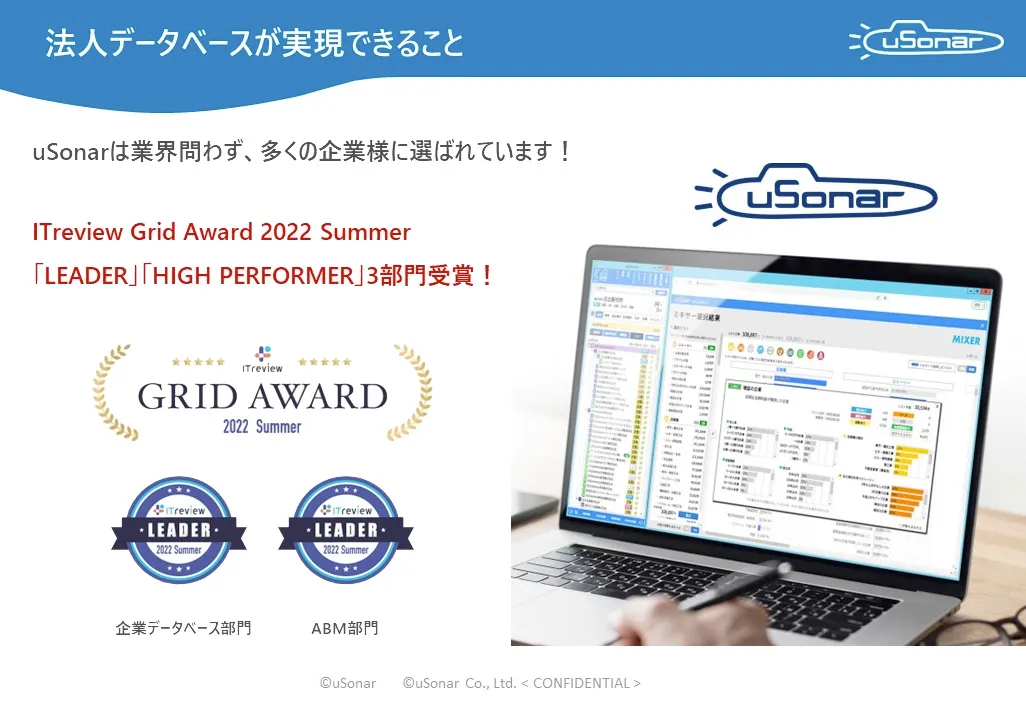
uSonar is utilized by various companies
across all industries and sectors.
ITreview Grid Award 2026 Summer
Leader in 6 Categories

With uSonar,
we will guide your company toward solving its challenges!
Case Studies and Sample Reports
Download