





- ABM
What Is ABM? A Comprehensive Guide to Implementation and Strategies for Success!

Use Cases by Objective
New Approach List
Group Strategy

Digital
Marketing

Client Information Registration

Data Cleansing
Corporate Attribute Analysis

SFA/MA Activation

Business Card Data Integration

Credit & Client Screening

Use Cases by Department
Sales Department

Inside Sales
Department

Marketing &
Corporate Planning Department

Information Systems Department

Management Department

Use Cases by Tool
Meeting Sonar
Last Updated: March 15, 2024
Science of Sales
Understand uSonar in 5 Minutes
B2B customer engagement strategies have traditionally prioritized process management in purchasing activities and step-up plans for enhancing existing customer loyalty.
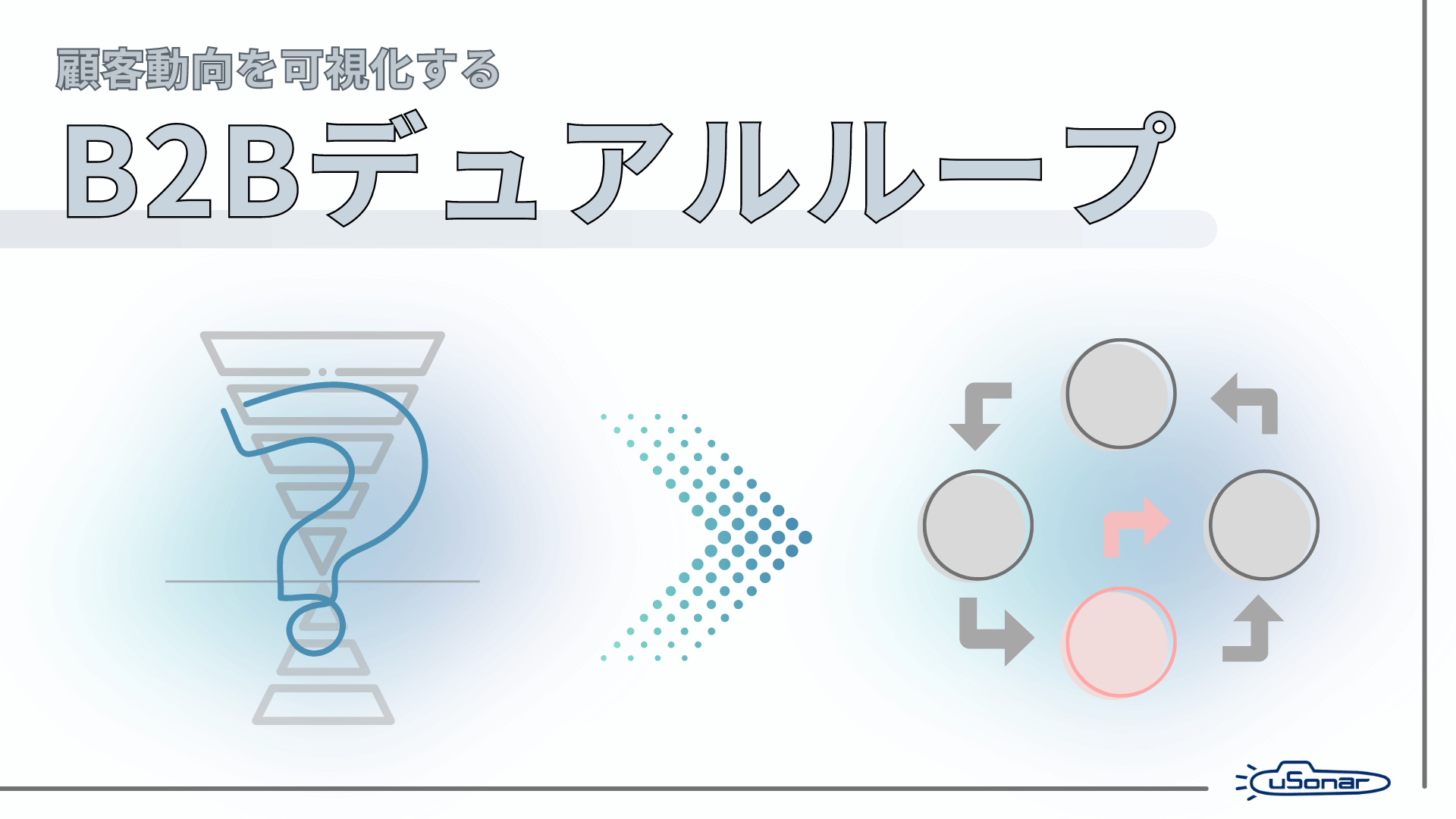
Historically, these customer behaviors have been visualized using funnel models, such as the Purchase Funnel and the Influence Funnel (or LTV Funnel). However, uSonar Co., Ltd. has developed the B2B Dual Loop as a new visualization approach, uniquely reconfiguring The Consumer Decision Journey proposed by McKinsey & Company in 2009. The Consumer Decision Journey
In this article, we explain the B2B Dual Loop and provide examples of approaches utilizing the services of uSonar Co., Ltd.
Recommended Articles

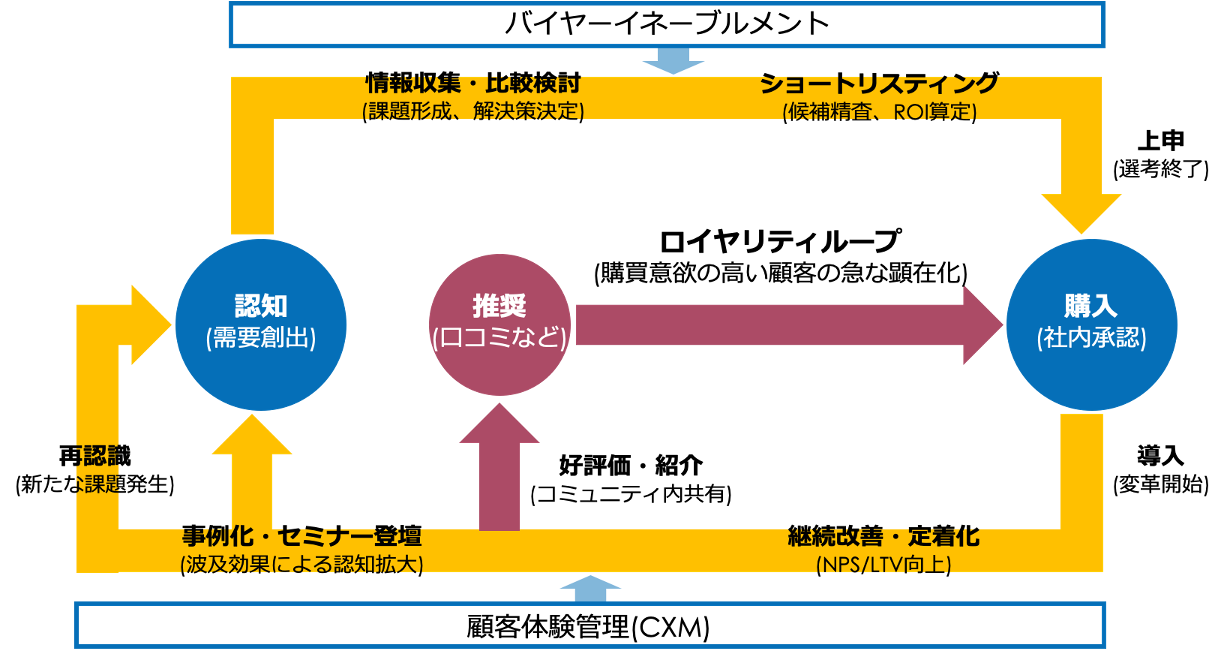
Diagram: B2B Dual Loop (Created by uSonar)
The B2B Dual Loop consists of the traditional funnel-based "Customer Purchasing Loop" and the "Loyalty Loop" generated through information sharing and recommendations.
By understanding that these loops interact rather than viewing them in isolation, you can gain a deeper understanding of customer behavior and execute subsequent actions more effectively.
In the "Customer Purchasing Loop," customers identify solutions that fit their business challenges, then proceed to the purchase stage after gathering information and conducting comparative evaluations. Following implementation, they conduct internal assessments through feedback and satisfaction surveys, leading to continuous improvement.
When new challenges or needs are identified, the customer returns to the awareness phase, and the same customer purchasing loop begins again.
As business operations become more efficient through implementation and customer loyalty increases, awareness expands to other potential customers facing similar challenges through case studies and seminars, driving the acquisition of new customers.
The "Loyalty Loop" represents the referral of new customers and the dissemination of information by existing customers. Highly satisfied customers may recommend products or services to friends and colleagues or share them on social media. This sparks interest among new customers, initiating a new purchasing loop.
This loop operates through high-trust recommendations from customers and helps accelerate the growth of your business.
In the B2B Dual Loop, "Buyer Enablement" and "ABM (Account-Based Marketing)" are critical elements in the process from "Awareness" to "Purchase."
Both are tactics used to demonstrate that your products or services are the right solution for a customer's priority challenges and that your company can deliver greater impact than competitors.
Buyer Enablement refers to corporate activities that provide information to customers as they navigate the purchasing process. It is essential to understand the unique process of each customer and provide the information they need at the right time. For more details, please refer to the article below.
>> Useful Article | What Is Buyer Enablement?
ABM is a marketing strategy that involves targeting specific accounts (companies) from a broad segment of potential buyers where your company can leverage its unique strengths.
Examples of such strengths include possessing extensive features to address specific challenges or having a wealth of relevant case studies from other companies. For more details, please refer to the article below.
>> Useful Article | What Is ABM (Account-Based Marketing)?
In the B2B Dual Loop, managing the Customer Experience (CX) for existing customers after a purchase becomes a critical element. This is referred to as Customer Experience Management (CXM).
Simply put, managing CX means establishing a framework to consistently enhance customer satisfaction by providing real-world experiences that exceed customer expectations. It requires utilizing various tools to provide necessary information and recommendations at the appropriate time.
While the difference between Buyer Enablement and CXM may not be immediately clear from the descriptions alone, they serve different purposes and therefore involve different levels of information granularity.
Buyer Enablement requires providing information to encourage customer purchasing, primarily focusing on details such as Return on Investment (ROI) and functional specifications, which are necessary for stakeholders involved in the purchasing process to reach a common understanding. Furthermore, it involves proposing usage methods that are tailored to the customer's specific challenges.
The objective of CXM is to enhance corporate value and generate ripple effects, such as creating new demand, by quantitatively monitoring and improving customer satisfaction and Lifetime Value (LTV). To achieve this, it is necessary to provide information required for stakeholders involved in operations to build a common understanding, such as implementation procedures and specifications of features to be utilized, tailored to the customer's unique situation.
In the Buyer Enablement phase of the Customer Purchasing Loop, it is crucial to provide information while keeping your ideal customer profile in mind. A corporate database is used to define this Ideal Customer Profile (ICP). By leveraging information such as industry, number of employees, revenue scale, and Interest Sign (intent data), you can narrow down companies that have needs where your company can maximize its strengths.
In the Loyalty Loop as well, by understanding relationships such as connections between companies and the communities they belong to in advance, it is possible to identify companies with similar needs and customers who are likely to generate ripple effects. Corporate databases are utilized here as well, providing functions to obtain information such as group structures, alma maters, and affiliated organizations.
In the CXM phase, databases are primarily used to keep information within CRM tools up to date. In some cases, database marketing is also introduced to establish a common understanding regarding the customers of one's customers.
As described, databases and the marketing activities that leverage them are used throughout the process to understand B2B customer behavior.
The B2B Dual Loop is a new framework that visualizes customer behavior and corporate approaches from the customer's perspective, building upon previously visualized data. By capturing the mechanism where two loops interact, it becomes possible to streamline conventional proposal activities while prioritizing and appropriately responding to high-probability inquiries from customers that may appear sudden at first glance.
Our customer data integration solution, uSonar, is equipped with one of Japan's largest corporate information databases. It allows for the centralized visualization of information publicly available in corporate registries, as well as unique corporate characteristics and commonalities between companies that we have independently assigned.
In addition to data collected offline, it includes a data provision function that visualizes the companies to which website visitors belong, and provides intent data that allows for the inference of interests and contact status with competitors.
Furthermore, it is equipped with an AI function that identifies non-trading companies facing challenges similar to those of existing customers and predicts the likelihood of winning orders.
For more details, please feel free to contact us via this page.
Author of This Article

uSonar Editorial Department
MX Group, Editor-in-Chief
We are the uSonar Editorial Department.
We provide information on data utilization and digital technologies useful for companies primarily engaged in B2B operations to rethink their future business practices.
uSonar is utilized by various companies
across all industries and sectors.
ITreview Grid Award 2026 Summer
Leader in 6 Categories

With uSonar,
we can help solve your company's challenges!
Case Studies and Sample Reports
Available for Download