





- Invoice
[Understand in 5 Minutes] How to Search for Invoice System Registration Numbers! Explaining What You Can Verify

Use Cases by Objective
New Approach List
Group Strategy

Digital
Marketing

Client Information Registration

Data Deduplication
Corporate Attribute Analysis

SFA/MA Activation
Business Card Data Integration

Credit & Client Check

Use Cases by Department
Sales Department

Inside Sales
Department

Marketing &
Corporate Planning Department

Information Systems Department

Management Department

Use Cases by Tool
Meeting Sonar
Last Updated: 2024-03-21
Click Here to Learn More About the Invoice System ▶
Lead to eBook[Practical Guide] A Clear Explanation of What You Need to Do for the Invoice System!
Are you putting off addressing the following challenges related to invoice compliance?
We share expertise gained from building our own corporate database of 8.2 million locations, along with exclusive insights on data maintenance that you won't find anywhere else.
Introducing a guide you can put into practice today. Download it now for free!Download!

The invoice system is a purchase tax credit system that was introduced on October 1, 2023. Under this new system, consumption tax rules have changed, and you must receive a qualified invoice to claim a tax credit when calculating consumption tax.
Simply put, a qualified invoice is a document required when filing your consumption tax return.
Understanding qualified invoices is essential for receiving purchase tax credits. In this article, we will explain the basics, including the advantages and disadvantages of the system.
Table of Contents
2Purpose of Introducing the Invoice System
2-2Preventing Confusion Between Reduced and Standard Tax Rates
3What Is a Purchase Tax Credit?
3-1Registration Required to Receive Purchase Tax Credits
3-2Requesting Invoices from Suppliers
4Disadvantages of the Invoice System
4-1Risk of Losing Business Partners
4-2Increased Operational Burden and Administrative Work
5Advantages of the Invoice System
5-1Eligibility for Tax Credits
5-2Streamlining Operations Through Electronic Invoicing
5-3Reduction of Storage and Management Costs
5-4Elimination of Data Tampering Risks
6Required Actions for the Invoice System
6-1Required Bookkeeping Entries for Purchase Tax Credits
6-2The Retention Period for Invoices (Qualified Invoices) Is 7 Years
Recommended Articles
There are several primary objectives for the introduction of the invoice system as follows:
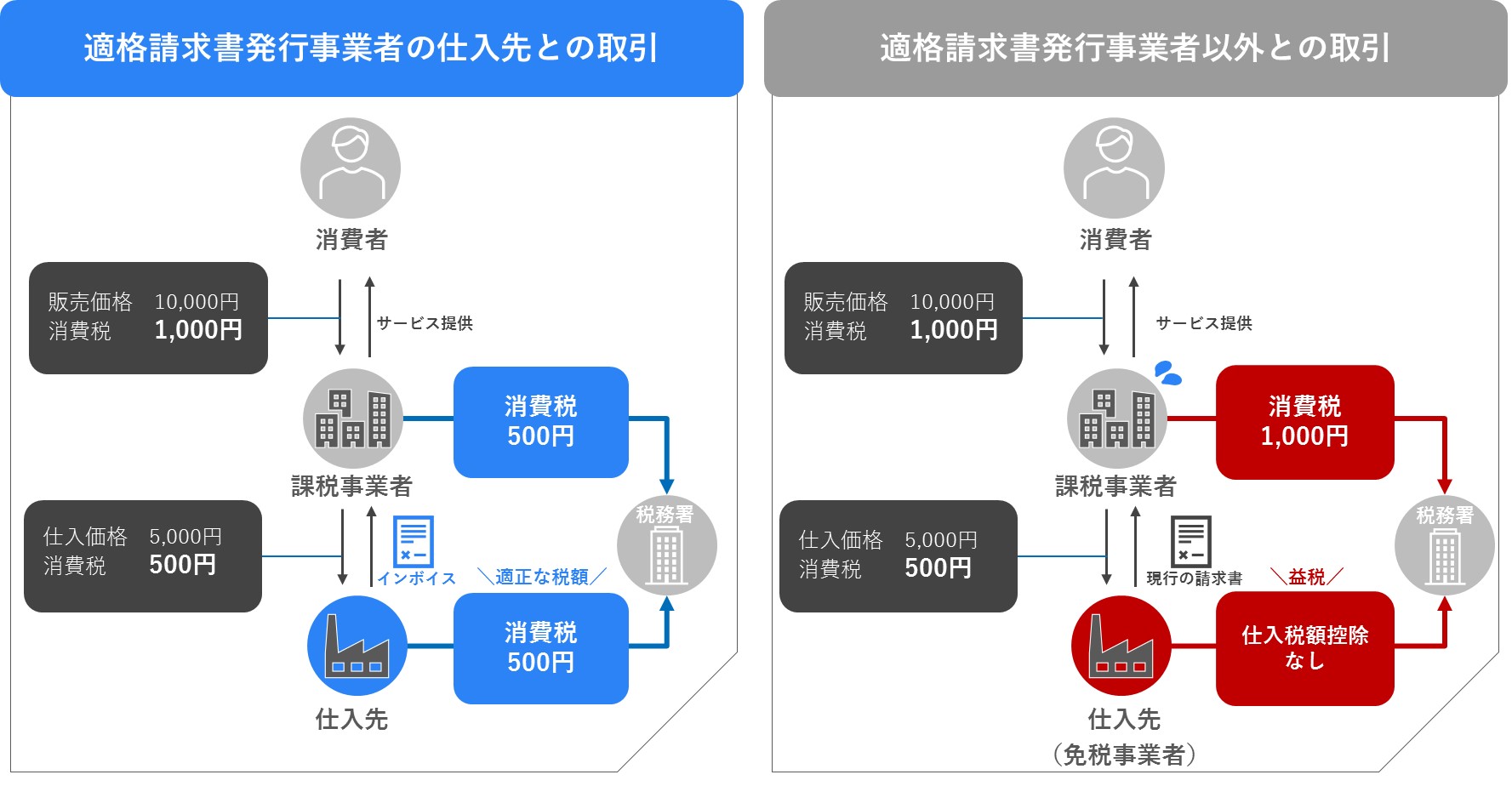
One of the purposes of introducing the invoice system is to address the issue of "tax exemptions." Previously, tax-exempt businesses (sole proprietors and freelancers) with taxable sales of 10 million yen or less were not required to pay the consumption tax they collected from consumers to the government. This is known as "tax exemption." However, with the introduction of the invoice system, tax-exempt businesses are now required to pay the appropriate amount of tax.
Since October 1, 2019, a reduced tax rate of 8% has been applied to certain products such as daily necessities and food and beverages, while a standard consumption tax rate of 10% has been applied to others, leading to a mix of rates on invoices. Invoices (qualified invoices) that began on October 1, 2023, include additional fields to accommodate these two tax rates, and the total consumption tax amount categorized by tax rate will be recorded.
Purchase tax credit is a system designed to prevent double taxation of consumption tax that occurs during the payment for purchases within a taxable period. When paying consumption tax, the amount of consumption tax on taxable purchases is deducted from the consumption tax amount on taxable sales. Once the invoice system begins, in principle, businesses cannot apply for purchase tax credit unless they receive an invoice.
At the start of the invoice system, business operators must register to receive purchase tax credit (as an invoice-issuing business). First, you must obtain a registration application form, fill in the necessary information, and submit it to the competent tax office. The deadline for registration applications was originally March 31, 2023, but it was changed to September 30, 2023.
Simply applying does not allow you to issue invoices; it takes about two months after submitting a paper application, or about three weeks for applications via e-Tax (the National Tax Agency's online system).
You can check the time required for notification on the National Tax Agency's "Qualified Invoice Issuer Site."
If you receive an invoice from a supplier, you can apply for purchase tax credit; if you do not, it will not be eligible for the credit. If you fail to receive an invoice, you will effectively lose the consumption tax portion, so caution is required.
We will explain the disadvantages of the invoice system in detail.
If you remain a tax-exempt business, you cannot issue qualified invoices under the invoice system. In other words, since the ordering party will face increased consumption tax payments when dealing with suppliers who cannot issue qualified invoices, they may wish to change their business partners. Therefore, tax-exempt businesses face the risk of losing their business partners.
An increase in the workload for accounting staff is expected. Once the invoice system begins, conventional invoices can no longer be used, and businesses will be required to issue invoices, keep copies, and retain qualified invoices.
Due to the introduction of invoices, businesses must create an invoice for every transaction because of the different applicable tax rates, such as registration numbers and reduced tax rates, which increases the administrative burden.
Furthermore, we do not recommend keeping books in Excel; we suggest utilizing accounting software to handle accounting processes.
Having explained the disadvantages, we will now discuss the advantages.
By completing the aforementioned registration, businesses can receive purchase tax credit. Under the invoice system, even former tax-exempt businesses are now required to pay the appropriate amount of tax. Therefore, taxable businesses that make purchases from tax-exempt businesses will be able to receive a deduction for the purchase tax amount.
Electronic invoices refer to the digitization of required qualified invoices. As the demand for electronic invoices increases, the volume of data exchanges will rise, which can significantly reduce transaction processing time.
With electronic data, there is no need for physical storage space. While paper media carries the risk of loss or deterioration, electronic data can be stored in the cloud, allowing you to retrieve data whenever necessary. Additionally, digitization is effective for cost reduction by enabling staff reductions and decreasing the consumption of paper and other supplies.
Electronic invoices are considered to offer improved security compared to paper-based qualified invoices. The Ministry of Internal Affairs and Communications is considering the introduction of electronic signatures (e-seals) that attach qualified invoice business information to electronic invoices, and further security enhancements are expected as adoption progresses.
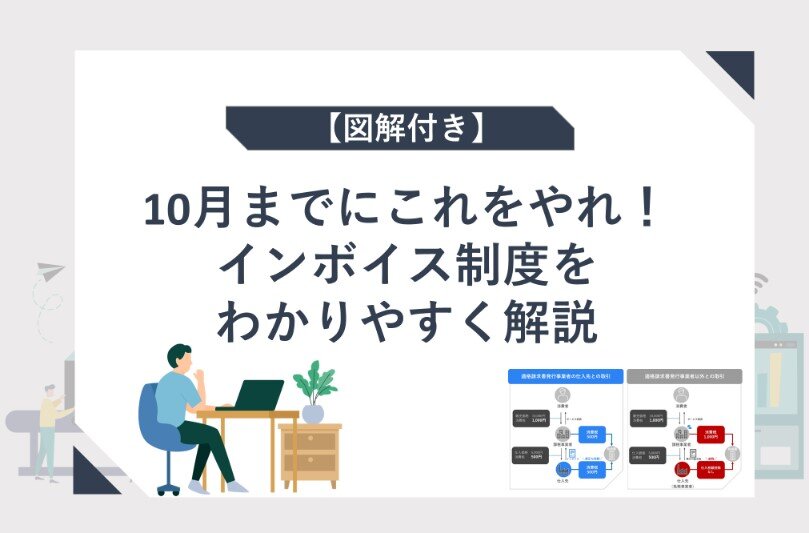
![[Illustrated Guide] Do This by October! An Easy-to-Understand Explanation of the Invoice System](https://usonar.co.jp/blog/invoice.jpg) ☆-☆-☆ Body Start ☆-☆-☆
☆-☆-☆ Body Start ☆-☆-☆
We have summarized the specific actions required following the introduction of the invoice system.
To qualify for purchase tax credits, simply receiving an invoice is insufficient. You must record the following items as stipulated by law:
1. Name or title of the supplier
2. Date of the transaction
3. Details of the transaction
4. Transaction amount (including the equivalent consumption tax amount)
Under the invoice system, "Qualified Invoice Issuers" are obligated to retain copies of issued invoices and electronic records. Both the issuer and the recipient are required to store all invoices for seven years. This seven-year retention period begins two months after the end of the taxable period in which the invoice was issued.
The provision exempting the retention of invoices for taxable purchases under 30,000 yen is scheduled to be abolished. Therefore, as a general rule, you must retain qualified invoices even for transactions under 30,000 yen.
☆-☆-☆ Body End ☆-☆-☆The benefits of introducing invoices (qualified invoices) include the ability to develop new business opportunities and streamline operations for electronic invoicing. Early preparation for registration is essential ahead of the upcoming invoice system. In particular, because there are many items to fill out, care must be taken to avoid omissions or errors. Let us begin the necessary preparations now to ensure a smooth transition.
uSonar's corporate data LBC can support you in assigning invoice registration numbers. Please check the details in the document below.
About the Author

uSonar Editorial Department
MX Group, Editor-in-Chief
We are the uSonar Editorial Department.
We provide information on data utilization and digital technology useful for considering future business operations, primarily for companies engaged in B2B business.
uSonar is utilized by various companies
across all industries and sectors.
ITreview Grid Award 2026 Summer
Leader in 6 Categories

With uSonar,
we can help solve your company's challenges!
Case Studies and Sample Reports
Available for Download