Corporate News
uSonar Co., Ltd. (Shinjuku-ku, Tokyo; Chairman: Nami Fukutomi; President: Katsuhito Nagatake; hereinafter "uSonar"), which maintains LBC, Japan's largest* corporate database, has launched the "Microcosm of Japanese Companies (≒ Japanese Economy) Report," a statistical analysis information service utilizing LBC. We are announcing six report examples.
*Largest in Japan for data on the number of headquarters and business establishment locations (based on our own research as of July 16, 2024)
Background of the "Microcosm of Japanese Companies (≒ Japanese Economy) Report"
uSonar maintains LBC, one of Japan's largest corporate databases, covering 8.2 million business locations. LBC structures data for nearly all business locations, from large enterprises to small and medium-sized businesses and individual shops.
Furthermore, it links a wide variety of attribute information, including basic data such as addresses, phone numbers, executives, industry types, number of employees, and capital.
The sources are primarily public information such as securities reports, official gazettes, corporate registries, and government announcements. LBC is typically used by sales, marketing, and market analysis departments of companies promoting "data-driven management" and "data utilization."
The "Microcosm of Japanese Companies (≒ Japanese Economy) Report" utilizes this corporate data as the source for our statistical analysis information service.
Specific Analysis Reports
Below, we introduce the reports (summary versions) created as the first installment.
1: Ranking of Prefectures with the Most Certified Companies for the 2024 Health & Productivity Management Outstanding Organizations Recognition Program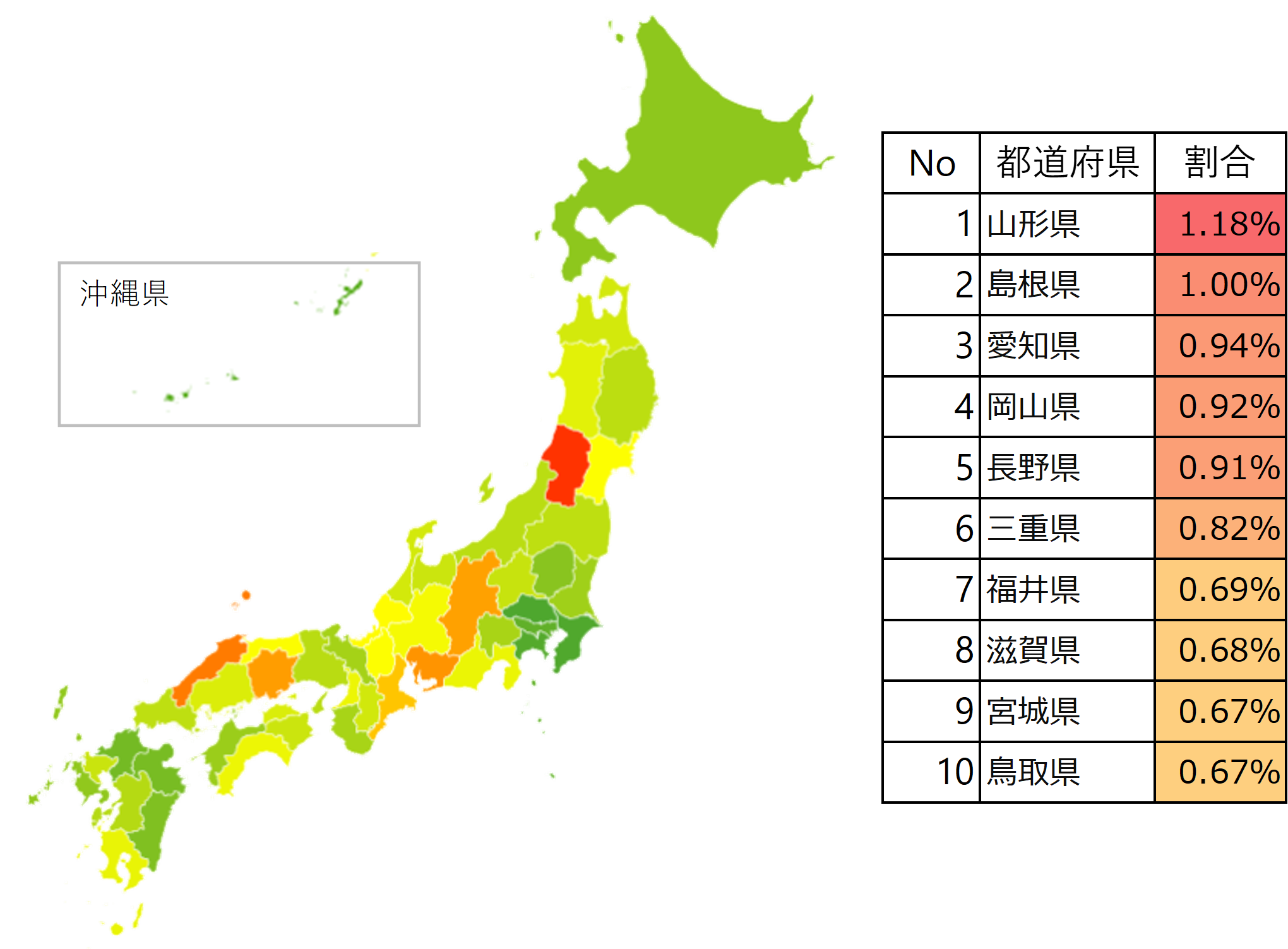
|
Population Data |
LBC headquarters data with corporate numbers for non-bankrupt and non-closed companies as of May 2024 Approximately 452 Ten Thousand Companies (The Same Applies to the Following Reports) |
|
Characteristics of the Population Data |
LBC covers information on almost all companies and corporations throughout Japan, which is utilized as the population data. For this analysis, we have limited the scope to non-bankrupt and active corporations that possess a Corporate Number and have completed corporate registration (the same applies to the following reports). |
|
Analysis Target Data |
Certified Health & Productivity Management Outstanding Organizations Recognition Program 2024 List (Approximately 20,000 Companies) |
|
Analysis Data Source |
Data Published on the Ministry of Economy, Trade and Industry Website |
|
Analysis and Aggregation Methodology |
LBC headquarters data is categorized by prefecture to establish the population count for each prefecture. The Health & Productivity Management Outstanding Organizations data is also categorized by prefecture. Calculate the percentage by prefecture, create a ranking in descending order, and visualize it on a map. |
|
Insights and Evaluations Obtained |
A corporate certification program by the Ministry of Economy, Trade and Industry (METI) designed to visualize large and small-to-medium enterprises that practice excellent health and productivity management. This allows employees, job seekers, affiliated companies, and financial institutions to evaluate these organizations. Established in fiscal year 2016. As interest grows among companies, we created a map by prefecture to identify which regions are most proactive in obtaining certification. Yamagata, Shimane, Aichi, Okayama, and Nagano ranked at the top. This trend was also confirmed in the data provided on the METI website. |
2: Ranking of Prefectures with the Most Companies Closing Accounts in December 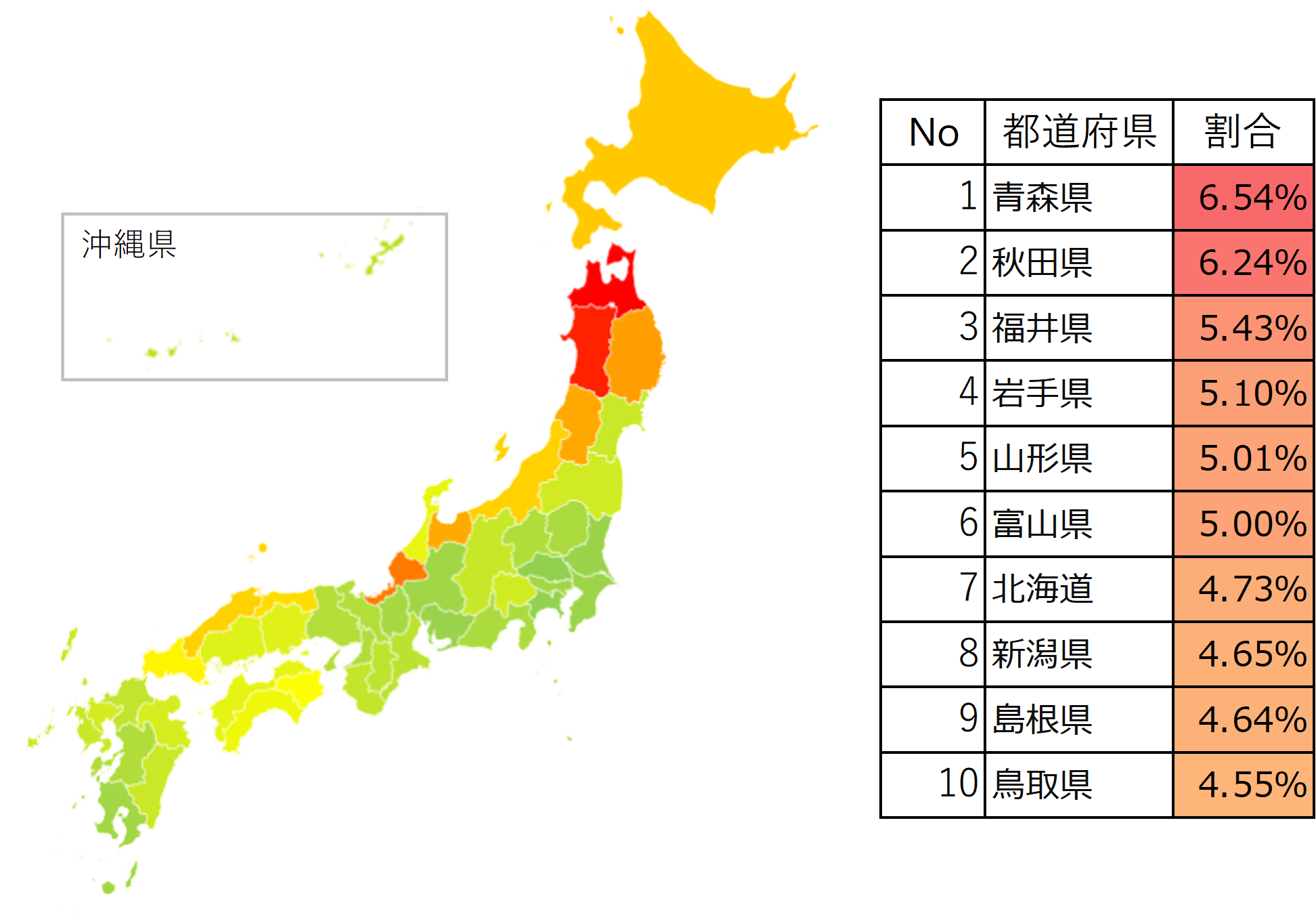
|
Analysis Target Data |
December Fiscal Year-End Companies Story (Approx. 125,000 companies) |
|
Analysis Data Source |
Securities reports and other sources |
|
Analysis and Aggregation Methodology |
Classify LBC headquarters data by prefecture and calculate the population for each prefecture. Classify companies with a December fiscal year-end by prefecture. Calculate the percentage for each prefecture, rank them in descending order, and visualize the data on a map. |
|
Insights and Evaluations Obtained |
The results indicate a high concentration of these companies, particularly in the Tohoku and Sea of Japan coastal regions. |
3: Ranking of Prefectures with the Highest Number of Companies Holding 1 to 5 Patents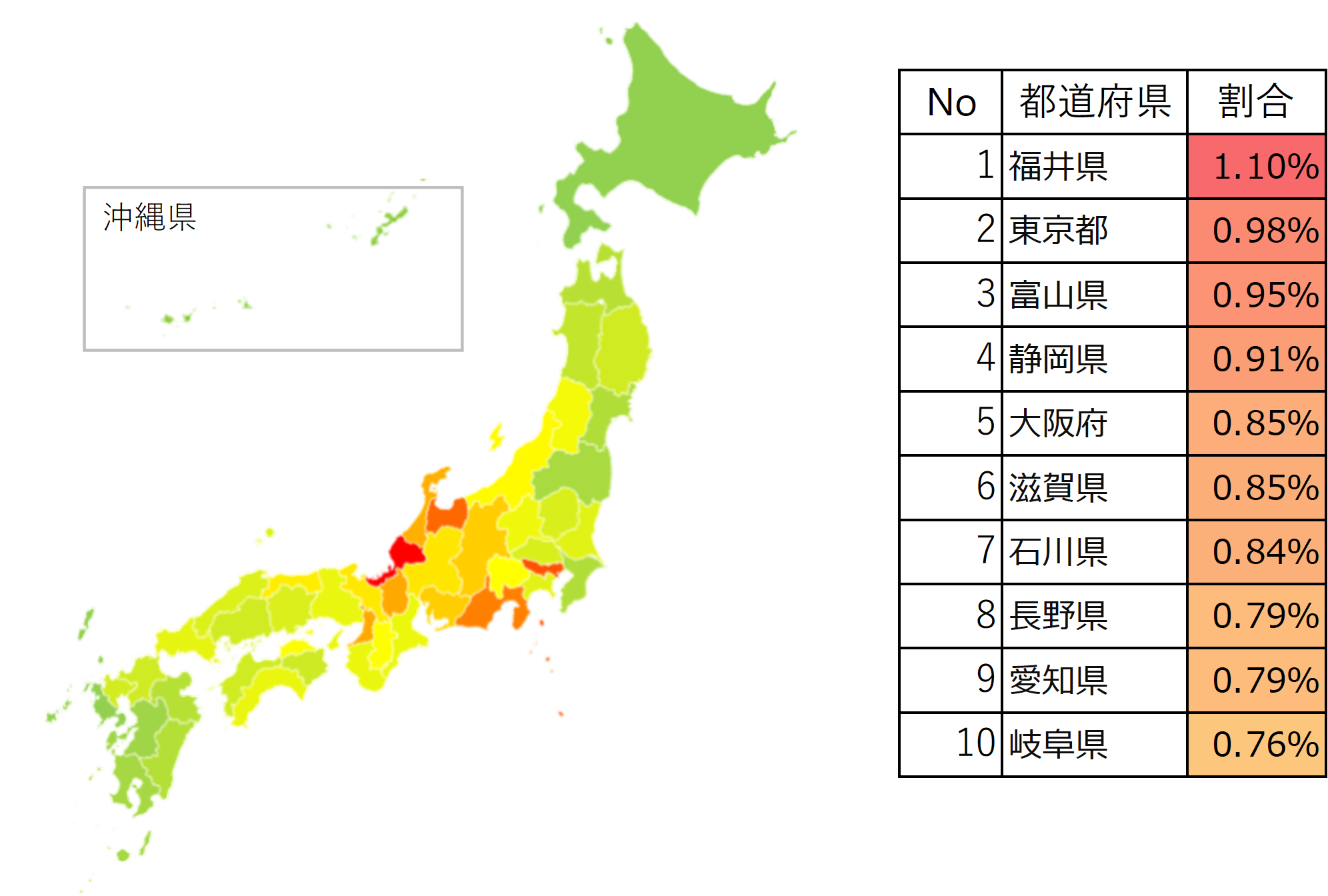
|
Analysis Target Data |
Companies holding 1 to 5 patents story (approximately 32,000 companies) |
|
Analysis Data Source |
Data from the Japan Patent Office website |
|
Analysis and Aggregation Methodology |
Classified LBC headquarters data by prefecture to establish the population count for each region. Categorized companies holding 1 to 5 patents by prefecture. Calculated the ratio for each prefecture, ranked them in descending order, and visualized the data on a map. |
|
Insights and Evaluations Obtained |
The data indicates a higher ratio of such companies in the Chubu and Hokuriku regions, as well as in Tokyo.
|
4: Ranking of Prefectures with a High Number of Companies Led by Female Presidents 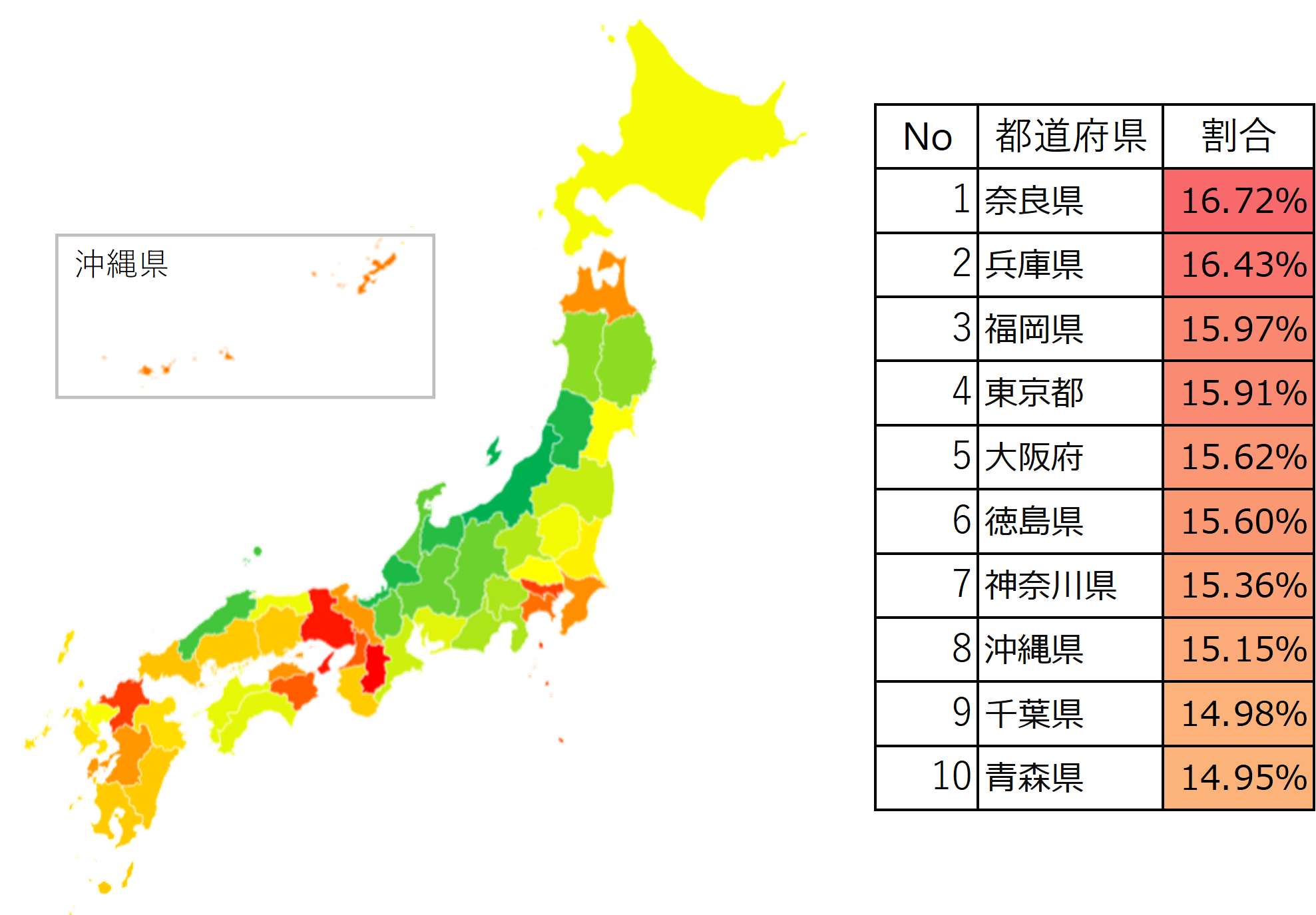
|
Analysis Target Data |
Companies identified as having a female president (Story: approximately 657,000 companies) |
|
Analysis Data Source |
Extraction Based on Proprietary Logic |
|
Analysis and Aggregation Methodology |
LBC headquarters data is categorized by prefecture to establish a population count for each. Companies identified as having female presidents are also categorized by prefecture. The ratio for each prefecture is calculated, and a ranking is created and mapped in descending order of these ratios. |
|
Insights and Evaluations Obtained |
A high trend is observed in areas encompassing major metropolitan regions, such as the Tokyo Metropolitan Area, Kansai, and Northern Kyushu. However, the extraction logic is based on our own definitions, and further examination is underway. |
5: Ranking of Prefectures with a High Number of Companies Identified as Family-Owned 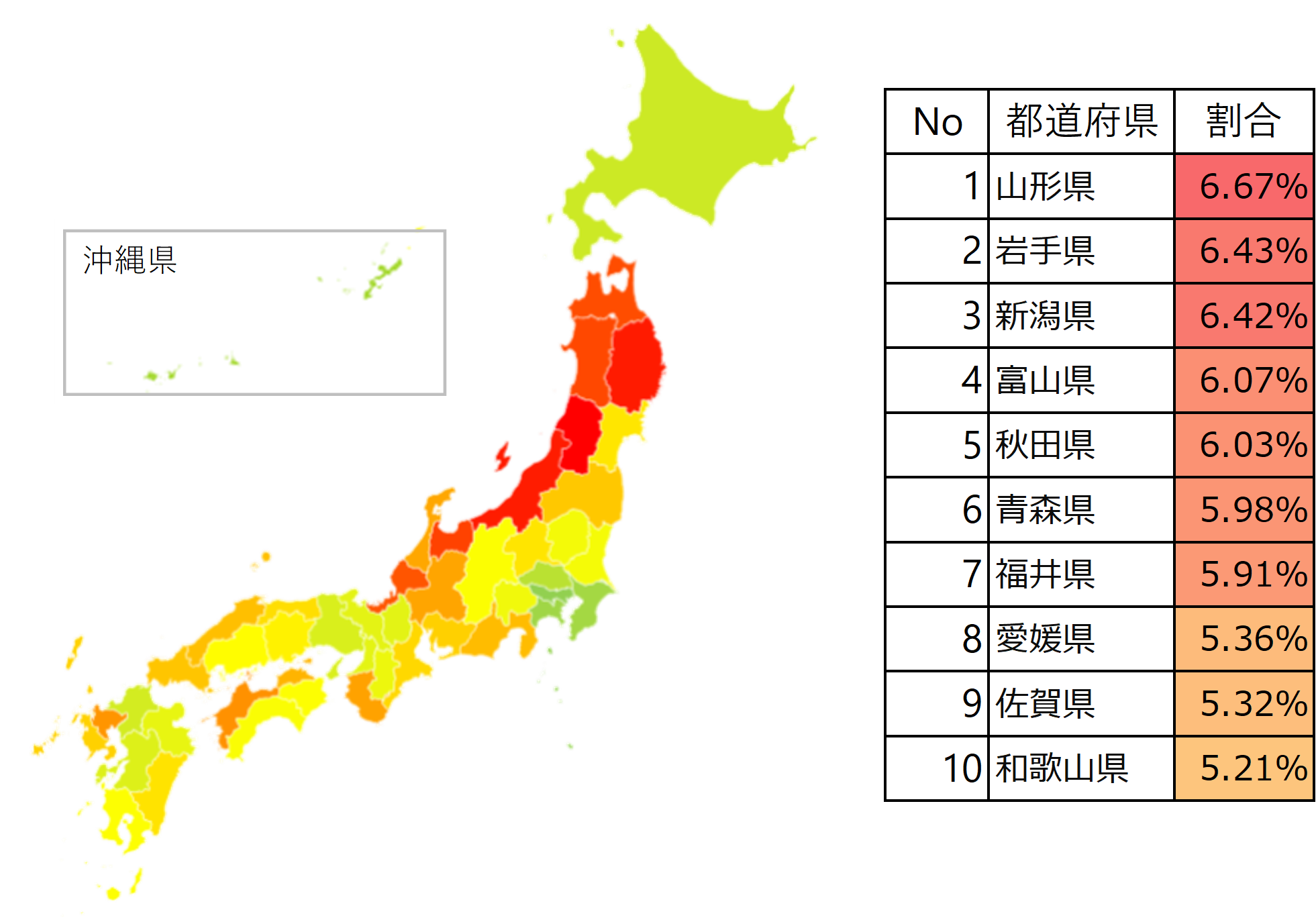
|
Data Subject to Analysis |
Story on Companies Identified as Family-Owned (Approx. 160,000 companies) |
|
Data Source for Analysis |
Extraction via Proprietary Logic |
|
Analysis and Aggregation Methodology |
LBC headquarters data is categorized by prefecture to establish a population count for each. Companies identified as family-owned businesses are also categorized by prefecture. The ratio for each prefecture is calculated, ranked in descending order, and visualized on a map. |
|
Insights and Evaluations Obtained |
A trend of higher ratios was observed in the Tohoku and Sea of Japan coastal regions.
|
6: Research Report on the Newly Developed Corporate Dissolution Score
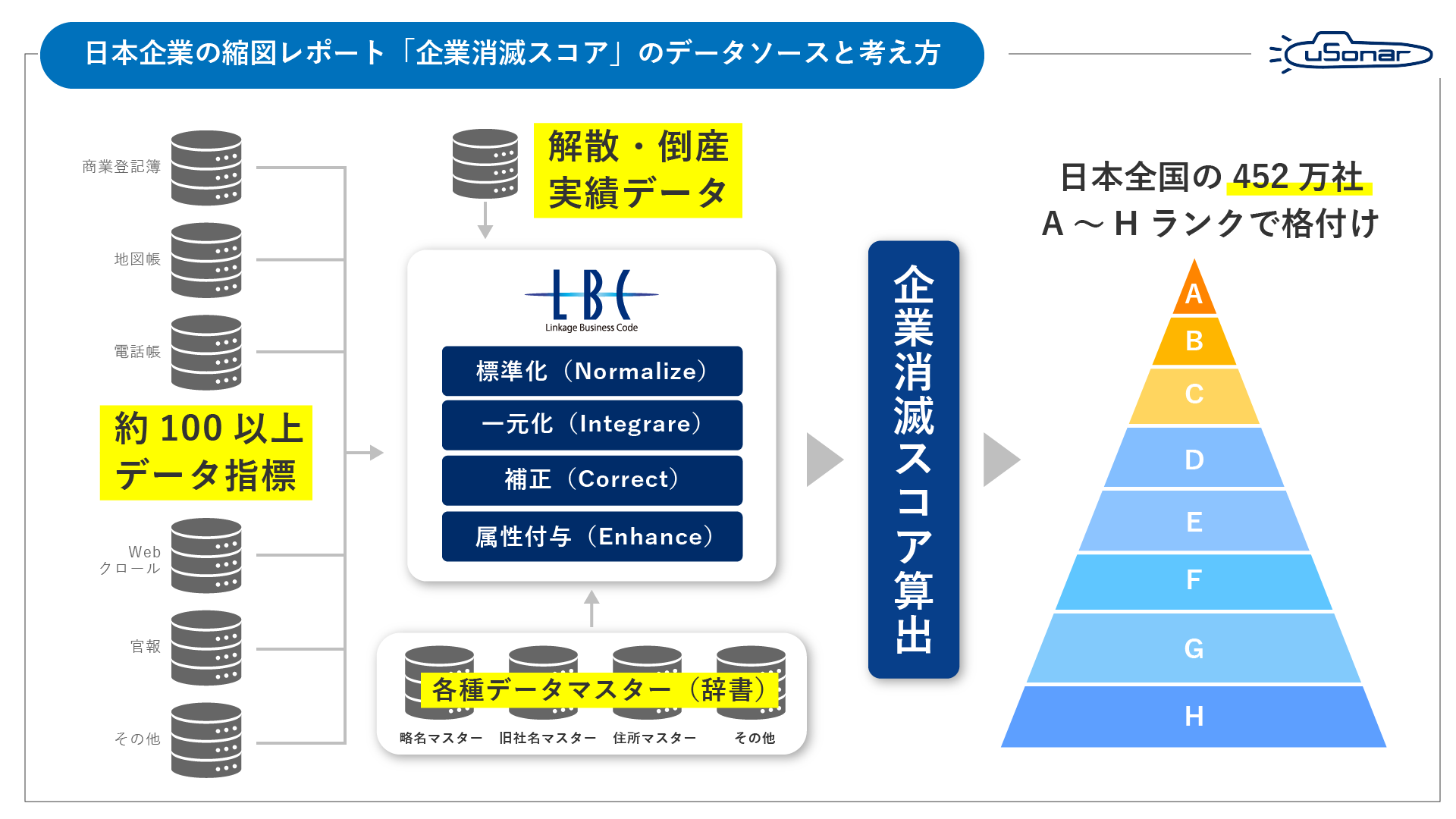 We have calculated our proprietary Corporate Dissolution Score by analyzing the characteristic trends of our 4.52 million corporate data records, incorporating over 100 diverse data indicators, including information on dissolved and bankrupt entities. Based on the score, we have assigned ratings across eight levels from A to H (details of the calculation logic remain undisclosed as this is currently under development and pilot testing).
Furthermore, we analyzed the relationship between various corporate attributes and the Corporate Dissolution Score.
As a result, we identified corporate attributes that frequently appear in the top-tier ratings (A–B) and those that frequently appear in the lower-tier ratings (G–H).
For example, we found that 97% of companies with the attribute of being a Certified Health & Productivity Management Organization fall into the A–B category of the Corporate Dissolution Score.
Additionally, we found that 13% of companies with the attribute of having a trendy cafe located within the same building fall into the G–H category of the Corporate Dissolution Score.
It should be noted that no single attribute acts as the sole driver of the Corporate Dissolution Score; rather, the score itself is a comprehensive metric derived from various data points. The Corporate Dissolution Score is currently in the pilot testing phase, and we will continue to refine its accuracy moving forward.
Notes on Citing Our Reports
• Please include the following credit when citing our data:
Source: "Microcosm of Japanese Companies Report" provided by uSonar Co., Ltd.
• Please include a link to the specific report cited below the source credit.
• If you notify us of your publication, we may feature it on our website or official social media channels.
Overview of the "Microcosm of Japanese Companies (≒ Japanese Economy) Report"
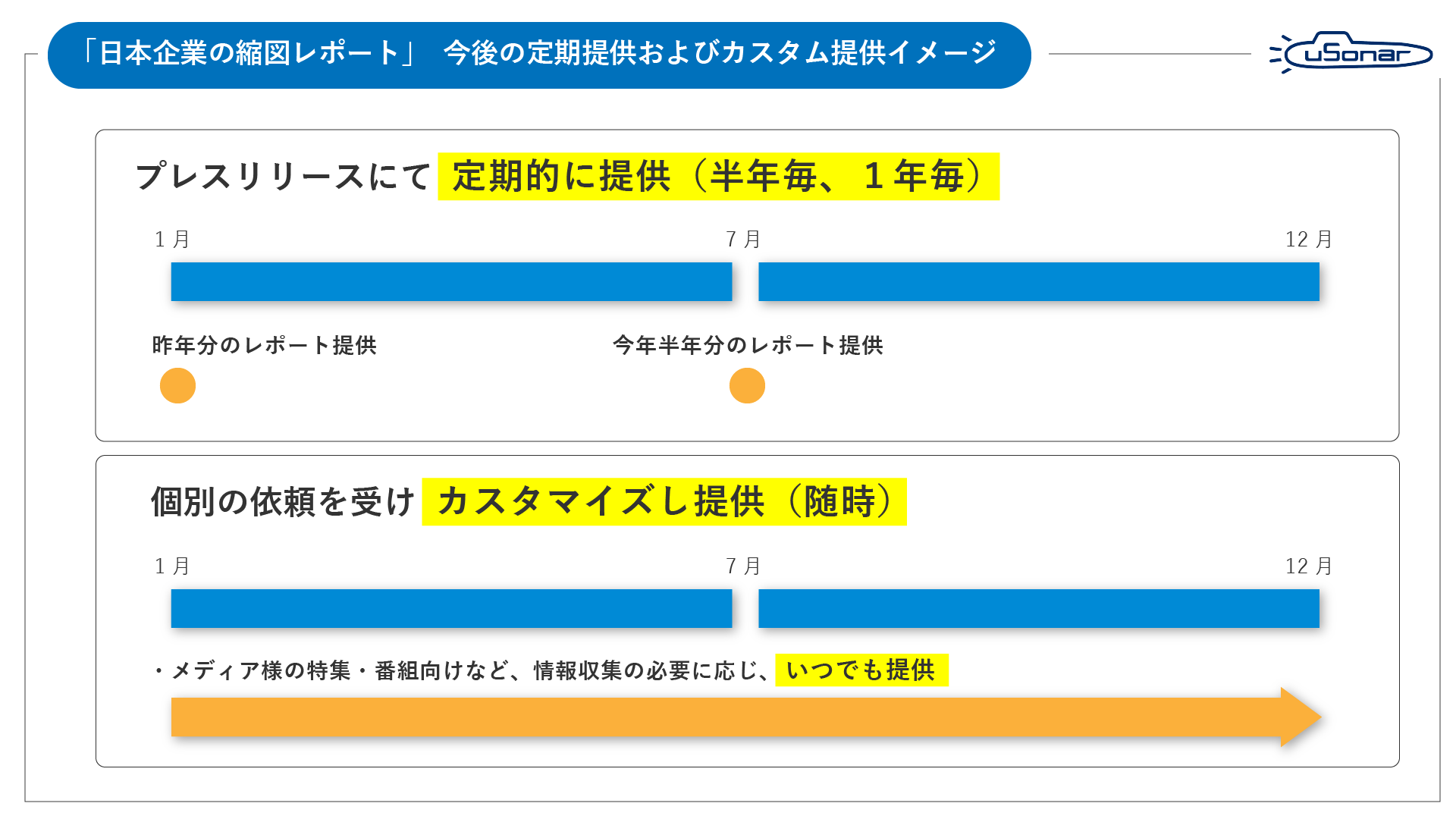
• Publication Frequency of Periodic Reports
Depending on the theme, press releases are issued every six months or annually (scheduled for January and July).
• Provision of Individual Custom Reports (For Media)
In addition to our regularly published reports, we can create "Individual Custom Reports" based on requests from media outlets.
Reports that have been published by the media may be distributed by our company to interested parties upon request.
Application Guidelines for Individual Custom Reports
Please contact us at the email address for "Microcosm of Japanese Companies Report" inquiries (ir@usonar.co.jp).
After receiving your inquiry, a representative from our company will contact you.
• Please note that we may be unable to fulfill certain requests depending on the content.
• This service is limited to provision for media organizations, including television, newspapers, magazines, and web media (for broadcast or publication).
• When publishing in the media, please clearly state the source as "Microcosm of Japanese Companies Report" provided by uSonar Co., Ltd.
uSonar Co., Ltd. Public Relations (Hiyama/Sawada)
Email: ir@usonar.co.jp
Phone: 03-5388-5300